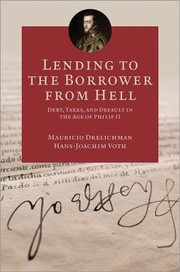
Lending to the Borrower from Hell
Philip II's serial defaults, and why bankers kept lending anyway.
Summary
Mauricio Drelichman and Hans-Joachim Voth reconstruct the finances of Philip II of Spain, who suspended payments on his debts four times between 1557 and 1596 and is the standard historical example of a serial sovereign defaulter. Their evidence is unusual: they assembled the complete surviving record of the loan contracts, or asientos, between the Spanish crown and its Genoese bankers, which lets them calculate what the lenders actually earned.
The finding overturns the received account. Lending to Philip was profitable across the whole period. The bankers charged rates that priced in the expected defaults, the settlements after each suspension typically converted short-term debt into longer-term annuities rather than writing it off, and the major banking families continued lending after each episode because the business remained attractive. The authors also show that Philip's fiscal position was sustainable by the standards of the time, with debt service well within the crown's revenue capacity, so the suspensions were liquidity events driven by silver fleet timing and war expenditure rather than insolvency.
Their explanation for why lending continued rests on coordination among the Genoese families, who could collectively withhold credit from a crown that treated any one of them badly, and on the fact that the crown needed the network's ability to move money to armies in the Netherlands. The book is quantitative economic history and demands attention, but it is clearly written. It has become a standard reference in the sovereign debt literature and is regularly cited in arguments about whether reputation or sanctions sustain sovereign lending.
Key takeaways 7
- Lenders to Philip II earned positive returns across his entire reign despite four suspensions of payment.
- Interest rates on the crown's loans priced in the expected frequency of default, so the defaults were anticipated rather than surprising.
- Philip's debt service was sustainable relative to revenue, which makes his suspensions liquidity events rather than insolvency.
- Settlements after each suspension converted short-term debt into long-term annuities rather than imposing outright losses.
- The Genoese banking families could coordinate to withhold credit, which enforced the crown's compliance without any legal mechanism.
- The crown needed the bankers' payment network to fund armies abroad, and that service was harder to replace than the money itself.
- Sovereign lending can be sustained by relationship and coordination among a small number of lenders, without courts or collateral.
Who should read it
Investors in sovereign debt and anyone interested in how lending to governments survives repeated default, supported by unusually complete contract-level evidence.
Where it sits in the reference 2
Similar books 6
Chosen by shared topics, the entries that hold them, and the people who recommended both.