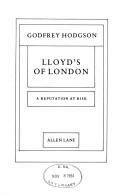
Lloyd's of London
History of the market before the losses that nearly ended it.
Summary
Hodgson, a British journalist, wrote a history of Lloyd's of London covering its origins in Edward Lloyd's coffee house, its development into the world's principal marine and specialty insurance market, its structure of individual Names bearing unlimited personal liability, and the scandals of the late 1970s and early 1980s.
The institutional material is what makes it useful. Lloyd's is a market rather than a company: underwriting syndicates operate within it, capital is supplied by Names who pledge their entire personal wealth against claims, and the market's reputation for paying claims is the asset that all the participants depend on. Hodgson explains the agency structure, the role of brokers, and the reinsurance arrangements including the reinsurance-to-close mechanism that transferred one year's remaining liabilities to the next.
The scandals he covers involved syndicate managers placing bad risks with Names they represented while protecting themselves and preferred clients, and the removal of funds through offshore reinsurance vehicles. Hodgson examines how the self-regulating structure permitted this and how the resulting inquiries changed governance.
The book was published in 1984, before the asbestos and pollution claims that nearly destroyed Lloyd's in the early 1990s, bankrupted thousands of Names and forced the introduction of corporate capital and the Equitas run-off vehicle. That is the most important thing that has happened to the institution and this book predates it entirely. Read it for the structure and the earlier history rather than as a current account.
Key takeaways 7
- Lloyd's is a market within which syndicates underwrite, not an insurance company, and its central asset is a collective reputation for paying claims.
- Names supplied capital by pledging their entire personal wealth, which gave the market capacity without requiring the capital to be paid in.
- Unlimited personal liability meant Names bore losses that could exceed anything they had earned from the market over decades.
- The reinsurance-to-close mechanism transferred a year's remaining liabilities to the following year's Names, which moved long-tail exposures onto people who had not underwritten them.
- Self-regulation permitted agents to place poor risks with the Names they represented while protecting themselves, and the structure supplied no independent check.
- Brokers rather than underwriters controlled the flow of business, which gave them power over which syndicates saw which risks.
- A market that pools reputation gives every participant an interest in the others' conduct and no individual mechanism for enforcing it.
Who should read it
Insurance professionals and investors interested in the structure of the Lloyd's market, read as predating the asbestos crisis that transformed it.
Where it sits in the reference 4
Similar books 6
Chosen by shared topics, the entries that hold them, and the people who recommended both.