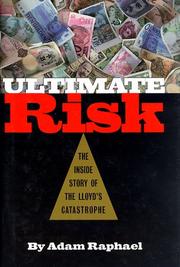
Ultimate Risk
The Lloyd's of London Names catastrophe and unlimited liability.
Summary
Raphael, a British journalist who was himself a Lloyd's Name and lost money, investigated the crisis that nearly destroyed the Lloyd's insurance market in the late 1980s and early 1990s.
The crisis had two components. Asbestos and pollution claims from policies written decades earlier arrived in amounts nobody had reserved for, and the long-tail nature of the exposure meant liabilities kept growing as American courts extended coverage. Separately, and more damagingly for the individuals involved, Raphael documents that agents and market insiders directed the worst of these exposures toward Names who had recently joined, particularly through the London Market Excess of Loss spiral, in which the same underlying losses were reinsured repeatedly around a small circle of syndicates, multiplying the total exposure far beyond the original claims.
His argument is that this was not merely bad luck. Recruitment of new Names accelerated at exactly the point when the insiders understood the scale of the asbestos problem, and the reinsurance-to-close mechanism transferred liabilities onto people who had not underwritten them. Thousands of Names were bankrupted, some took their own lives, and the litigation ran for years.
Raphael is a participant and the book is angry, which readers should factor in. He was also right about the substance, and subsequent inquiries and settlements supported much of what he alleged. The book documents the failure of a self-regulating market to protect the people whose capital it depended on, and the eventual resolution through Equitas and the introduction of corporate capital ended the model he describes.
Key takeaways 7
- Asbestos and pollution claims from policies written decades earlier produced liabilities that grew as American courts extended coverage retroactively.
- The excess of loss reinsurance spiral reinsured the same underlying losses repeatedly around a small circle of syndicates, multiplying total exposure far beyond the original claims.
- New Names were recruited into the market at the point when insiders understood the scale of the asbestos exposure.
- The reinsurance-to-close mechanism transferred long-tail liabilities onto Names who had not underwritten the original policies.
- Unlimited personal liability meant individual Names lost far more than they had ever earned from the market, and thousands were bankrupted.
- A self-regulating market gave the insiders both the information advantage and the authority to police it, which is a structure that cannot protect outside capital.
- Long-tail insurance liabilities cannot be assessed by the capital providers, which makes the arrangement dependent entirely on the honesty of the agents.
Who should read it
Insurance investors and anyone providing capital to a market they cannot observe, on how long-tail liabilities and self-regulation combine.
Where it sits in the reference 4
Similar books 6
Chosen by shared topics, the entries that hold them, and the people who recommended both.