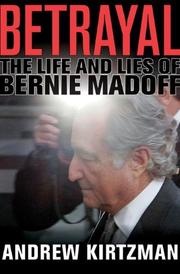
Madoff Talks: Uncovering the Untold Story Behind the Most Notorious Ponzi Scheme in History
Built on prison correspondence and interviews.
Summary
Campbell, a radio host, conducted extensive correspondence and interviews with Bernard Madoff in prison over several years and combined this with interviews with victims, investigators, employees and family members.
The material from Madoff himself is the book's distinguishing feature and also its main problem, since a convicted fraudster explaining his own conduct is an unreliable source and Campbell is at times too willing to relay his framing. Madoff's account attributes the origin of the fraud to the early 1990s and to institutional feeder funds demanding returns he could not generate, and blames the banks and feeders for wilful blindness. Campbell does push back on some of this.
The institutional analysis is the more useful part. Campbell covers the SEC's repeated failures to act on specific referrals, including Harry Markopolos's submissions which laid out the mathematical impossibility of the returns; the feeder fund structure that gathered assets while charging fees and conducting no diligence; the banks whose internal analysis concluded the returns could not be real and who continued transacting; and the split between the legitimate market-making business and the fraudulent advisory arm, which operated on separate floors with separate systems.
For investors the specific lessons are concrete: the returns were impossible on their face, the claimed options strategy would have required more contracts than existed in the market, the auditor was a three-person firm, and custody of assets was not separated from management. Every one of these was checkable.
Key takeaways 7
- Madoff's reported returns were mathematically impossible on their face, and the claimed options strategy would have required more contracts than existed in the market.
- The fund's auditor was a three-person firm, which was verifiable and should have ended any institutional diligence process immediately.
- Madoff had custody of client assets as well as managing them, which removed every independent check on whether the assets existed.
- Feeder funds gathered assets and charged fees while conducting no diligence, because their economics depended on the relationship continuing.
- Several large banks concluded internally that the returns could not be genuine and continued to transact with the operation.
- The SEC received specific detailed referrals including Markopolos's mathematical analysis and failed to act on them over a period of years.
- The legitimate market-making business supplied the reputation that made the fraudulent advisory business credible to institutional investors.
Who should read it
Investors and allocators who want the diligence failures of the Madoff case laid out, treating Madoff's own explanations with appropriate scepticism.
Where it sits in the reference 4
Similar books 6
Chosen by shared topics, the entries that hold them, and the people who recommended both.