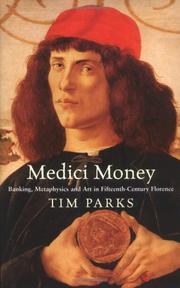
Medici Money
Renaissance banking, branch networks and the origins of modern finance.
Summary
Tim Parks, a novelist and translator living in Italy, wrote this short history of the Medici bank from its founding in 1397 to its collapse in 1494. He draws heavily on Raymond de Roover's archival scholarship and adds a narrative treatment for general readers.
The financial mechanics are the most interesting part. Church prohibition of usury meant the bank could not charge interest openly, so it made its money through bills of exchange: a loan in Florence repayable in London in a different currency at a rate that embedded the interest, with the exchange risk providing the theological cover. Parks explains the branch structure, in which each branch was a separate partnership with local managers holding equity, which limited liability but also limited control from Florence. He covers the papal account, which was the bank's most profitable business and which tied it to Church politics.
Parks then traces the decline. The Medici's political role in Florence made the bank an instrument of state, and loans became difficult to refuse. Branch managers in London and Bruges lent to sovereigns who defaulted. Lorenzo, occupied with politics and patronage, delegated to managers who concealed losses. The bank was insolvent well before the family's expulsion. Parks writes as an essayist and is more interested in the tension between profit and salvation than in banking technique; readers wanting rigour should go to de Roover. The account of how political power destroyed a bank is well made.
Key takeaways 7
- The Medici bank charged interest through bills of exchange denominated in different currencies, which satisfied the prohibition on usury.
- Each branch was a separate partnership with the manager holding equity, which limited the parent's liability and also its control.
- The papal account was the bank's most profitable business and tied its fortunes to Church politics.
- Political power in Florence made it impossible for the bank to refuse loans it would otherwise have declined.
- Sovereign lending by the London and Bruges branches produced the losses that destroyed the bank's capital.
- Lorenzo's attention to politics and patronage left branch managers unsupervised, and they concealed losses for years.
- Parks argues that the same family prominence that supplied the bank's business ultimately made prudent banking impossible.
Who should read it
Investors and bankers who want an accessible history of how early banking worked around legal prohibitions and how political entanglement destroyed a dominant firm.
Where it sits in the reference 2
Similar books 6
Chosen by shared topics, the entries that hold them, and the people who recommended both.