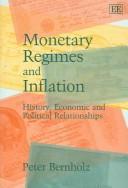
Monetary Regimes and Inflation
Comparative study of hyperinflations and the fiscal conditions behind them.
Summary
Peter Bernholz, a Swiss economist, examines inflation across recorded history and asks what monetary and political conditions produce it. His evidence base is unusually wide: metallic currencies and debasements from antiquity through the early modern period, paper money episodes, and the twentieth and twenty-first century inflations and hyperinflations.
His central empirical finding concerns the fiscal threshold. Bernholz identifies roughly thirty hyperinflations in recorded history and shows that in every case the government was financing a large share of its expenditure by creating money. He puts the threshold at around forty per cent of government expenditure covered by money creation, with hyperinflation becoming likely once deficits reach roughly twenty per cent of expenditure sustained over time. He also documents the behavioural regularities: real money balances collapse before the price level peaks, currency substitution accelerates, and the exchange rate leads domestic prices rather than following them.
The second theme is institutional. Bernholz argues that monetary regimes differ in how much inflation they permit, that metallic standards constrained governments more effectively than discretionary paper regimes, and that central bank independence works only when it is supported by a political consensus against inflation. He is explicit that independence written into statute fails when the government's fiscal position becomes untenable. The book is scholarly and data-dense. Its cross-historical comparison is its distinctive contribution and it is regularly cited in current debates about fiscal dominance.
Key takeaways 7
- Every recorded hyperinflation involved a government financing a large share of its spending through money creation.
- Hyperinflation becomes likely when money creation covers roughly forty per cent of government expenditure.
- Real money balances collapse before the price level peaks, because holders anticipate the currency's destruction.
- Exchange rates lead domestic prices during high inflation rather than following them, which reverses the normal causal assumption.
- Metallic standards constrained government finance more effectively than statutory central bank independence does.
- Central bank independence fails when the government's fiscal position leaves no alternative to monetary financing.
- Bernholz argues that inflation is always a political phenomenon expressed through monetary institutions rather than a technical monetary error.
Who should read it
Investors and policymakers who want the historical base rates on what fiscal conditions produce inflation and how currencies behave as they fail.
Where it sits in the reference 2
Similar books 6
Chosen by shared topics, the entries that hold them, and the people who recommended both.