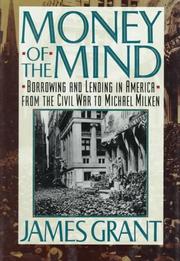
Money of the Mind: Borrowing and Lending in America from the Civil War to Michael Milken
Open Library unreachable during build; title listed on grantspub.com books page
Summary
Grant traces the history of American credit from the Civil War to the leveraged buyout era, arguing that lending standards follow a long cycle in which the memory of losses fades and each generation of lenders rediscovers that credit can be extended further than the last one believed.
His historical argument is that the nineteenth-century American lender operated under conditions of genuine risk: no deposit insurance, no lender of last resort, personal liability for bank shareholders, and a legal and social framework in which default carried real consequences. As those conditions were removed one by one through the twentieth century, through the Federal Reserve, deposit insurance, the removal of double liability, government guarantees and the growth of secondary markets, the lender's exposure to the consequences of a bad loan fell, and lending standards fell with it.
He traces this through specific episodes: nineteenth-century commercial banking practice, the 1920s installment credit boom, the New Deal's mortgage guarantees and the housing finance system they created, the postwar consumer credit expansion, the sovereign lending of the 1970s, the savings and loan crisis, and the junk bond market.
The book is well researched and Grant's thesis is coherent. It is also a moral argument, and readers should recognise that the removal of the conditions he describes also removed the bank runs and depressions those conditions produced. Grant addresses this less than the argument requires. The historical detail on lending practice is the durable contribution.
Key takeaways 7
- Lending standards follow a long cycle in which the memory of losses fades and each generation extends credit further than the last believed possible.
- Nineteenth-century American lenders operated under conditions of genuine personal risk including shareholder double liability, which disciplined their decisions.
- Deposit insurance, the lender of last resort and government guarantees each removed a consequence of bad lending, and standards fell as they were removed.
- Secondary markets for loans separate the originator from the loss, which removes the incentive to assess the borrower.
- Credit expansions end when the marginal borrower can no longer service the debt, which is a point that lenders reach without noticing.
- Government guarantee programmes create the lending they were designed to encourage and also the loosening they were not.
- The conditions Grant admires produced bank runs and depressions as well as discipline, which the argument acknowledges less than it should.
Who should read it
Credit investors who want the long history of American lending standards and the argument connecting them to lender consequence.
About James Grant
Founder and editor, Grant's Interest Rate Observer (since 1983); financial historian and biographer
Grant's Interest Rate Observer is a primary source other investors read and quote, and Money of the Mind is a standard credit history.
Where it sits in the reference 2
Who recommended it 1 · 1 direct
Similar books 6
Chosen by shared topics, the entries that hold them, and the people who recommended both.