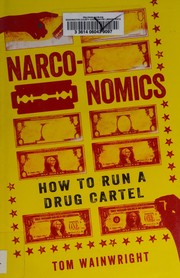
Narconomics
The cartels analysed as firms: supply chains, franchising, HR.
Summary
Tom Wainwright covered Mexico for The Economist and analyses the drug trade as an industry rather than as a criminal phenomenon. Each chapter takes a standard business problem and shows how cartels solve it: supply chain management, human resources, public relations, franchising, offshoring, diversification, online retail.
Several of the findings undercut standard drug policy. Wainwright shows that coca eradication in the Andes barely raises retail cocaine prices in the United States, because the farm-gate value of the coca in a kilogram of cocaine is trivial relative to the retail price, and because the cartels operate as a monopsony that pushes the cost of crop destruction back onto growers. He shows that cartels franchise their brands, with the franchisee bearing operational risk and the brand owner collecting fees, which explains why decapitating a cartel's leadership multiplies violence rather than reducing supply. He covers the growth of the dark web as a retail channel, where reputation systems produce better product quality and lower violence than street dealing, and the diversification of Mexican groups into avocados, iron ore and fuel theft.
The policy conclusions follow from the economics: interdiction at the production end is ineffective because the input is cheap, demand-side treatment is far more cost-effective per unit of consumption reduced, and legalisation transfers the industry to firms that can be taxed and regulated. Wainwright is writing accessible journalism rather than economics, and the quantitative claims deserve checking against the specialist literature. The framework is genuinely illuminating and the reporting is first-hand.
Key takeaways 7
- Coca eradication barely affects retail cocaine prices because the raw input is a negligible share of the final price.
- Cartels operate as monopsony buyers of coca leaf, which lets them push the cost of eradication back onto farmers.
- Cartels franchise their brands, so removing a leader multiplies competing operators and raises violence without reducing supply.
- Dark web drug markets produce better product quality and less violence than street dealing because reputation systems substitute for enforcement.
- Spending on treatment reduces consumption far more per dollar than spending on interdiction does.
- Cartels diversify into legal industries such as agriculture and mining because their core capability is extortion and logistics rather than drugs.
- Prison functions as a recruiting and coordination facility for these organisations rather than as a disruption to them.
Who should read it
Operators and analysts who want a demonstration of how standard industry analysis applies to illicit markets, and readers assessing drug policy on economic grounds.
Where it sits in the reference 2
Similar books 6
Chosen by shared topics, the entries that hold them, and the people who recommended both.