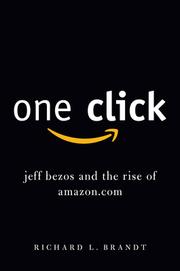
One Click
Short Bezos biography written before the Everything Store era.
Summary
Brandt wrote a short biography of Jeff Bezos and an early history of Amazon, covering the departure from D. E. Shaw, the founding in 1994, the choice of books as the first category, the initial public offering, the dot-com period, the expansion into other categories and into marketplace and web services.
The useful material is on the strategic reasoning. Brandt explains why books were selected: a large number of distinct items that no physical store could stock, an existing wholesale distribution infrastructure through Ingram and Baker and Taylor that removed the need to hold inventory initially, and a product that did not need to be examined before purchase. He covers the decision to invest in customer reviews including negative ones, which publishers objected to; the one-click patent and the litigation around it; the deliberate acceptance of years of losses to fund growth and the shareholder letters that explained it; and the opening of the platform to third-party sellers, which competitors regarded as self-destructive.
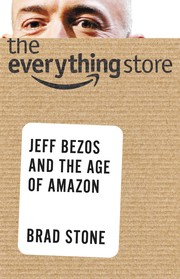
Brandt did not have access to Bezos or to the company, and the book is assembled from public sources, interviews with former employees and previous reporting. It is short and it is superseded by Brad Stone's The Everything Store, which had far better access and covers more. It also predates Amazon Web Services becoming the profit engine, the Prime flywheel reaching its current form, and the logistics network build-out. Read it as a brief early account rather than as the reference history.
Key takeaways 7
- Books were chosen as the first category because they had more distinct titles than any store could stock and an existing wholesale infrastructure that removed the need to hold inventory.
- Publishing negative customer reviews alongside positive ones was a deliberate decision that publishers opposed and that built the credibility the store depended on.
- Accepting years of losses to fund growth was an explicit strategy communicated to shareholders rather than a failure to reach profitability.
- Opening the marketplace to third-party sellers, including direct competitors on the same product page, was regarded as self-destructive and became a major profit source.
- Amazon competed on selection and convenience rather than on price alone, and the recommendation and review systems were the mechanisms for both.
- Bezos framed decisions by asking what would still be true in ten years and investing in those things, principally selection, price and delivery speed.
- Free cash flow rather than reported earnings was the metric Bezos told shareholders to judge the company on, which permitted the reinvestment strategy.
Who should read it
Readers wanting a brief early account of Amazon's strategic choices, though Brad Stone's later book is the better-sourced history.
Where it sits in the reference 3
Who recommended it 1 · 1 direct
Similar books 6
Chosen by shared topics, the entries that hold them, and the people who recommended both.