Salomon Brothers, 1910-1985: Advancing to Leadership
Commissioned institutional history, written before the fall.
Summary
Robert Sobel, a prolific business historian, wrote this commissioned history of Salomon Brothers covering the firm from its founding by the Salomon brothers in 1910 to the mid-1980s, when it had become the dominant bond trading house on Wall Street.
The narrative covers the firm's origins as a money broker, its move into government securities, its position as an outsider excluded from the underwriting syndicates that the established houses controlled, and its consequent development of trading rather than relationship banking as its business. Sobel covers the postwar growth, the leadership of Billy Salomon, the decision to build capital by requiring partners to leave earnings in the firm, and the development of the bond trading operation that became its defining business. He covers the 1981 sale to Phibro, which converted the partnership into part of a public company and made the partners wealthy while ending the structure that had built the firm.
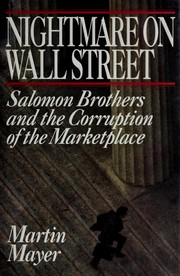
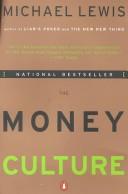
The book was commissioned and its access came on those terms, so it is respectful. It was also published in 1986, immediately before the events that defined Salomon in the public mind: the mortgage trading described in Liar's Poker, the 1987 restructuring, the Treasury auction scandal of 1991 and the Buffett rescue. Readers wanting those should go to Michael Lewis and to Martin Mayer. Sobel's contribution is the earlier history, which is otherwise poorly documented.
Key takeaways 6
- Salomon built its business on trading because the established underwriting syndicates excluded it from relationship banking.
- Requiring partners to leave earnings in the firm built the capital base that made large-scale bond trading possible.
- Market-making in government securities gave Salomon information about institutional flows that its competitors lacked.
- The 1981 sale to Phibro ended the partnership structure that had disciplined the firm's capital and risk decisions.
- Sobel argues that Salomon's outsider status was the source of its willingness to commit capital where established firms would not.
- The firm's culture rewarded trading results directly, which produced both its growth and its later control failures.
Who should read it
Readers of Wall Street history who want the pre-1985 Salomon record that the better-known accounts of the firm assume rather than describe.
Where it sits in the reference 2
Similar books 6
Chosen by shared topics, the entries that hold them, and the people who recommended both.