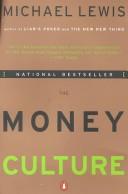
The Money Culture
Collected 1980s finance essays
Summary
Lewis collected magazine pieces written after Liar's Poker, mostly for The New Republic, Manhattan Inc and British publications, covering finance in the late 1980s.
The pieces cover the period's characteristic subjects: the leveraged buyout wave, the Japanese purchases of American assets, the London markets after Big Bang, Michael Milken and the junk bond business, the takeover defence industry, and the individuals who made and lost fortunes. Lewis writes as a former participant and the pieces are satirical, working by close observation of how people behaved rather than by financial analysis.
The recurring argument, insofar as a collection has one, is that finance during this period detached compensation from any measurable contribution, that the people involved understood this and constructed elaborate justifications, and that the institutions were structured so that the individuals bore little of the risk they created.
The pieces vary. Some are sharp reporting on transactions that mattered, some are essays on personalities, and some are period comedy that has not aged well. The collection has no organising structure and no analytical framework.
As a source on late 1980s finance it is impressionistic rather than reliable, and readers wanting the substance of the period should read Bryan Burrough and John Helyar on RJR Nabisco or Connie Bruck on Drexel. What Lewis captures accurately is the tone: how participants talked about what they were doing, and what they believed justified it. That is genuinely hard to reconstruct afterward and is the collection's value.
Key takeaways 7
- Compensation in late 1980s finance became detached from any measurable contribution, and participants constructed justifications for it.
- Institutional structures placed the risk of financial decisions with firms and clients rather than with the individuals making them.
- Japanese purchases of American assets during this period were driven by domestic conditions in Japan rather than by asset quality.
- Takeover defence became an industry whose practitioners profited regardless of whether the defence served shareholders.
- Deregulation in London produced an influx of foreign capital and the rapid disappearance of the firms it acquired.
- Contemporaneous reporting captures how participants justified their behaviour, which retrospective accounts cannot recover.
- The collection is impressionistic and should not be relied on for the substance of the transactions it describes.
Who should read it
Readers who want the atmosphere and self-justification of 1980s finance, using other sources for the transactions themselves.
About Michael Lewis
Financial journalist and author; former Salomon Brothers bond salesman
Liar's Poker, The Big Short and Flash Boys are the primary narrative sources later writers build on for Wall Street of the 1980s, the subprime crisis and high-frequency trading.
Where it sits in the reference 3
Similar books 6
Chosen by shared topics, the entries that hold them, and the people who recommended both.