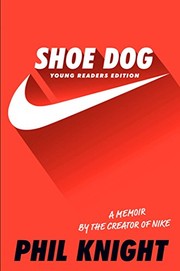
Shoe Dog
Insider account: Knight's founder memoir, the best-known Nike book.
Summary
Knight tells the story of Nike from his 1962 trip to Japan, where he talked his way into a distribution agreement with Onitsuka Tiger by inventing a company called Blue Ribbon Sports, to the 1980 initial public offering. The book concentrates on the two decades of near-permanent financial distress in between and stops before the period most readers associate with the brand.
The recurring subject is cash. Knight ran the company on bank borrowing against inventory, reinvesting everything into more shoes and constantly exceeding what his lenders would tolerate. The narrative includes the loss of the Onitsuka relationship and the resulting lawsuit, the switch to Japanese trading company Nissho Iwai for financing, a federal customs claim of twenty-five million dollars under the American Selling Price rule that could have ended the company, and a bank calling the loan and reporting the account to the FBI.
The portraits of early employees give the book its second subject. Bill Bowerman, Jeff Johnson, Bob Woodell and the rest are described as misfits who took a chance on an unprofitable shoe importer. Knight writes candidly about his own remoteness as a manager, his failures as a communicator, and the personal cost including the death of his son.
The book is a memoir written decades after the events with a professional collaborator, so the dialogue is reconstructed and the shape is literary. It says little about the labour practices that dominated Nike's public reputation in the 1990s, and it ends before the brand-building era. Read it for a founder's account of financing growth without capital, not as a business history of Nike.
Key takeaways 8
- A company growing quickly on borrowed working capital can be profitable every year and still nearly die from cash shortages.
- Knight built the company by reinvesting every dollar into more inventory, deliberately refusing to hold cash reserves.
- Depending on a single supplier relationship, in this case Onitsuka Tiger, put the entire business at the supplier's discretion until Nike manufactured its own product.
- Hiring people who had failed elsewhere and giving them unusual responsibility produced the early management team.
- Knight delayed going public for years because he feared losing control, and only did so when the capital structure left no alternative.
- Regulatory exposure, in the form of a retroactive customs claim, threatened the company more seriously than any competitor did.
- The founder describes himself as a poor communicator who ran the company by hiring people he trusted and then leaving them alone.
- Building the business consumed family life, and Knight presents that cost without arguing it was worth paying.
Who should read it
Founders financing growth through debt and inventory rather than equity, who want an honest account of two decades of surviving rather than a success narrative.
Where it sits in the reference 3
Who recommended it 28 · 4 direct
Similar books 6
Chosen by shared topics, the entries that hold them, and the people who recommended both.