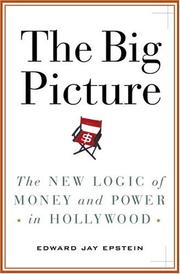
The Big Picture
Where studio money actually comes from, line by line.
Summary
Edward Jay Epstein investigated the economics of Hollywood using studio financial documents, and this book reports what they show. His central finding is that the theatrical box office, which is what the press reports and what the industry discusses, is not where the studios make money.
The accounting he reconstructs shows that a major studio's revenue comes predominantly from home video, television licensing, pay television and international distribution, with theatrical release functioning as a marketing event that establishes a title's value in those channels. He documents the specific splits: the exhibitor's share of box office, the marketing cost that studios bear, and the resulting theatrical contribution, which is frequently negative even for successful films. He also covers the six companies that controlled distribution, which he calls the sexopoly, and explains the barriers that kept the group closed: the library, the distribution infrastructure, the relationships with exhibitors and broadcasters, and the ability to absorb losses.
The second half covers the social and political machinery of the business: the talent agencies and their control of packaging, the accounting practices that make participation in net profits worthless, the studios' relationship with technology and their handling of each new distribution format. Epstein's data comes from a specific period in the early 2000s, and the economics have changed enormously since: home video collapsed, streaming replaced television licensing, and the studios' ownership changed. The analytical method, of following the actual cash rather than the reported box office, remains the right approach.
Key takeaways 7
- Theatrical box office is a marketing event that establishes value in other channels rather than the studios' main revenue source.
- Home video and television licensing supplied the majority of studio revenue during the period Epstein documents.
- Successful films frequently produce negative theatrical contribution once the exhibitor's share and marketing costs are counted.
- Six companies controlled distribution and the barrier to entry was the library and the distribution infrastructure rather than the ability to make films.
- Net profit participation in studio contracts is structured so that it almost never pays, and gross participation is the only meaningful form.
- Talent agencies capture value by packaging talent and selling the package, which places them between the studio and the people it needs.
- Epstein argues that following the actual cash rather than reported box office reverses most conclusions about which films succeed.
Who should read it
Investors and operators in film and media who want the cash economics of the studio business rather than its public accounting.
Where it sits in the reference 2
Similar books 6
Chosen by shared topics, the entries that hold them, and the people who recommended both.