The Blank Swan
Philosophical treatment of contingency and the practice of option trading
Summary
Ayache, an options trader and philosopher, argues against the standard framework in which derivatives are priced by probability, and proposes that the market is prior to probability rather than derived from it.
His position is difficult and deliberately so. He argues that the standard picture, in which a probability distribution over future states exists and derivative prices are computed from it, has the relationship backwards. What actually exists is the market, meaning traded prices for contingent claims, and the probability distributions that quantitative finance computes are derived from those prices rather than describing anything prior to them. The implied volatility surface is not a measurement of expected volatility; it is a translation of prices into a common language.
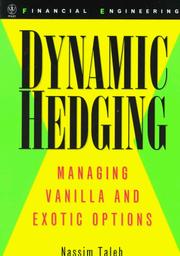
He engages directly with Taleb, arguing that the black swan framing still assumes a probability space with rare events in its tails, and that the more radical position is that the future is not a set of states with probabilities at all. His blank swan is the genuinely new event that no probability space contained because the space is written after the fact.
He draws on Meillassoux, Deleuze and Badiou, and the book is written in a philosophical register that most finance readers find impenetrable.
The reference has not verified the specific technical claims. The book is idiosyncratic, has a small readership, and is not a practical guide to anything. Its interest is as the most radical available statement that market prices are primary and models are translation devices, which Derman argues more accessibly.
Key takeaways 7
- Market prices for contingent claims are primary and the probability distributions computed from them are derived rather than describing anything prior.
- The implied volatility surface translates prices into a common language rather than measuring expected volatility.
- The black swan framing still assumes a probability space with rare events in its tails, which Ayache argues concedes too much to the standard picture.
- A genuinely new event is not a low-probability outcome within a known space but an event no space contained, because the space is written afterwards.
- Derivative pricing models are technologies for trading rather than descriptions of a market's underlying dynamics.
- Writing contingent claims is what creates the market, and the market then produces the prices that models are calibrated to.
- The book is written in a philosophical register most finance readers find impenetrable, and Derman states the accessible version of the argument.
Who should read it
Philosophically inclined derivatives practitioners, with Derman's Models.Behaving.Badly as the accessible statement of the same position.
Where it sits in the reference 2
Who recommended it 1
Similar books 6
Chosen by shared topics, the entries that hold them, and the people who recommended both.