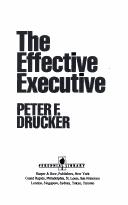
The Effective Executive
OL lists as 'Effective Executive'
Summary
Drucker argues that effectiveness is a set of practices that can be learned rather than a personality trait, and that it is the specific requirement of knowledge work, where output cannot be measured by activity. He defines the executive as anyone whose decisions materially affect the organisation's results, which includes many people without management titles.
He gives five practices. Know where your time goes, which requires recording actual time use rather than estimating it, then eliminating and consolidating. Focus on outward contribution, meaning asking what results the organisation needs from you rather than what work you are doing. Build on strengths, including your own, your colleagues' and your superiors', and staff positions to what people can do rather than to what they lack. Concentrate on the few areas where superior performance produces outstanding results, doing first things first and refusing second things entirely. Make effective decisions, which Drucker treats as a systematic process.
The decision chapters are the most substantial. Drucker argues that effective executives make few decisions but make them at the highest conceptual level, that the first task is determining whether the situation is generic or genuinely exceptional, that disagreement must be organised deliberately because a decision without dissent has not been examined, and that a decision must specify who will do what by when or it remains an intention.
The book was published in 1967 and the examples come from mid-century corporations and government. The prose is plain and dated. Drucker offers no research and writes from consulting observation. The material on time recording, on staffing to strength and on organised dissent has been repeated by every subsequent management writer without improvement.
Key takeaways 8
- Effectiveness is a set of learnable practices rather than a personality trait, and intelligence and hard work do not produce it on their own.
- Executives should record where their time actually goes, because estimates are consistently wrong and the record itself reveals what to eliminate.
- Discretionary time comes in blocks or not at all, since knowledge work requires continuous periods and fragmented time produces nothing.
- An executive should ask what results the organisation requires from them rather than what work they are doing or what authority they hold.
- Positions should be staffed to what a person can do exceptionally well, because organisations exist to make strengths productive and weaknesses irrelevant.
- Concentration on one thing at a time, with second priorities refused rather than deferred, is what allows anything significant to be completed.
- A decision made without organised disagreement has not been examined, so dissent should be required rather than tolerated.
- A decision that does not specify who does what by when is an intention rather than a decision.
Who should read it
Anyone whose decisions affect organisational results, wanting the original statement of practices that later management writing has restated without improving.
About Peter F. Drucker
Management writer and consultant; professor at Bennington, NYU and Claremont Graduate University
He invented management as a field of study, and The Practice of Management and The Effective Executive remain the primary sources every later writer builds on.
Where it sits in the reference 3
Who recommended it 8 · 2 direct
Similar books 6
Chosen by shared topics, the entries that hold them, and the people who recommended both.