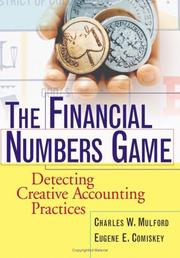
The Financial Numbers Game
Summary
Mulford and Comiskey, both accounting professors at Georgia Tech, wrote a systematic guide to detecting the ways companies manipulate reported results within and beyond the accounting rules.
The structure follows the mechanisms. Revenue recognition abuses include recording sales before the earnings process is complete, recognising revenue on shipments to distributors that have return rights, treating gross amounts as revenue when the company is an agent, and bill-and-hold arrangements. Expense manipulation includes capitalising costs that should be expensed, extending depreciation lives, understating reserves for receivables and warranties, and using restructuring charges to create reserves that can be released into later earnings. Balance sheet manipulation includes off-balance-sheet financing through special purpose entities, operating lease treatment, and pension accounting assumptions.
The analytical method the authors teach is comparison across three statements. Reported earnings should be checked against operating cash flow, since manipulation of accruals shows up as a widening gap. Revenue should be checked against receivables and against days sales outstanding. Inventory turns, gross margin trends and reserve balances should be tracked over time and against competitors. Changes in accounting policy, in estimates or in auditors should be treated as signals requiring explanation.
The book includes many worked examples from Securities and Exchange Commission enforcement actions and from restatements, which give the reader the actual filings rather than hypotheticals.
It was published in 2002, so the examples are from the preceding decade and the accounting standards have changed substantially, particularly on leases, special purpose entities, revenue recognition under the current standard, and stock compensation. Later editions update some of this. The analytical method transfers regardless, because the incentives that produce manipulation have not changed.
Key takeaways 7
- A widening gap between reported earnings and operating cash flow is the most reliable general indicator of accrual manipulation.
- Receivables growing faster than revenue indicates sales recognised before the earnings process was complete.
- Restructuring charges create reserves that can be released into later periods, which converts a one-time charge into future earnings.
- Capitalising costs that should be expensed shifts current spending into future periods and inflates present results.
- Companies acting as agents that report gross transaction value as revenue overstate their scale without affecting profit.
- Changes in accounting estimates, policies or auditors require explanation and should be treated as signals rather than as technicalities.
- Pension return assumptions feed directly into reported operating income, which gives management a lever unrelated to the business.
Who should read it
Analysts and investors who need a systematic method for reading financial statements against the possibility that the numbers are being managed.
About Charles W. Mulford
Professor of accounting at Georgia Tech and director of its Financial Analysis Lab.
The Financial Numbers Game catalogues the specific devices companies use to flatter reported results - revenue recognition timing, capitalised costs, reserve releases, one-off classification - and shows how to find each one in the filings. Creative Cash Flow Reporting does the same for the cash flow statement, where operating cash flow can be raised by classification choices that leave the cash unchanged.
Where it sits in the reference 3
Similar books 6
Chosen by shared topics, the entries that hold them, and the people who recommended both.