The Golden Constant
The long-run purchasing-power series that grounds gold inflation-hedge claims.
Summary
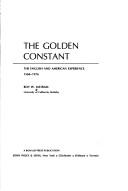
Roy Jastram assembled price data for England from 1560 and for the United States from 1800, and compared the purchasing power of gold with commodity price indices over those periods. The book is the foundational empirical study of gold as a store of value.
His finding, which gave the book its title, is that gold's purchasing power at the end of each long period was close to what it had been at the beginning. Between those points it varied substantially. What produced the long-run stability was a pattern he called the retrieval phenomenon: gold's purchasing power rose during deflations, when the nominal gold price was fixed and other prices fell, and fell during inflations, when the fixed gold price could not keep pace. Gold therefore protected purchasing power over centuries and failed to protect it during the inflationary episodes when holders most wanted protection.
Jastram's data covers periods when the gold price was officially fixed, which is the analysis's central limitation for a modern reader: the mechanism he identifies depends on that fixity. The book was published in 1977, shortly after gold began floating, and a later edition updated by Jill Leyland extends the series through the floating period, where the behaviour differs. The empirical work is careful and the finding that gold is a poor short-horizon inflation hedge and a good multi-century store of value has held up.
Key takeaways 7
- Gold's purchasing power at the end of each long period examined was close to what it had been centuries earlier.
- Gold's purchasing power rose during deflations and fell during inflations, which is the opposite of the common assumption.
- The mechanism producing this pattern depended on the nominal gold price being officially fixed, which no longer holds.
- Gold protected wealth over centuries and failed to protect it over the decades when inflation was actually occurring.
- Between the long endpoints, gold's real value varied substantially, so the constancy is a statement about very long horizons only.
- Jastram's data assembly for England from 1560 and the United States from 1800 is the study's principal contribution.
- Gold's behaviour under a floating price differs from the historical pattern the book documents, which limits direct application.
Who should read it
Investors considering gold as an inflation hedge or store of value who want the long-run empirical record rather than assertion.
Where it sits in the reference 2
Similar books 6
Chosen by shared topics, the entries that hold them, and the people who recommended both.