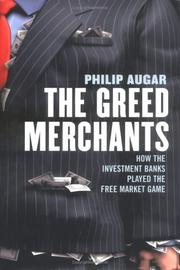
The Greed Merchants
How the integrated investment bank extracts its economics from clients.
Summary
Augar, a former head of equities at a British investment bank, argues that the global investment banking industry operates as an oligopoly that extracts economic rent from its clients, and that this is a structural feature rather than the result of individual misconduct.
The structural argument is that a small number of firms, which he calls the core, control the securities business globally, and that they enjoy advantages that prevent competition from eroding their returns: scale in distribution, information advantages from seeing order flow and client positions across many markets, the ability to bundle services so that clients cannot price components separately, and integration across advisory, underwriting, research, trading and principal investment, which creates conflicts that the firms manage rather than eliminate.
He examines the conflicts specifically. Research produced to win underwriting business. Underwriting priced to the issuer's disadvantage where the bank benefits from a first-day price rise it allocates to trading clients. Advisory recommendations that generate financing fees. Proprietary trading alongside client business. He notes that the settlements following the internet bubble addressed research but left the underlying integration intact.
His evidence is industry revenue and profitability data showing returns above what a competitive market would sustain, and the persistence of the same firms at the top over decades.
Augar writes from inside the industry as a critic, and his position is that the clients, meaning corporations and institutional investors, could change this by unbundling what they buy and by pricing services separately, but do not. The book is from 2005 and precedes the crisis, the subsequent regulation and the substantial decline in investment bank returns on equity. Some of what he describes has changed; the oligopolistic structure has not.
Key takeaways 7
- A small number of investment banks control the global securities business and earn returns above competitive levels.
- Seeing order flow and client positions across many markets gives these firms an information advantage clients cannot obtain.
- Bundling services prevents clients from pricing components separately, which is what sustains the pricing.
- Research written to win underwriting mandates was a structural consequence of integration, and settlements addressed the symptom.
- Underwriting priced to produce a first-day rise transfers value from the issuer to the bank's trading clients.
- Corporate and institutional clients could unbundle what they buy and price it separately, and their failure to do so sustains the structure.
- Integration across advisory, underwriting, trading and principal investment creates conflicts that firms manage rather than remove.
Who should read it
Corporate finance directors and institutional investors who buy investment banking services and want the structural case for how the industry's pricing works.
About Philip Augar
Former investment banker at Schroders and NatWest Markets who writes on the British investment banking industry.
The Death of Gentlemanly Capitalism explains why British merchant banks sold themselves to American and European buyers after Big Bang, and what their owners misjudged about the capital intensity of the business they were in. The Greed Merchants and The Bank That Lived a Little examine fee structures and client conflicts inside integrated investment banks, the second through Barclays' decision to buy Lehman's American operations.
Where it sits in the reference 3
Similar books 6
Chosen by shared topics, the entries that hold them, and the people who recommended both.