The Bank That Lived a Little
Barclays' thirty-year attempt to become a global investment bank.
Summary
Augar, a former investment banker who has written several books on the City of London, wrote a history of Barclays from the late 1980s to 2017, focusing on the recurring internal conflict over whether the bank should be a retail institution or a global investment bank.
The narrative is structured around that argument, which recurred under successive chief executives. Barclays de Zoete Wedd was assembled after the 1986 deregulation and performed poorly. Martin Taylor attempted to withdraw from investment banking in the 1990s and was forced out. Bob Diamond built Barclays Capital as a debt-focused business that avoided equities and advisory, grew it substantially, and bought Lehman's American operations out of bankruptcy in 2008, which transformed the bank's scale and profit mix. Diamond became chief executive and was then removed in 2012 after the LIBOR settlement, with pressure from the Bank of England.
Augar covers the 2008 capital raising from Qatari and Abu Dhabi investors, which allowed Barclays to avoid a British government rescue and which later produced criminal charges over undisclosed fees, and the subsequent attempts under Antony Jenkins and Jes Staley to resolve the same strategic question.
The argument Augar makes is that the conflict was never resolved because both positions had real support, and that the bank's culture and risk appetite followed from whoever held control at the time.
The book has extensive access to participants, which gives it detail and also gives the participants' framing. It is written for readers familiar with the City. Augar is more interested in the internal politics than in the underlying economics of investment banking, so readers wanting analysis of whether the strategy could have worked will find less than they want.
Key takeaways 7
- Barclays never resolved whether it should be a retail bank or a global investment bank, and the conflict recurred under every chief executive.
- Barclays Capital grew by concentrating on debt markets and avoiding equities and advisory, which was a deliberate choice not to compete everywhere.
- Buying Lehman's American business out of bankruptcy transformed the bank's scale and its profit composition in a single transaction.
- Raising capital from Gulf investors in 2008 avoided a British government rescue and later produced criminal proceedings over undisclosed fees.
- The Bank of England forced a chief executive's removal without any formal power to do so, which demonstrated where authority actually sat.
- An investment banking culture inside a retail bank produces conflicts over capital, risk appetite and pay that governance cannot settle.
- Strategic direction at a large bank followed from which internal faction held the chief executive position rather than from analysis.
Who should read it
Investors and operators in banking who want a detailed account of how strategic conflict inside a universal bank plays out over decades.
About Philip Augar
Former investment banker at Schroders and NatWest Markets who writes on the British investment banking industry.
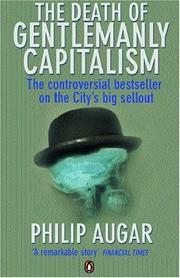
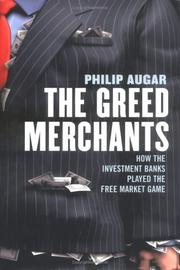
The Death of Gentlemanly Capitalism explains why British merchant banks sold themselves to American and European buyers after Big Bang, and what their owners misjudged about the capital intensity of the business they were in. The Greed Merchants and The Bank That Lived a Little examine fee structures and client conflicts inside integrated investment banks, the second through Barclays' decision to buy Lehman's American operations.
Where it sits in the reference 3
Similar books 6
Chosen by shared topics, the entries that hold them, and the people who recommended both.