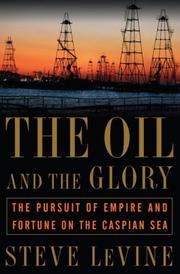
The Oil and the Glory
How Tengiz and Kashagan were negotiated; the best account of dealmaking in the region.
Summary
Steve LeVine covered Central Asia and the Caucasus for the Wall Street Journal and Newsweek, and wrote this history of the competition for Caspian Sea oil from the nineteenth century to the present.
The historical material covers Baku's first oil boom, the Nobel and Rothschild interests there, and the region's role in Soviet oil production. The main narrative concerns the period after 1991, when the Caspian states became independent and Western oil companies sought access to reserves that had been closed. LeVine covers the Tengiz field in Kazakhstan and Chevron's long negotiation for it, the Azerbaijani contract of the century in 1994, the Kashagan discovery and its enormous cost overruns, and the pipeline question.
The pipeline material is the political core. Landlocked Caspian oil must cross someone's territory, and the routing decision determined which countries gained transit revenue and leverage. LeVine covers the competition between the Russian route, the Iranian route that American sanctions foreclosed, and the Baku-Tbilisi-Ceyhan pipeline through Georgia to the Turkish Mediterranean coast that the United States promoted and that was eventually built. He covers the personalities including the intermediaries, the corruption allegations including the Giffen case involving payments to Kazakh officials, and the American policy interest. The book is journalism with extensive field reporting and is the standard account of the region's oil politics.
Key takeaways 7
- Landlocked Caspian oil requires crossing another country's territory, which makes pipeline routing the central political question.
- The Baku-Tbilisi-Ceyhan pipeline was built for political reasons, to avoid both Russian and Iranian territory, rather than on cost grounds.
- American sanctions on Iran foreclosed the shortest and cheapest export route from the Caspian.
- Kashagan's development cost overruns made it among the most expensive oil projects ever undertaken.
- Intermediaries with political access captured substantial value between the oil companies and the host governments.
- The Giffen prosecution documented payments to Kazakh officials and raised questions about what American policy had sanctioned.
- Caspian reserves proved smaller and more expensive to develop than the initial estimates that drove the competition for them.
Who should read it
Energy investors and analysts of resource politics who want the field-reported history of how Caspian oil access and transit were determined.
Where it sits in the reference 2
Similar books 6
Chosen by shared topics, the entries that hold them, and the people who recommended both.