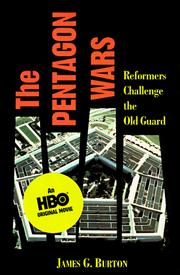
The Pentagon Wars
Insider account of the Bradley programme and operational testing.
Summary
James Burton was an Air Force colonel assigned to the Pentagon's testing office, and this is his account of the fight over live-fire testing of American combat vehicles, principally the Bradley Fighting Vehicle.
The substantive dispute concerned whether vehicles should be tested by firing real anti-armour weapons at them while loaded with fuel and ammunition, as they would be in combat. Burton argued that only such testing reveals what happens to crews. The Army resisted, and Burton documents the successive attempts to conduct tests with empty fuel tanks, with water instead of fuel, with ammunition removed, and with firing angles chosen to avoid vulnerable areas. When realistic tests were eventually conducted, they showed severe crew casualty risks from the aluminium armour and from stored ammunition, and design changes followed including spall liners and relocated ammunition storage.
The wider argument concerns the incentives in weapons procurement: programme offices are evaluated on delivering the programme, so testing that could delay or cancel it is treated as an attack. Burton also covers the requirement creep that turned the Bradley from a troop carrier into a vehicle attempting several incompatible roles. He was pushed toward early retirement as a result of the fight. The book is a participant's account with an evident position, and the events were dramatised in a 1998 film. The testing reforms it argued for were adopted in American law.
Key takeaways 7
- Live-fire testing with real fuel and ammunition reveals crew survivability risks that instrumented testing does not.
- The Army repeatedly configured tests to avoid conditions that would produce damaging results.
- Realistic testing showed severe crew casualty risks from the Bradley's aluminium armour and stored ammunition, and design changes followed.
- Programme offices are evaluated on delivering their programme, which makes testing that could delay it an institutional threat.
- Requirement creep turned the Bradley from a troop carrier into a vehicle attempting several incompatible roles at once.
- Burton was pushed toward early retirement for pursuing the testing, which he treats as the predictable institutional response.
- The testing reforms the book argued for were subsequently written into American law.
Who should read it
Readers interested in procurement incentives and in how organisations resist testing that could invalidate their programmes.
Where it sits in the reference 2
Similar books 6
Chosen by shared topics, the entries that hold them, and the people who recommended both.