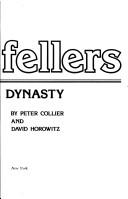
The Rockefellers: An American Dynasty
The family and trusts that outlived the operating company.
Summary
Peter Collier and David Horowitz wrote this history of four generations of the Rockefeller family, from John D. Rockefeller through his son, the five brothers of the third generation, and the cousins of the fourth.
The book combines business history with family history. It covers the building of Standard Oil, John D. Junior's management of the fortune and his philanthropy, and the careers of the third generation: Nelson as governor of New York and vice president, David at Chase Manhattan, John D. III in philanthropy and population work, Laurance in conservation and venture investing, and Winthrop in Arkansas. The authors cover the institutions the family built, including the Rockefeller Foundation, Rockefeller University, the Museum of Modern Art and Rockefeller Center, and the management of the fortune through the family office.
The fourth generation material is the book's distinctive content. Collier and Horowitz interviewed the cousins extensively, and much of the book concerns their difficulty with the inheritance, their political dissent from the family's positions during the 1960s and 1970s, and the family meetings at which they confronted their fathers. The authors were writing from the political left at the time, and the book's framing of dynastic wealth reflects that, though both later moved to the right. It is narrative rather than analytical and remains the standard family history.
Key takeaways 7
- John D. Junior's principal work was converting an accumulated fortune into institutions and repairing the family's public reputation.
- The family office managing the fortune functioned as an institution with its own staff, interests and continuity across generations.
- Third generation members took positions in government, banking, philanthropy and conservation rather than in a single family business.
- Fourth generation members interviewed by the authors described the inheritance principally as a burden and a constraint.
- Philanthropic institutions the family created acquired independent lives and eventually diverged from family control.
- The authors wrote from the political left and the framing of dynastic wealth reflects that position.
- Concentrated family wealth requires deliberate institutional structures to survive generational dispersion, and the family built them explicitly.
Who should read it
Readers interested in how a large fortune is institutionalised across generations and in the position of the heirs who inherit it.
Where it sits in the reference 2
Similar books 6
Chosen by shared topics, the entries that hold them, and the people who recommended both.