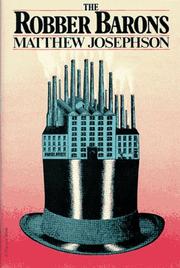
The Robber Barons
The framing of Rockefeller's generation that shaped US policy.
Summary
Josephson wrote this in 1934, at the depth of the Depression, and it fixed the popular American image of the nineteenth-century industrialists. It covers Vanderbilt, Gould, Fisk, Drew, Carnegie, Rockefeller, Morgan, Harriman and Frick, from the Civil War through the consolidation era.
The argument is that these fortunes were built by financial manipulation, political corruption, rate discrimination, watered stock and the deliberate destruction of competitors rather than by productive innovation. Josephson documents the Erie war, the Credit Mobilier scandal, the railroad rate rebates that let Standard Oil destroy rivals, the Homestead strike, and the corner attempts and stock manipulations of the period. He treats the resulting industrial consolidation as expropriation and connects it directly to the concentration of wealth that he saw producing the Depression.
The book has been contested for ninety years. Business historians including Chandler and Alfred Sloan's biographers argue that Josephson underweights the genuine organisational and technical achievement of the period, particularly the productivity gains from integrated railroads and from Rockefeller's refining efficiency, and that his sources are frequently muckraking journalism rather than records. Josephson was a literary figure writing with an explicit political purpose, and the term robber baron itself is his contribution to the language. It remains worth reading because it is the origin of the critical account, because the specific corruption it documents did happen, and because it shows how a period of consolidation looks from the losing side.
Key takeaways 7
- The great nineteenth-century American fortunes were built substantially through stock manipulation, political purchase and rate discrimination rather than through operating innovation.
- Railroad rebates and drawbacks gave Standard Oil a cost advantage that no rival refiner could match regardless of operating efficiency.
- Control of a railroad was primarily a financial position rather than an operating one, and the securities were manipulated independently of the underlying business.
- Legislative bodies at state and federal level were routinely purchased, and the cost of doing so was a normal business expense in the period.
- Industrial consolidation eliminated the competition that the consolidators had used to acquire their positions.
- The concentration of wealth produced in the consolidation era created the structural conditions Josephson blamed for the Depression.
- Philanthropy by the industrialists functioned as reputational repair undertaken after the fortunes were secure.
Who should read it
Readers who want the founding critical account of American industrial consolidation, understood as argument from a particular moment rather than settled history.
Where it sits in the reference 4
Who recommended it 1
Similar books 6
Chosen by shared topics, the entries that hold them, and the people who recommended both.