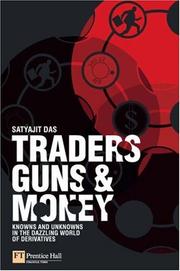
Traders, Guns and Money
Structured products and the client side of the derivatives trade.
Summary
Satyajit Das spent decades in derivatives trading and structuring, and this book is his account of how the business actually works, written with sustained irony.
The substantive content concerns the relationship between dealers and clients. Das explains that the money in structured products comes from selling complexity to counterparties who cannot value what they are buying, and he works through specific structures showing where the margin sits and how it is concealed within terms the client cannot price. He covers the products that produced client losses, including the leveraged interest rate structures sold to corporates and municipalities, currency products sold to Asian corporates before 1997, and the credit structures of the 2000s. He is direct that the dealer's advantage is informational and that the sales process is designed to prevent the client from acquiring the information.
He also covers the internal life of a dealing operation: the relationship between traders, salespeople, structurers and risk managers; the way risk models are used and gamed; the compensation structure and what it selects for; and the specific episodes including Procter and Gamble's losses at Bankers Trust, the Orange County bankruptcy, and Long-Term Capital Management. The tone is comic and some readers find it grating. The technical content is accurate and it is one of the few books that explains where derivatives revenue actually comes from.
Key takeaways 7
- Structured product margin comes from selling complexity to counterparties who cannot value what they are buying.
- The dealer's advantage is informational, and the sales process is designed to prevent the client from acquiring the information.
- Margin is concealed within terms the client cannot price separately, which is why the products are structured rather than simple.
- Risk models inside dealing operations are used and gamed by the people whose positions they measure.
- Compensation structures select for people who generate reported profit rather than for people who understand the risk.
- Client losses at Procter and Gamble, Orange County and elsewhere followed the same pattern of buying complexity that could not be valued.
- Das argues that the industry's technical vocabulary functions to exclude the client from the conversation about price.
Who should read it
Anyone buying structured products or working in a dealing operation who wants an honest account of where derivatives revenue comes from.
Where it sits in the reference 2
Similar books 6
Chosen by shared topics, the entries that hold them, and the people who recommended both.