True Professionalism
The follow-on: what sustains a firm whose assets go home at night.
Summary
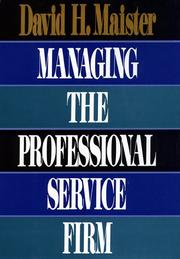
David Maister consulted to professional service firms for decades and wrote this collection of essays on what distinguishes genuinely professional practice from competent commercial delivery.
His central distinction is between a professional and a technician: both may be equally skilled, but the professional cares about the client's outcome and the technician performs the work. Maister argues that this difference is visible to clients, determines whether relationships endure, and cannot be produced by incentive systems, since it depends on what the individual actually wants.
The essays cover several levels. On the individual, he addresses career management, the choice of what work to pursue, the discipline of specialising, and what he calls the trusted adviser relationship, in which the client brings problems before they are defined rather than after. On client relationships, he covers the difference between doing the work and managing the relationship, the economics of client retention against acquisition, and the practice of investing unbilled time in clients. On firm management, he covers partner compensation and what different systems produce, the tension between short-term profitability and long-term capability, the management of underperformers, and the argument that most firms say they value quality while measuring and paying for utilisation. The book is essays rather than a system and is repetitive. It is the standard reference in professional services and its arguments about compensation and about what firms actually measure are the most useful.
Key takeaways 7
- A professional cares about the client's outcome while a technician performs the work, and clients can tell the difference.
- Firms state that they value quality and long-term relationships while measuring and paying for billable utilisation.
- Partner compensation systems determine behaviour more than any stated strategy or value statement does.
- The trusted adviser relationship is one in which clients bring problems before they are defined, and it is worth more than any project.
- Client retention economics dominate acquisition economics in professional services, which most firms manage backward.
- Investing unbilled time in a client relationship is the mechanism by which the adviser position is earned.
- Maister argues that caring about the outcome cannot be produced by incentives, because it depends on what the individual actually wants.
Who should read it
Partners and managers in professional service firms who want the standard treatment of what distinguishes advisory practice from technical delivery.
Where it sits in the reference 2
Similar books 6
Chosen by shared topics, the entries that hold them, and the people who recommended both.