Wheels for the World
Company-authorized centennial history with archive access.
Summary
Brinkley, a historian, wrote a full-length history of the Ford Motor Company from its founding in 1903 to the end of the twentieth century, commissioned around the company's centennial and drawing on the Ford archives.
The early sections cover the technical and organisational innovations: the Model T, the moving assembly line at Highland Park, the five dollar day introduced in 1914 and its effect on turnover and on the labour market, and the River Rouge complex built for complete vertical integration from ore and rubber to finished vehicle. Brinkley documents both the productivity gains and the costs, including the Sociological Department that inspected workers' private lives as a condition of the higher wage.
The middle sections are harsher. Henry Ford's refusal to replace the Model T cost the company its lead to General Motors, which offered model variety, annual changes and instalment credit. Ford's antisemitic publishing through the Dearborn Independent, his admiration in Germany, his violent resistance to unionisation through Harry Bennett's Service Department, and his refusal to relinquish control as he declined are all covered. The company was near collapse when Henry Ford II took over in 1945 and brought in the Whiz Kids, including Robert McNamara, to install modern financial control.
The later sections cover the postwar recovery, the Mustang, the Pinto, the 1980s Taurus and the quality problems, and the family's continued control through the dual-class share structure.
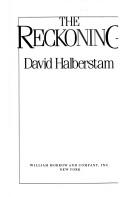
The book is long, narrative rather than analytical, and its use of company archives produces a somewhat institutional perspective. Readers wanting a sharper analysis of Ford's decline against Japanese competition should read Halberstam's The Reckoning.
Key takeaways 7
- The moving assembly line cut Model T assembly time by an order of magnitude and made the low price possible rather than following from it.
- The five dollar day was introduced to reduce ruinous labour turnover, and it succeeded on that measure before it became a public relations asset.
- The higher wage came with intrusive inspection of workers' private conduct as a condition of eligibility.
- Complete vertical integration at River Rouge produced control over inputs but also fixed costs that punished the company in downturns.
- Ford lost market leadership to General Motors because he refused model variety and instalment credit, not because of manufacturing cost.
- Henry Ford's personal control extended past his competence, and the company had no functioning financial system by 1945.
- The dual-class share structure has preserved family control through every subsequent crisis.
Who should read it
Operators and investors who want the full institutional history of Ford, including how a manufacturing cost advantage failed to protect market position.
Where it sits in the reference 2
Who recommended it 1
Similar books 6
Chosen by shared topics, the entries that hold them, and the people who recommended both.