Updates

  1. 137 new fund letters and reports, each with its own page: Kayne Anderson Rudnick (48 market briefings, KayneCast episodes and TV commentaries), Shelton Capital Management (48 shareholder reports and a commentary), Lakehouse Capital (10 Small Companies Fund letters), Smead (5 newsletters), RIT Capital Partners (5 monthly commentaries), Kovitz, Legal & General, Generation, Hosking, Marram, Munro, Oldfield and others.
  2. 200 new fund letters and reports, each with its own page: Spheria (41 monthly reports), Peapack Private (41 weekly recaps and planning newsletters), Fort Washington (23), Polen Capital (15), Aristotle Pacific (14), Riverwater (13), Chou (10), Apollo Asia Fund (8, back to 1998), Personal Asset Trust, Rockwood Strategic, J Capital Research, I/O Fund, Penn Davis McFarland, Pomona and others.
  3. Investor pages have one Investments tab with shares, changes, % owned, class, market cap and Market cap and Status filters, a Funds tab listing each fund the firm runs, and assets under management from Form ADV. The Investors table shows AUM and current investments, and its search finds investors by what they hold.
  4. Filters, search and sort stay as you left them when you come back to a section. Person cards look like book cards. Company pages name their Investors tab Ownership. Kind and Sector filters use four kinds and GICS sectors with industries. Dead links left the Links tabs.
  5. 190 more investors from fiscal.ai's list, with their sites, letters, partners and 13F holdings; 556 more partner descriptions. Experts now lists only people.
  6. Fund letters lists 144 new documents from 23 firms, each with its own page: a summary, key insights and quotes. Among them: 37 BlackRock articles, 21 Value Partners monthly notes, eight Baron Capital letters, six Stone Sentinel letters to partners, seven Value Line portfolio manager Q&As, BNY's 2026 earnings releases and Starboard Value's 2026 conference presentations.
  7. 584 more investors, with their websites, 6,776 letters from their own sites, 1,385 partners with pages and the 13F holdings of 213 firms. New letters arrive daily from 290 more archives.
  8. Media and Companies filter by GICS sector and industry group, taken from the companies an episode or page names. 1,860 more company pages show a logo, the SEC's list included.
  9. The home page counts what the platform holds and lists features such as the document reader, the player and saved marks. Settings sits at the foot of the rail. Book cards are a quarter wider, so rows hold fewer. Companies drops the Named in filter, and the Role list in your account runs A to Z.
  10. Investor pages of 13 firms show their newsroom's latest posts. New 13F filings are read as the SEC publishes them.
  11. Investor pages have an Investments tab: 13,975 holdings for 105 investors, from their 13F filings with the SEC and their own portfolio pages, with status and sector. 7,338 more companies have a page of their own.
  12. A podcast or YouTube episode keeps playing while you move around the site, in a bar with skip, speed and volume. Media tables show each episode's length and description.
  13. Press releases come from each company's own newsroom (167 companies); SEC filings sit on the Filings tab. Tickers name their exchange, and a company's Experts tab includes guests whose episode description names it.
  14. Letter types now include Market commentary, Fact sheet, Interim report, Annual report, Proxy circular and Governance document. The reader opens over the whole window.
  15. Partners of investment firms have 2,836 appearances and 580 pieces of writing on their pages; Derek Sivers's page lists every book he rates, with his rating.
  16. Fund letters lists three Akre Focus shareholder reports: the ETF's annual report for the year to July 2026, its semi-annual report to January 2026 and the fund's semi-annual report to January 2025, each with its own page: a summary, key insights and quotes.
  17. 837 partners of 73 investment firms now have their own pages, with title, description, photograph and social accounts; Andreessen Horowitz partners' pages also list their writing on a16z.com.
  18. Company pages have a Press releases tab: 8,229 releases for 203 companies, from SEC filings and company newsrooms. Companies filter by For-profit or Non-profit. Own media is a table with filters. Media filters by sector and industry. Publication pages link their publisher in the description.
  19. The Unilever page's Letters tab shows what each fund letter says about Unilever, word for word with its page, and whether the letter is bullish, bearish, mixed or neutral. Filter by sentiment, and see 10 letters at a time.
  20. 492 more fund letters and 3,183 more articles show the day they were published, read from each letter's first page or each article's own page.
  21. The PDF reader has a search box: type words to see every match in the document and step through them. About 540 letters that were web pages, among them Oakmark's commentaries, Bill Miller's letters and Howard Marks's memos, now open in the reader.
  22. Person pages: recommendations open with tier 1 books; one button per organisation; transcripts sit on their episodes; the books on 129 reading lists joined the Recommends tabs.
  23. Companies lists every company with a ticker on the SEC's list, with a Source filter. A quote on a company page opens the letter at that page with the words marked. A company's Media tab lists only episodes that name it, and a new Own media tab lists its podcasts, publications and YouTube channel. Show pages link their publisher. A page opened from a table no longer shows that table's filters beside it.
  24. Company, investor and person pages show more of their social accounts: Facebook, TikTok, Bluesky, Medium, GitHub, Discord and podcast shows. Investor pages list every partner the firm's own team page names: 965 people across 73 investors, 98 for Andreessen Horowitz.
  25. About 170 more letters and papers open in the reader: Mohnish Pabrai's letters and transcripts from his site's new folder, and free copies of papers by Asness, Harvey, Altman, Lo and others from their own or their schools' sites.
  26. Every company a fund letter names has a page, with the letters and quotes that name it: 47 new pages, among them Atom Computing, Hugging Face, Rolls-Royce Holdings and Westinghouse Electric. Company pages have a Quotes tab.
  27. A person's Writing tab has a Type column and filter (Article, Essay, Transcript, Speech, Foreword, Interview and the rest), and Publication names only the publication that published each piece.
  28. Fund letters opens on the newest published letter, and a letter or paper found by search opens its own page here instead of the publisher's site.
  29. A letter or paper with a copy on the site opens its PDF over its page, with a button to open it in a new tab. Select text to highlight or underline it; signed-in readers keep their marks in their account. Each quote opens the PDF at its page with its words marked, and a Source link leads to the publisher's original.
  30. Fund letters lists 61 more documents, each with its own page: Fairfax's 2025 and 2026 interim reports, proxy circulars and 2025 annual report (with their French editions), 26 Charlie Munger meeting transcripts, talks and essays, Third Point's 2026 monthly reports and Malibu Life's interim results, and a Seth Klarman interview. Papers adds Richard Thaler's two 2020 editorials on nudges.
  31. Fund letters lists Lux Capital's letters for Q2 and Q3 2026, by Josh Wolfe, each with its own page: a summary, key insights and quotes.
  32. Fund letters lists Brookfield's letter to shareholders for Q3 2026, by Bruce Flatt, with its own page: a summary, key insights and quotes.
  33. Fund letters lists Howard Marks's memo of 11 November 2026, A Layman Thinks About AI, with its own page: a summary, key insights and quotes.
  34. Fund letters lists 118 more letters, each with its own page: 44 weekly commentaries by Jeremy Siegel from 2026, 31 issues of Van Tharp's newsletter from 2018, 23 Pabrai Investment Funds letters from 2021 to Q3 2026, 13 Efficient Frontier essays by William Bernstein, Oakmark's three 3Q 2026 commentaries, two Lindsell Train reports, a John Hussman comment and Third Point's Q3 2026 letter.
  35. 2,027 more books carry a one-line description in the Books table and on their pages; 7,067 of 7,715 have one, every tier 1, 2 and 3 book among them.
  36. Fund letters lists 187 more letters from 19 firms, among them Permanent Equity, Social Capital, Lux Capital, Square Peg, Bestinver, Cobas, Sequoia Fund, Marketfield and EquityCompass; each shows on its investor's page and has a page of its own.
  37. 2,928 more books carry a one-line description in the Books table and on their pages, so every tier 1, 2 and 3 book has one; 5,040 in all.
  38. Every publication on Newsletters has its own page: its writing, its writers, its staff and who recommends it. Investor pages have a Management tab; a company's Experts tab now leaves out its own people, who list under Management. Tabs on a phone move sideways only.
  39. Every fund letter and research paper has its own page: the thesis, the PDF, the companies and books it names, and for 176 letters and 24 papers so far a summary, key insights and quotes with their page.
  40. 99 books that no page listed now sit under their topics in Books, among them Caste, American Prometheus and Pale Blue Dot.
  41. Newsletters lists every newspaper, magazine, investment newsletter, journal and blog the reference holds, 442 in all, with the people who write there. The search box keeps your last 20 searches. You can create an account.
  42. 283 books that fund managers recommend in their letters are on the shelf, each with the letter's own words and page; investor pages have a Recommends tab.
  43. Person, company, investor and show pages link their own accounts on X, Threads, Instagram, LinkedIn, YouTube and Substack: 275 people, 552 companies and organisations, 88 investors and 478 shows.
  44. 716 more book recommendations name their source: the person's own reading list, letter, blog post, speech or interview, or an article that reports it. 232 of them quote the person's own words about the book, on the book card and on the book's page.
  45. Every US-listed company has a page with its SEC filings. Company pages list their experts and their management, past and present. Fund managers sit under Investors. Each show has a page of its episodes, and an episode page names its guests and hosts. Biographies lists groups, then people. Breadcrumbs show where a page sits.
  46. Media lists every podcast episode, video, interview and talk, over 10,000, by person, company, publisher and event; each filter searches its own choices. Books opens on its table, then Browse, then Authors and Recommenders. A filter's count no longer covers its arrow.
  47. A book that no company, country or subject page lists shows its topics under Where it sits in the reference. On a phone, a page's tabs scroll sideways only. Descriptions read the same on every page. See them in the Experts tab lists every expert the page names.
  48. Every podcast episode, video and interview has its own page with a video or audio player and a link to the source. Investor pages show each company's sector and market cap; firms such as Berkshire Hathaway have one page that holds their letters and their company tabs. Letters tabs filter by company and search the theses. Companies filter by Public, Private and Defunct and link each company's website.
  49. Every tab, view and search has its own address, such as /books/table/asset or /letters/companies, so Back works and a link opens the same place. Page addresses no longer end in .html. Fund letters, Investors, Companies and Papers load about a fifth of the data they did.
  50. Fund letters has a Companies tab: every company the letters name, with its market cap, sector, country, and how many letters and investors name it. Investor pages link each investor's website. Lists in table cells end with “… and N more” at every width.
  51. 1,120 more book summaries; descriptions for 373 papers; pages for 137 more companies, each with the fund letters that discuss it; 215 official photographs; search has its own page.
  52. 411 more books have a summary; person pages list 930 more of the books they wrote; 147 people show their official photograph.
  53. Every investor has a page with its letters and the companies they discuss; company pages list the investors whose letters name them.
  54. A Companies section at the top of the rail lists every company the books, experts and fund letters name.
  55. Person pages list letters, writing, profiles and links as sortable tables with filters, and show each person's companies as links; Fund letters show each letter's description in its own column.
  56. Experts show a checked job title and a short description of each person; 30 more people have photographs.
  57. Every company, fund, university and publication the experts work for has a page listing the people there.
  58. Fund letters show each letter's thesis and filter by it; 225 person pages list the essays, columns and newsletter issues the person wrote.
  59. Person pages list every essay and newsletter issue a person wrote, and their own books as a table in List view.
  60. Recommends shows the five largest kinds of book and the rest under More; browse pictures load sooner.
  61. Podcasts and talks link the original episode, filter by Audio and video or Press, and list each publisher once.
  62. Pages are wider, Recommends has List and Grid, and a filter clicked again turns off.
  63. Book cards sit in a ruled grid with Open Library and Goodreads links and each book's one-line note.
  64. Funds is now Investors; each investor's styles are buttons that filter the table.
  65. Podcasts and talks on a person's page filter by year and publisher and show as a list or a grid of pictures.
  66. Quotes show only people's own words: 472 summaries written by list sites are gone.
  67. Country pages open from Browse again, and every link on the shelf lands on a page.
  68. Subject and person pages show their sections as tabs, and each book appears once on a person's page.
  69. Book cards show the quote, who said it and the source; grids show five cards to a row.
  70. On a phone, a menu holds the sections, search, Updates, Feedback and dark mode.
  71. Feedback takes a screenshot of the page with no browser prompt, opens a screenshot full size when you click it, and clears itself once sent.
  72. Book cards are centred, search names the topic each book sits in, and any text cut short shows whole on hover.
  73. Search groups its results by kind: people, companies, geographies, subjects, topics, books, funds, fund letters and papers.
  74. The Books table lists who recommended each book by name, and the browser tab names the section you are in.
  75. Feedback can take a screenshot of the page, or one you paste or choose, and opens in the corner beside Updates.
  76. Each rail button reopens its section where you left it, and Browse, Table and People show on every book and subject page.
  77. Filters grey out choices that hold nothing instead of hiding them, and Books › People filters by authors or recommenders.
  78. Feedback takes a subject line and up to three screenshots.
  79. Biographies are grouped by the person they are about: 41 new pages, from Abraham Lincoln to Lee Kuan Yew.
  80. Sport splits into 23 sports, and Religion into one topic per faith.
  81. Book lists show as cards: the cover, one recommendation quote and every recommender by name.
  82. Seventeen subjects that had two or three pages under different names now have one page each.
  83. Every page lists its Experts as authors and recommenders, with a link to them on the Experts tab.
  84. Economics, Financial history, Financial panics and Accounting are subjects of their own, with one page per financial crisis.
  85. Book, person and subject pages open inside the app, so the tabs stay in view.
  86. 996 more book covers, and photographs or logos for 227 more people and companies.
  87. Books › Browse shows every subject as cards, and the rail holds Fund letters, Papers, Experts, Books and Funds.
  88. Every topic over 150 books splits into narrower topics, each with a page of its own.

Send feedback

What is it?
Screenshots, up to 3 (optional)
or paste one with Ctrl+V

We use your email only to reply to you.

T

Podcast · 15 episodes in the reference, 2017 to 2026

Times Tech

Published by The Sunday Times

Host
WMWill Morley

Episodes
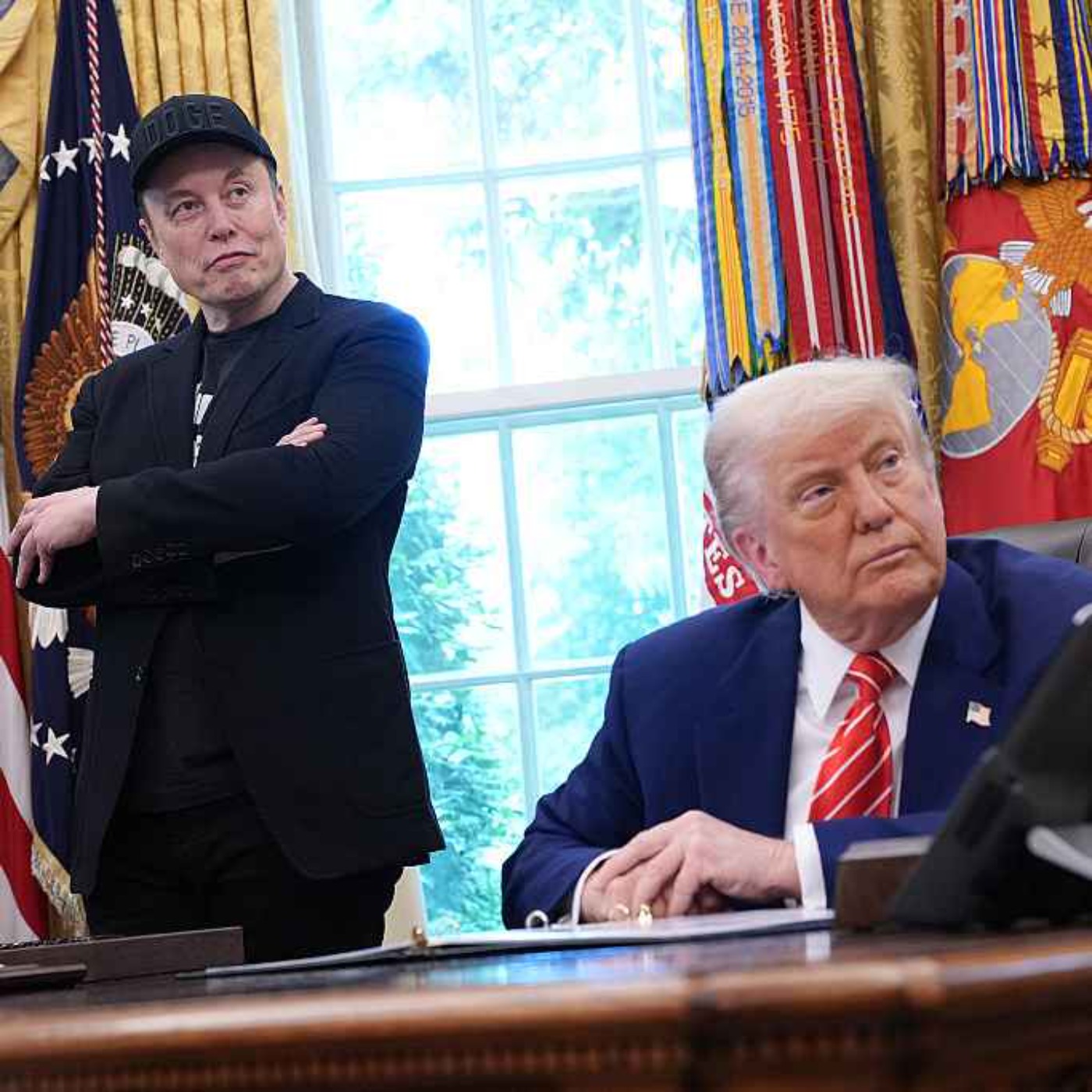
PayPal’s Max Levchin on Donald Trump, Elon Musk and mega-IPOsMax Levchin2 July 202646 minAffirm CEO, PayPal co-founder, original member of the 'PayPal Mafia' Max Levchin joins Danny Fortson and Katie Prescott to talk about moral moneylending, Elon Musk, mega-IPOs and why there are so many tech bosses in Washington. As he puts it – “If you’re not at the table, you’re on the menu.” Meanwhile, Anthropic has announced that Claude Fable 5 will be released again globally after the Trump administration's ban. Plus, Danny and Katie discuss the latest trend in Silicon Valley - the rise of voice AI and the death of the keyboard. Is it hot air or if we are really in a new era of "yapping, rather than tapping"? On that note, Norman, Katie's AI agent, finally (and terrifyingly), has a voice. Would you swap your keyboard for voice-to-text software? Get in touch: techpod@thetimes.co.uk Watch on YouTube Read more: Is it time to say goodbye to the keyboard? Producer: Marnie Duke Executive Producer: Priyanka Deladia Video Producer: Bronwen Latham Image: Getty Hosted on Acast. See acast.com/privacy for more information.
With Marc Benioff, CEO of SalesforceMarc Benioff21 February 202544 minMarc Benioff, CEO of Salesforce & owner of Time Magazine explains his vision of the future of work. Plus he talks President Trump, Elon Musk and has a pop at Microsoft's AI too. Hosted on Acast. See acast.com/privacy for more information.
Satya Nadella, Microsoft's Chairman and Chief ExecutiveSatya Nadella25 October 202453 minSatya Nadella is only the third boss in the tech giant's 50 year history, but he has pivoted Microsoft towards accelerating technology, and forging partnerships with leading companies including OpenAI. On a whistle-stop AI tour of the world and in his only UK interview this year - this exclusive conversation with Satya Nadella covers the dangers, pitfalls and growth of AI. What better time to sit down with the Microsoft supremo than almost two years after the public launch of ChatGPT? He tells Katie that his major worry is that nations miss the opportunity to take advantage of AI and technological innovation for economic growth "ultimately the benefits of it being much more broad spread are, I think... the real dream." Hosted on Acast. See acast.com/privacy for more information.
Obvious Ventures’ Andrew Beebe: “Do stuff that matters”Andrew Beebe11 November 2022The Sunday Times’ tech correspondent Danny Fortson brings on Andrew Beebe, to talk about “world positive” investing (4:00), the dotcom boom (5:30), zeroing in on climate years ago (10:10), how a cold call to Google worked (12:10), how he met Twitter founder Ev Williams (16:00), investing in the downturn (19:10), screening for world positive companies (23:45), how he coaches founders (28:20), climate tech whiplash and why this time is different (32:000), and his worst day of work (40:30). Hosted on Acast. See acast.com/privacy for more information.
Antonio Garcia Martinez: "Silicon Valley's necessary delusions"Antonio García Martínez23 July 20211:04The Sunday Times’ tech correspondent Danny Fortson brings on Antonio Garcia Martinez, to talk about his winding career in tech and media (3:25), living in the woods (7:25), his Facebook memoir (11:00), criticizing tech but also defending it (15:55), landing a gig at Apple and then getting fired (20:10), the Silicon Valley culture wars (23:25), launching a newsletter (30:25), the breakdown of the media business model (37:45), the tectonic plates shifting in the ad world (42:20), the privacy push (45:20), Apple and Google tightening their grip on the web (49:05), whether we should care (55:00), and living in Reno (58:30). Hosted on Acast. See acast.com/privacy for more information.
Tim O'Reilly: "Silicon Valley: turning idealists into monopolists"Tim O’Reilly26 March 202149 minThe Sunday Times’ tech correspondent brings on Tim O’Reilly to talk about the end of Silicon Valley as we know it (3:30), how the markets were designed to give us monopolies (6:30), his history in tech (90), incentives (10:30), the coming crash (17:00), the tech industry’s changing culture (23:15), how venture investors now pick the winners (26:15), on whether Silicon Valley can do deep tech (29:15), the antitrust backlash (38:20), how the industry is moving away from its ideals (38:35), how that tax code powers the bubble (40:55), and the next opportunities (45:00). Get The Times and The Sunday Times for a BIG discount by clicking here: times.co.uk/dannyinthevalley Hosted on Acast. See acast.com/privacy for more information.
Varda’s Delian Asparouhov: “The space gold rush”Delian Asparouhov19 February 202146 minThe Sunday Times’ tech correspondent brings on Delian Asparouhov, founder of Varda Industries, to talk about manufacturing in space (3:00), the collapse in launch costs (6:45), SpaceX’s Starship (8:55), coming to America from Bulgaria (11:30), the math Olympiad (12:20), his previous tech jobs (14:55), founder dating (17:45), building space factories (24:20), the ‘coming down’ challenge (26:05), setting a 2-year timeline (29:20), the pitch to investors (30:50), what else can be made in microgravity (34:05), and what you can do in two days in space (41:20). Get The Times free for a month: https://app.times.radio/dannyinthevalley Hosted on Acast. See acast.com/privacy for more information.
Tim O'Reilly: "The landlords of the Internet"Tim O’Reilly4 December 202047 minThe Sunday Times’ tech correspondent Danny Fortson brings on Tim O’Reilly, founder of O’Reilly Media and prominent tech commentator, to talk about algorithmic rent (0:00), the Facebook case (5:15), how tech companies quietly changed the terms of engagement (7:40), getting investment from Pierre Omidyar (12:40), how his work got started on algorithmic rent (13:20), monitoring Big Tech’s behaviour change (16:15), Facebook’s rents (23:35), the importance of framing a problem (26:00), how to protect our 'tenants’ rights' (29:40), building a case (36:00), getting inspiration from Microsoft (37:40), and the toxicity of the Big Tech debate (41:20). Hosted on Acast. See acast.com/privacy for more information.
Mmhmm's Phil Libin: "Hospital clowns to investment bankers”Phil Libin30 October 202053 minThe Sunday Times’ tech correspondent Danny Fortson brings on Phil Libin, founder of Mmhmm, to talk about fasting (3:35), starting the company (5:00), what it does (9:15), the end of the social media ice age (13:20), a trillion dollar shift (17:00), why he’s not worried about rivals copying him (24:30), who uses it (27:00), how he came up with the name (30:45), what goes wrong at startups (34:20), what skydiving taught him (39:35), the new hybrid world (43:30), and why he plans to leave San Francisco (46:30). Hosted on Acast. See acast.com/privacy for more information.
Five questions with.... Andreessen Horowitz's Angela StrangeAngela Strange31 May 2019The Sunday Times’ tech correspondent Danny Fortson brings on Angela Strange, partner at Andreessen Horowitz, to answer five questions on the future of finance: 1. What do Internet keywords tell us about the power of finance (3:00). 2. How will insurance be transformed in ten years’ time? (5:45) 3. Why is it expensive to be poor? (15:50) 4. Is Silicon Valley starting companies to capitalise on the impending recession (24:20) 5. Is there more opportunity in the developing world, where it is largely free of legacy businesses? (26:30) Hosted on Acast. See acast.com/privacy for more information.
Lambda School's Austen Allred: "Go to university - if you can pay for it in cash"Austen Allred4 October 201843 minThe Sunday Times’ tech correspondent brings on Austen Allred, founder of Lambda School, to talk about how he moved to Silicon Valley and lived in his car (2:50), getting his first job (5:05), his first failed startup (6:05), trying to kill payday loans (9:05), landing on his current startup idea of offering free university in exchange for a cut of students’ income (9:50), the education problem (11:50), going to Y Combinator (113:50), expanding the model into other industries (15:00), soaring university costs (17:35), the reasons behind it (21:30), why education has been overlooked as a target for disruption (23:00), the cultural role of university (24:25), how he chooses students (27:45), how universities have responded (29:35), raising venture capital (31:10), the importance of Twitter as a marketing tool (31:40), betting all of his money on Tesla (34:40), finding professors for his school (38:05), and his plans to offer free room and board as well (39:35). Hosted on Acast. See acast.com/privacy for more information.
Stripe's Patrick Collison: "I'm petrified of getting too confident"Patrick Collison2 March 201842 minThe Sunday Times’ tech correspondent Danny Fortson brings on Patrick Collison, founder of $9bn payments startup Stripe to talk about building the financial plumbing of the Internet (2:45), why the web is just getting started (5:05), treating the big and small the same (8:45), the problem with ads (12:00), the origin of the name ‘Stripe’ (13:25), growing up in a village (14:45), trying to not be too “Silicon Valley” (18:35), going from 40 to 1000 people in four years (21:30), hiring adults (23:45), avoiding complacency (25:45), arriving in America (27:20), first mover disadvantage (30:15), America’s stagnant banking market (20:10), dissonance between Silicon Valley’s image and reality (32:00), the future of money (35:10), his worst day of work (37:55), and learning to fly (39:10). Hosted on Acast. See acast.com/privacy for more information.
Tim O'Reilly: "It's our brains that are being hacked"Tim O’Reilly26 January 201840 minThe Sunday Times tech correspondent Danny Fortson brings on Tim O’Reilly, oracle of the tech industry, to talk about why 2017 may go down as a watershed year (3:00), how Facebook is like Microsoft (4:25), what’s wrong with tech’s “master algorithm” (7:15), exploding the myth of the rise of the machines (9:50), the era of surveillance (12:25), the danger of bad laws (15:20), creating the world’s first website and formalising the open-source movement (17:40), coining the term “Web 2.0” (19:35), what World War II can tell us about tech (21:50), the need to rebuild society as we know it (24:35), why we may need to get rid of advertising altogether (25:25), why he doesn’t buy the blockchain hype (28:00), why the marriage of AI and biotech is the next big revolution (31:00), the beginning of the end of the Internet duopoly (31:55), data as the point of control (36:00), and why the 21st will be China’s (37:00). Hosted on Acast. See acast.com/privacy for more information.
Twitter co-founder Ev Williams: “You’re selling attention”Ev Williams30 September 201737 minThe Sunday Times’ tech correspondent Danny Fortson brings on Ev Williams, chief executive of online publisher Medium and Twitter co-founder, to talk about upping Twitter’s character limit (2:20), the dark side of the Internet (3:40), the power of the web in politics (6:00), starting four companies (7:15), the idea behind Medium (9:35), the problem with the ad-based web (11:30), pivoting (13:15), putting up a paywall (14:55), cat videos vs investigative journalism (16:40), his new “pay-for-claps” model (19:10), the broken media (20:00), why it’s so hard to make money from content online (24:00), Twitter’s problem with “trolls” (27:50), and anonymity (29:00), Silicon Valley’s awakening (30:55), and his worst day of work (34:30). Hosted on Acast. See acast.com/privacy for more information.
Evernote founder Phil Libin: “I sold my first company for $500”Phil Libin16 July 201738 minThe Sunday Times tech correspondent Danny Fortson brings on Phil Libin, founder of Evernote, one of the first companies to be labelled a “unicorn”, to talk about his plan to create the Netflix of artificial intelligence (1:00), growing up poor (3:30), selling his first company at 16 (6:00), starting another after September 11 (9:45), creating Evernote (11:00), being one of the first apps in the App Store (13:45), getting funding from fanboys (17:00), being saved by a random Swede (19:30), the downside of the hype cycle (21:30), leaving Evernote (24:30), becoming a venture capitalist (25:45), his worst day at work (29:30), bureaucracy robots (32:45), and building something for yourself (36:00). Hosted on Acast. See acast.com/privacy for more information.