 Y
Podcast · 22 episodes in the reference, 2017 to 2026
Y Combinator Startup Podcast
Published by Y Combinator
Episodes
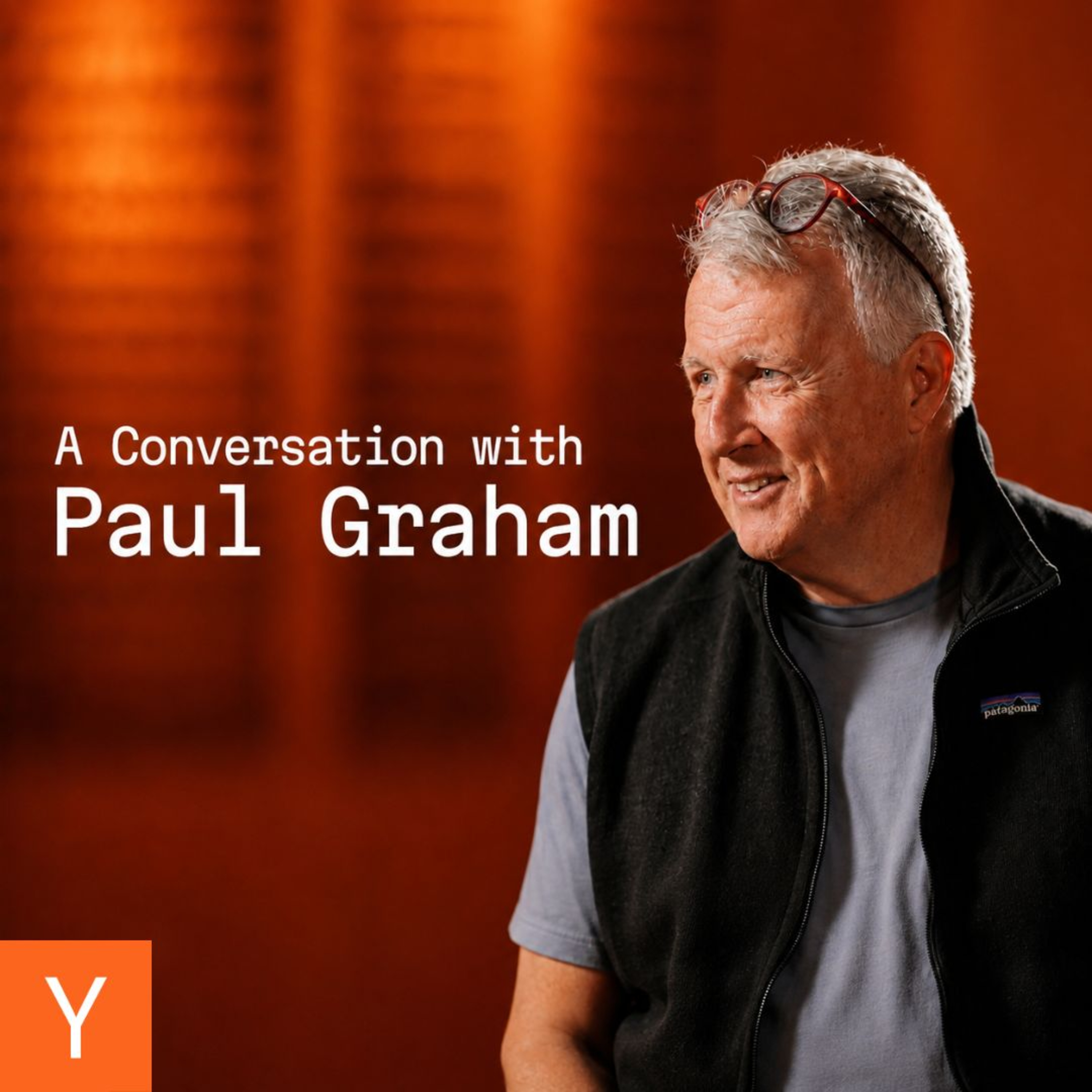 Paul Graham On Startups, Ambition, and Great Founders | Paul Graham | 5 September 2026 | 21 min | YC Visiting Partner Vivian Shen sits down with Paul Graham at the original YC office in Mountain View to talk about startups, AI, ambition, and what makes great founders. |
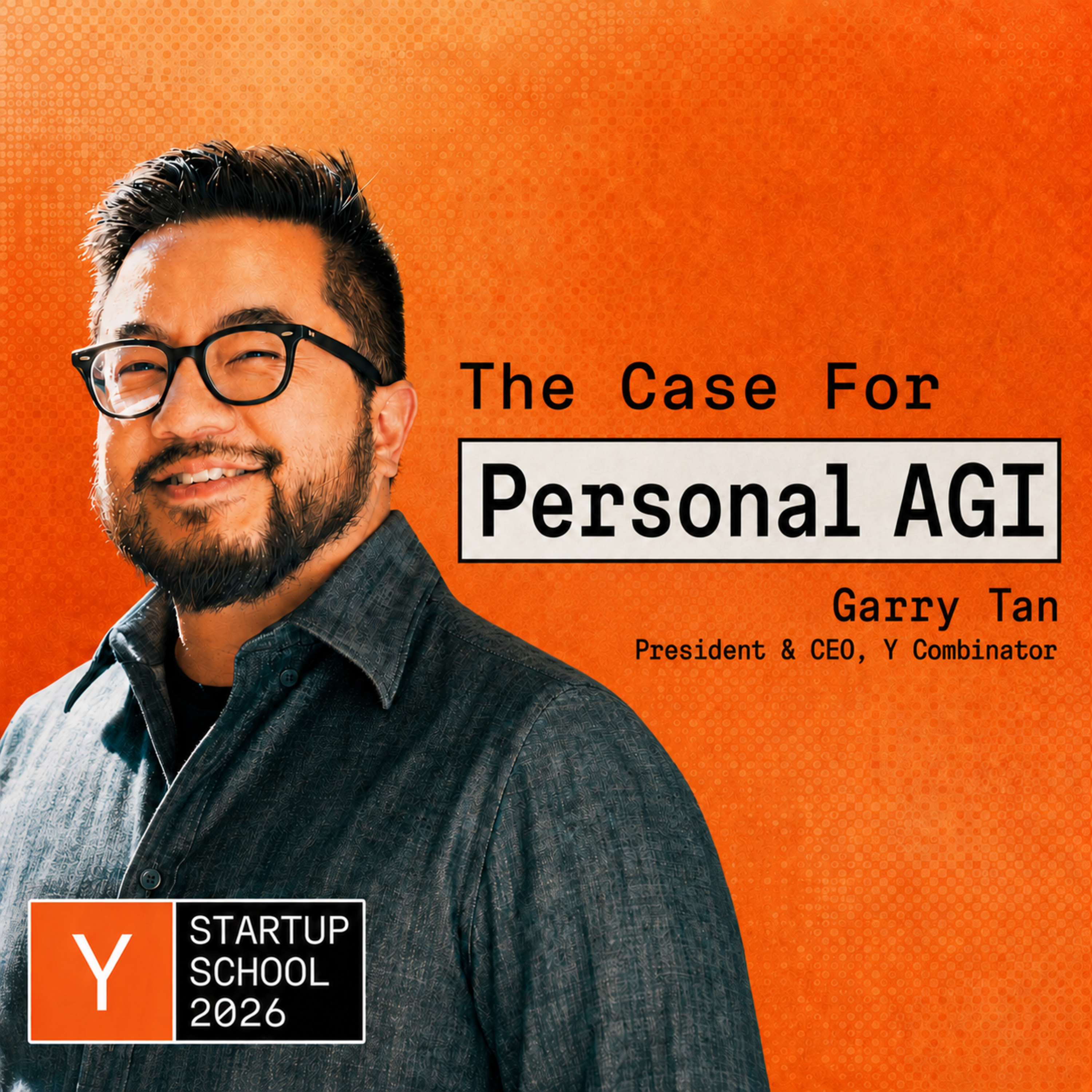 Garry Tan: Own Your Intelligence | Garry Tan | 6 August 2026 | 42 min | The next generation of startups will be built by smaller teams than ever before. At Startup School 2026, YC President & CEO Garry Tan explains why we're entering the era of personal AGI: AI agents that run on your own infrastructure, compound your knowledge over time, and dramatically increase your ability to build. He shares the tools and workflows he uses every day, why every founder should own their intelligence instead of renting it, and what it means to build under your own power. Transcript: https://www.ycrootaccess.com/p/garry-tan-own-your-intelligence |
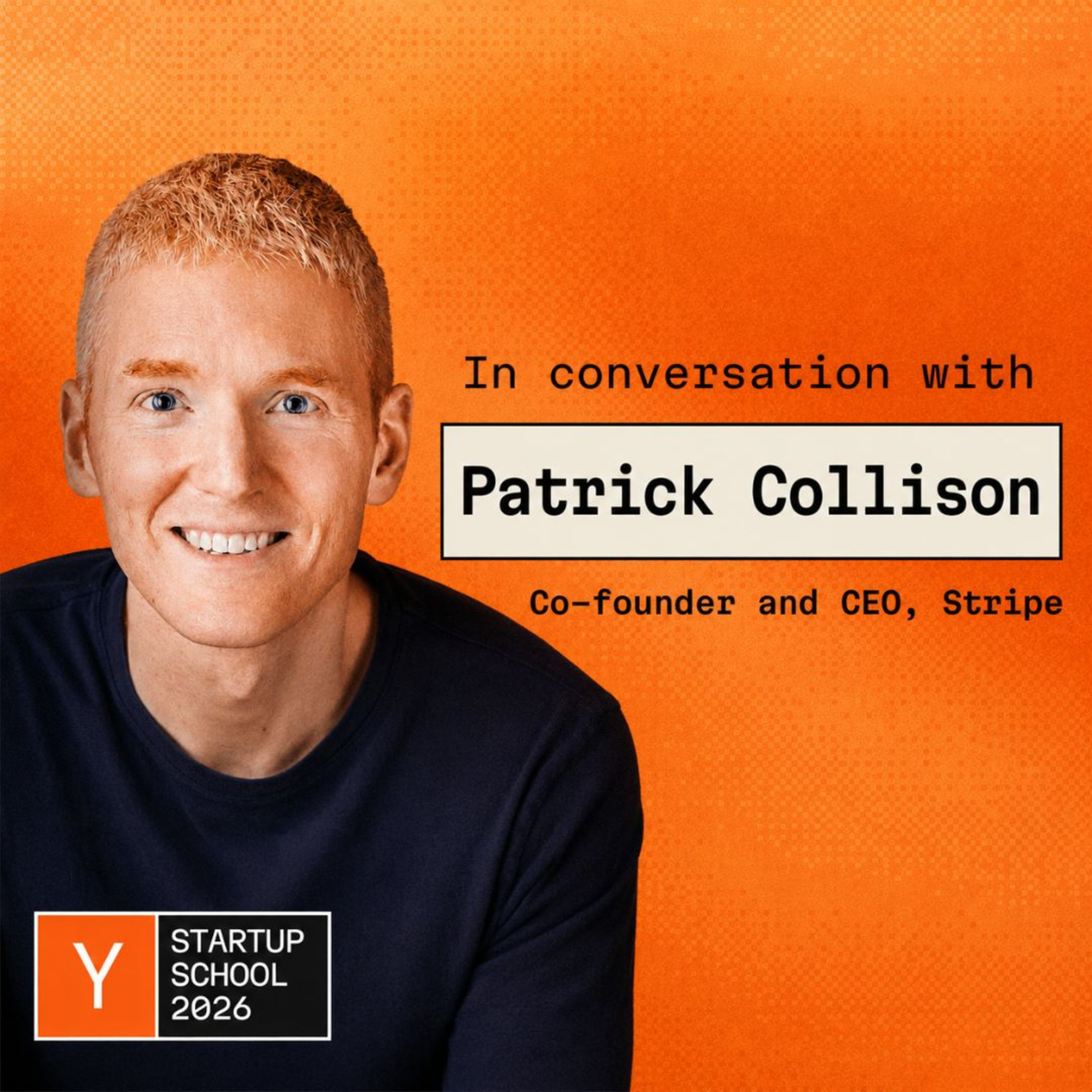 Patrick Collison: Is AI Breaking the Lean Startup Playbook? | Patrick Collison | 3 August 2026 | 31 min | In 2009, Patrick and John Collison went to Startup School in Berkeley, got sushi in Potrero Hill afterward, and decided on the walk home to start Stripe. The reasoning, as Patrick remembers it, was that “we might as well because it probably won't be that hard.” It took two years to launch. Seventeen years later, at Startup School 2026, he talks with YC's Harj Taggar about dropping out of MIT twice, why founders should ask what happens if they succeed, and what Stripe's own data says about the best time to start a company. |
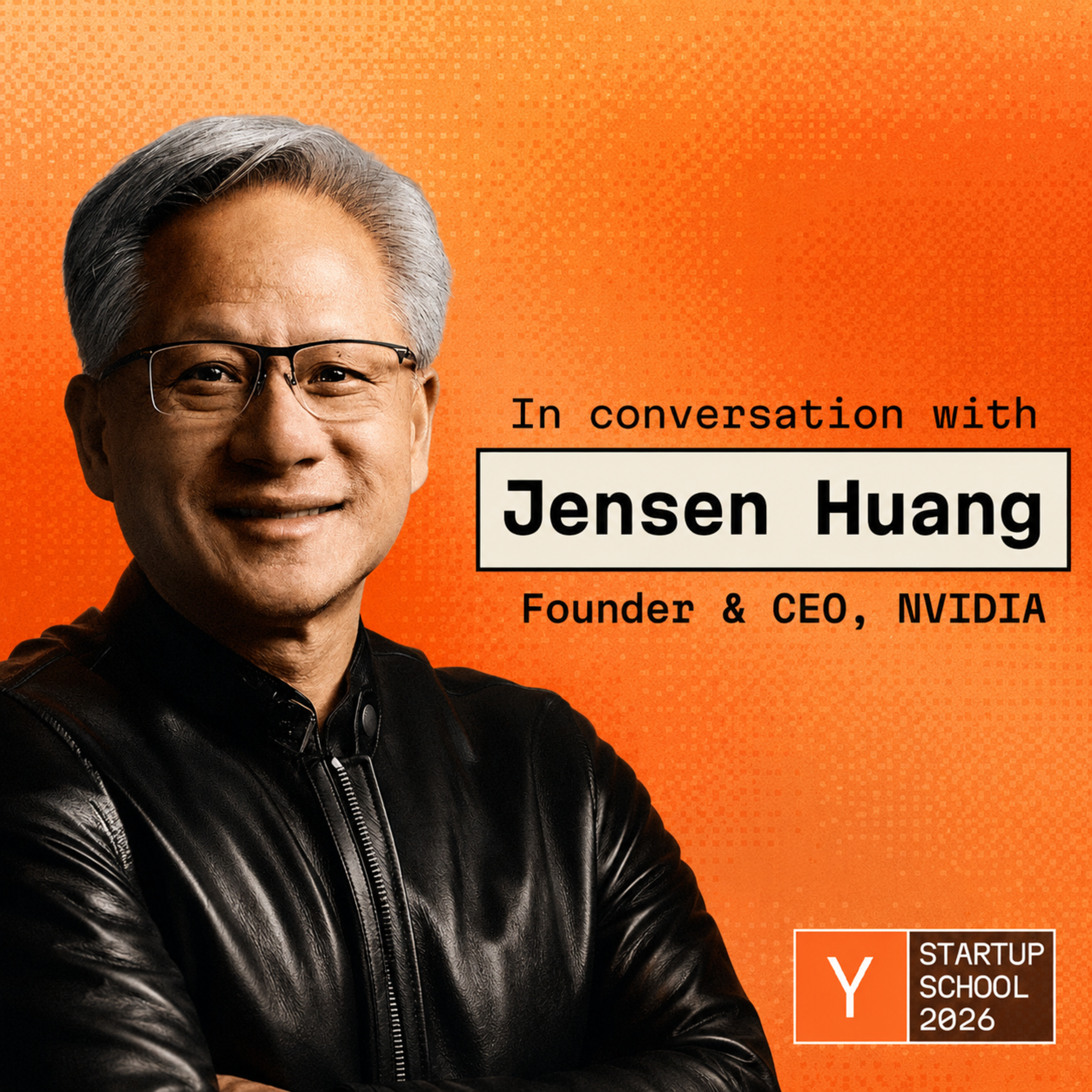 Jensen Huang: The Mindset That Built NVIDIA | Jensen Huang | 27 July 2026 | 49 min | NVIDIA started with the wrong technology, learned the right one from three textbooks bought at Fry’s, and went on to invent most of the major breakthroughs in modern computing.At Startup School 2026 at Chase Center, Garry Tan sits down with Founder and CEO Jensen Huang to talk about confronting reality, learning your way into new domains, and why resilience — getting through one day at a time — matters more than anything else. |
| Why Domain Experts Are Winning In The Age Of AI | Bryant Chou | 19 June 2026 | 43 min | Bryant Chou co-founded Webflow, which today powers around 1% of all websites on the internet. Now he's back in the current YC batch with Ploy, an AI-powered website and marketing platform that doesn't just build your site — it connects to your analytics, CRM, and search console to optimize your marketing while you sleep. In this episode of the Lightcone he explains how he built Ploy to be “anti slop,” how building today compares to his first startup, and why founders with domain expertise are making a comeback.Chapters:00:00 — What Experience Gives You in the Age of AI00:38 — Meet Bryant Chou, Co-Founder of Webflow01:22 — His New Startup Ploy02:47 — Rebuilding the Posterous website From 200803:27 — Rebuilding the Scribd website From 200705:04 — Rebuilding the Auctomatic website From 200706:19 — Rebuilding the Escher Reality website From 201707:11 — 12% of the YC Batch Uses Ploy08:26 — The D&D Theory of Founder Skills10:05 — Democratizing Marketing and Growth10:50 — Live Demo: The Design Slurper13:21 — Your Website Should Work for You While You Sleep14:26 — Integrations, Analytics, and the Marketing Brain17:27 — Ploy's Anti-Slop Engine: 3,500 Curated Design Prompts20:05 — The Andy Warhol Theory of AI22:35 — Webflow Origin Story24:26 — Building in a Competitive Market Then vs. Now26:01 — First Three Months: Webflow 2013 vs. |
 Aaron Levie: Why Startups Win In The AI Era | Aaron Levie | 16 September 2025 | 40 min | For nearly two decades, Box co-founder and CEO Aaron Levie has been at the frontlines of how technology reshapes work—guiding the company through the rise of mobile, the cloud, and now the age of AI.In his fireside with YC General Partner David Lieb at AI Startup School, Aaron reflects on what it means to adapt a company over the long term, the hard lessons of staying relevant across multiple technology waves, and why he believes AI represents the most transformative shift yet. |
 #144 - Startup School Week 3 Recap - Anu Hariharan and Adora Cheung | Anu Hariharan | 18 September 2019 | 45 min | We've cut down the third week of lectures to be even shorter and combined them into one podcast. First, a lecture from Anu Hariharan . Anu is a partner at YC. Her lecture covers nine common startup business models and the metrics investors want to see for each. Then, a Q&A with Anu and Adora Cheung . Adora is also at partner at YC. During their Q&A they’ll answer questions from Startup School Founders on how investors evaluate startups. Y Combinator invests a small amount of money ($150k) in a large number of startups (recently 200), twice a year. Learn more about YC and apply for funding here: https://www.ycombinator.com/apply/ *** Topics 00:00 - Intro 00:39 - Anu Hariharan on Nine Business Models and the Metrics Investors Want 1:44 - Enterprise 4:09 - SAAS 8:55 - Subscription 11:33 - Transactional 14:44 - Marketplace 19:04 - E-commerce 21:14 - Advertising 23:12 - Hardware 23:44 - Common mistakes 25:35 - Anu Hariharan and Adora Cheung on How Investors Measure Startups Q&A 26:07 - Team, product market fit, and market opportunity 27:10 - What if the founder doesn't have experience in the are in which they're building a product? 28:19 - How do investors know you're moving fast? 29:40 - Local vs remote 30:40 - Evaluating solo founders 31:45 - Clarity of thought 33:35 - International founders 35:17 - Solo founders 36:21 - Should I fundraise? 38:33 - How does an investor evaluate a company with a heavy MVP? 39:36 - How do you avoid investors who say "it's too early for us"? |
 #136 - Anu Hariharan on Managing a Board | Anu Hariharan | 24 July 2019 | 35 min | Anu Hariharan is a partner at YC. Today’s episode is about her recent post, How To Manage a Board . You can find her on Twitter @anuhariharan . If you’re interested in doing Startup School this year, signups are open at StartupSchool.org . The course just started and the deadline to sign up is August 4th. Select companies who complete the course will also receive 15,000 dollars in equity-free funding. The YC podcast is hosted by Craig Cannon . Y Combinator invests a small amount of money ($150k) in a large number of startups (recently 200), twice a year. Learn more about YC and apply for funding here: https://www.ycombinator.com/apply/ *** Topics 00:00 - Intro 00:57 - Why Anu wrote How to Manage a Board 2:27 - Board composition 4:27 - Adding independent board members 6:27 - The responsibilities of a board member 9:12 - Productive board meetings 12:52 - Sharing materials before the meeting 13:42 - Bringing executives into the meeting 16:57 - Dealing with board conflict 18:22 - Following up after a board meeting 21:12 - Dealing with difficult board members 23:57 - Reality distortion 24:52 - Agustin Feuerhake asks - What does it take to be a great board member? 27:22 - Dave Bailey asks - To what extent should the board culture reflect the company culture? 29:42 - Connor Abene asks - How do you think about adding board members who haven't worked in your industry but you think are good? |
 A CS Education That's Free Until You Get a Job - Austen Allred of Lambda School | Austen Allred | 3 April 2019 | 1:01 | Austen Allred is the CEO and cofounder of Lambda School . Lambda School provides a CS education that's free until you get a job. They were in the Summer 2017 batch of YC. You can learn more about Lambda School at lambdaschool.com . Austen is on Twitter at @austen . The YC podcast is hosted by Craig Cannon . *** Topics 00:00 - Intro 1:01 - Encouraging people to do something that they're scared to do 5:16 - Where did the insight for Lambda School come from? 6:26 - College vs developer schools 10:26 - Building a network 12:16 - Does Austen see value in a traditional liberal arts education? 14:56 - Steven Klaiber-Noble asks - As competitors begin to copy your model what front do you believe you'll be competing on? 17:56 - Why did Austen choose to raise money? 20:06 - Fundraising falling through on Austen's first startup 21:36 - Moving back to Utah and writing a book about growth 23:26 - Why Austen wrote a book 26:26 - "Starting a company is by definition saying, I think what I can do is worth more than what other people will pay me for." 27:26 - Mispriced human capital 30:21 - Other opportunities for Lambda School 32:46 - Modeling risk 35:36 - David Kofoed Wind asks - When Lambda School is incentivized to take in people that will land high paying jobs, how do you think about the diversity of candidates? One would imagine that it quickly becomes a game of pattern matching the stereotypical SV people. 37:51 - Will Lambda School ever not be remote? |
 #113 - Caterina Fake and Kat Manalac | Caterina Fake | 21 February 2019 | 58 min | Caterina Fake hosts the podcast Should This Exist? which is about how technology is impacting our humanity. It launches today on iTunes . She also cofounded Flickr, Hunch, and Findery and is an investor at Yes VC . Kat Manalac is a partner at YC. You can find Caterina on Twitter at @Caterina and Kat at @KatManalac . The YC podcast is hosted by Craig Cannon . *** Topics 00:32 - Caterina's new podcast, Should This Exist? 2:32 - Is there a process for considering if something should exist? 4:02 - Who should be part of these conversations? 5:17 - Wait But Why and the Human Colossus 7:22 - Episode 1 of Should This Exist? 10:17 - Having conversations before things exist 11:42 - How might employees think about their role in whether or not something should exist? 14:32 - Caterina reflecting on her creations and if they should exist 19:02 - Considering whether things should exist as investors 23:32 - Cofounder charter - What you will and won't do 26:03 - Questioning the VC model 27:22 - Working on Wall St, feeling herself change, and quitting 31:22 - Caterina as a student 34:02 - Peculiarity and entrepreneurship 35:22 - "Don't fight to win prizes that aren't worth winning" 38:32 - What was once fringe is now mainstream 40:52 - Kat looking up to Lea Salonga 42:42 - Evgeny asks - How did she get her first 100 paying users? 49:27 - How does she advise founders to find investors? 54:47 - What questions should founders ask themselves while making something? |
 Vinod Khosla : How to Build the Future | Vinod Khosla | 9 January 2019 | 35 min | Vinod Khosla is the founder of Khosla Ventures , a firm focused on assisting entrepreneurs to build impactful new energy and technology companies. Previously he was the founding CEO of Sun Microsystems, where he pioneered open systems and commercial RISC processors. How to Build the Future is hosted by Sam Altman . *** Topics 00:30 - Vinod’s intro 01:20 - A zero-million-dollar company vs a zero-billion-dollar company 4:20 - What percentage of investors in Silicon Valley are good long-term company builders? 4:50 - Who has earned the right to advise an entrepreneur? 6:50 - Which risk to take when 7:20 - Helpful board members 8:15 - Who to trust for what advice 11:00 - First principles thinking and rate of change 13:00 - Evaluating a candidate in an interview 14:15 - How much should a founder have planned and how ambitious should a founder be? 16:30 - Recruiting great people 19:00 - Building a phenomenal early team 20:20 - Being generous with early employee equity 27:00 - Gene pool engineering 27:18 - The art, science, and labor of recruiting 28:20 - How founders should think about investors 31:00 - Doers vs pontificators 32:00 - What does Vinod want to do in the next ten years? 32:10 - Reinventing Societal Infrastructure with Technology |
 #99 - Laura Deming | Laura Deming | 23 October 2018 | 1:10 | Laura Deming is a partner at The Longevity Fund . They invest in companies that will allow us to live longer and healthier lives. You can learn more about them at Longevity.vc . Laura’s on Twitter @LauraDeming . The YC podcast is hosted by Craig Cannon . *** Topics 00:22 - Why focus on longevity now? 2:12 - How did Laura get started in longevity? 3:22 - Why raise a fund? 5:52 - What does Laura do personally for longevity? 9:07 - Worm and mouse studies 10:44 - Craig's personal habits 12:37 - Human studies 15:22 - Mica asks - Do you think immortality is going to be achieved by: 1. Curing all disease and stop aging so we could live with our own bodies forever 2. OR is going to be something like porting our brain, "mind" to a computer/robot? 17:37 - Most likely strategies to increase lifespan 19:47 - Ryan Hoover asks - Ask about the ethics of longevity. Jack J. Fernandes asks - Do people actually want to live longer? 21:44 - Mica asks - How would immortality change society? Wouldn't we become more complacent? Since we have "forever" to do things wouldn't that diminish our rate of innovation? And since less new individuals are being created we would have access to less new ideas. We would just stop creating new Newtons, Einsteins, Mozarts… 24:52 - Cognitive enhancement 25:52 - Daily habits 34:12 - Tech environment changes in the past 5-10 years 39:22 - What percentage of people in labs want to start companies? |
 Anne Wojcicki : How to Build the Future | Anne Wojcicki | 13 April 2018 | 29 min | Anne Wojcicki is the cofounder and CEO of 23andMe , which provides direct-to-consumer genetic testing. Sam Altman is the president of YC Group. He interviewed Anne for a series called How To Build The Future, which you can check out on our YouTube channel . |
 #50 - Growth Office Hours with Anu Hariharan and Gustaf Alstromer | Anu Hariharan | 1 December 2017 | 33 min | Anu Hariharan and Gustaf Alstromer are Partners at YC. This episode is a follow-up to Anu's Growth Guide . The YC podcast is hosted by Craig Cannon . |
 Communicate with Users, Build Something They Want - Ryan Hoover of Product Hunt | Ryan Hoover | 4 October 2017 | 49 min | Ryan Hoover is the founder of Product Hunt . Get a 10% discount on Ship pro plans by using this link . |
 Don't Start a Blog, Start a Cult - Mr. Money Mustache | Mr. Money Mustache | 27 September 2017 | 53 min | Pete Adeney, more commonly known as Mr. Money Mustache , retired at 30 after working as a software engineer for about ten years. He blogs at MrMoneyMustache.com about how he saved money, where he invested it, and how he achieved "financial freedom through badassity". You can apply to the W18 batch of YC here - ycombinator.com/apply |
 Phil Libin at Startup School 2013 | Phil Libin | 23 August 2017 | 29 min | Phil Libin is the cofounder and CEO of All Turtles. Prior to that he was the CEO of Evernote. This is his 2013 Startup School talk. Watch the video here . Read the transcript here . |
 #24 - Padmasree Warrior on Designing Autonomous Vehicles - With Anu Hariharan at the Female Founders Conference | Anu Hariharan | 9 August 2017 | 22 min | Padmasree Warrior is the CEO of NIO . Anu Hariharan is a Partner at YC Continuity. |
 VMware Cofounder Diane Greene with Jessica Livingston at the Female Founders Conference | Jessica Livingston | 4 August 2017 | 25 min | Diane Greene is SVP of Google Cloud and she was also the CEO and cofounder of VMware. Jessica Livingston is cofounder of YC. |
 #17 - Aileen Lee and Kirsty Nathoo at the Female Founders Conference | Aileen Lee | 12 July 2017 | 27 min | Aileen Lee is the founder of Cowboy Ventures. Kirsty Nathoo is CFO and a Partner at Y Combinator. |
 Jessica Livingston : How to Build the Future | Jessica Livingston | 31 May 2017 | 37 min | Sam Altman interviews Jessica Livingston for a series called How To Build The Future, which you can watch on YC’s YouTube channel: https://youtube.com/ycombinator . Read the transcript here: https://blog.ycombinator.com/jessica-livingston-on-htfbt/ |
 #2 - Network Effects with Anu Hariharan | Anu Hariharan | 15 May 2017 | 35 min | Anu Hariharan is a Partner at YC Continuity (https://www.ycombinator.com/continuity) which is an investment fund dedicated to supporting founders as they scale their companies. Read the transcript here (http://blog.ycombinator.com/anu-hariharan-on-network-effects/). |
YPaul Graham On Startups, Ambition, and Great FoundersPaul Graham · 5 September 2026YGarry Tan: Own Your IntelligenceGarry Tan · 6 August 2026YPatrick Collison: Is AI Breaking the Lean Startup Playbook?Patrick Collison · 3 August 2026YJensen Huang: The Mindset That Built NVIDIAJensen Huang · 27 July 2026YWhy Domain Experts Are Winning In The Age Of AIBryant Chou · 19 June 2026YAaron Levie: Why Startups Win In The AI EraAaron Levie · 16 September 2025Y#144 - Startup School Week 3 Recap - Anu Hariharan and Adora CheungAnu Hariharan · 18 September 2019Y#136 - Anu Hariharan on Managing a BoardAnu Hariharan · 24 July 2019YA CS Education That's Free Until You Get a Job - Austen Allred of Lambda SchoolAusten Allred · 3 April 2019Y#113 - Caterina Fake and Kat ManalacCaterina Fake · 21 February 2019YVinod Khosla : How to Build the FutureVinod Khosla · 9 January 2019Y#99 - Laura DemingLaura Deming · 23 October 2018YAnne Wojcicki : How to Build the FutureAnne Wojcicki · 13 April 2018Y#50 - Growth Office Hours with Anu Hariharan and Gustaf AlstromerAnu Hariharan · 1 December 2017YCommunicate with Users, Build Something They Want - Ryan Hoover of Product HuntRyan Hoover · 4 October 2017YDon't Start a Blog, Start a Cult - Mr. Money MustacheMr. Money Mustache · 27 September 2017YPhil Libin at Startup School 2013Phil Libin · 23 August 2017Y#24 - Padmasree Warrior on Designing Autonomous Vehicles - With Anu Hariharan at the Female Founders ConferenceAnu Hariharan · 9 August 2017YVMware Cofounder Diane Greene with Jessica Livingston at the Female Founders ConferenceJessica Livingston · 4 August 2017Y#17 - Aileen Lee and Kirsty Nathoo at the Female Founders ConferenceAileen Lee · 12 July 2017YJessica Livingston : How to Build the FutureJessica Livingston · 31 May 2017Y#2 - Network Effects with Anu HariharanAnu Hariharan · 15 May 2017