A Colossal Failure of Common Sense
Lehman Brothers' fall seen from its trading floor, and the warnings it ignored.
Insider account by a former Lehman convertible bond trader.
Summary
McDonald traded distressed debt and convertible bonds at Lehman Brothers and wrote this account with Patrick Robinson after the firm's bankruptcy.
The substantive argument concerns internal risk warnings. McDonald reports that traders in his part of the firm identified the deterioration in mortgage credit during 2005 and 2006, positioned against subprime exposure where they could, and attempted to communicate the analysis upward. He argues that the firm's leadership, particularly Richard Fuld and Joseph Gregory, was insulated by layers of management, dismissed the warnings, removed risk officers who raised them, and continued increasing the firm's commercial real estate and mortgage exposure through 2007 while competitors were reducing theirs. The Archstone acquisition in 2007 is his central example of a decision taken after the evidence was available.
The structural material covers Lehman's leverage, its dependence on short-term repurchase agreement funding, and the concentration of illiquid assets against that funding, which is what made the firm unable to survive a loss of confidence.
The book combines this with memoir: McDonald's route into the industry, the trading floor culture, and the personalities.
It is one participant's account written shortly after the events and it is self-serving in the ordinary way, presenting the author's group as having been right and ignored. The technical claims about the firm's positions cannot be verified from the book. The Valukas bankruptcy examiner's report is the authoritative source on Lehman's condition and on the Repo 105 transactions that McDonald does not cover. Read this for the internal experience of a firm whose leadership stopped receiving information, and go to the examiner's report for what actually happened to the balance sheet.
Key takeaways 7
- Traders inside Lehman identified deteriorating mortgage credit in 2005 and 2006 and could not get the analysis to the firm's leadership.
- Layers of management between the trading floor and the executive committee filtered out information that contradicted the strategy.
- Risk officers who raised objections were removed, which taught everyone else what raising objections would cost.
- The firm increased commercial real estate and mortgage exposure through 2007 while competitors were reducing theirs.
- Dependence on short-term repurchase agreement funding against illiquid assets is what made a loss of confidence immediately fatal.
- The Archstone acquisition was completed after the evidence of a property downturn was available internally.
- A single participant's account written after the event presents his own group as having been right, which readers should discount.
Who should read it
Risk managers and executives who want an account of how information failed to travel upward inside a firm that had it.
Similar books 6
Chosen by shared topics, the entries that hold them, and the people who recommended both.
Lehman Brothers' failure traced through how it valued its assets, Repo 105 included.
A Lehman ETF trader's memoir of the trading floor and his own mental illness.
Lehman Brothers' internal culture and the relationships among its top executives.
Evidence that the Fed could legally have saved Lehman Brothers in 2008.
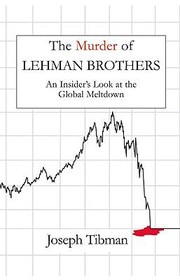
An insider's account of the forces that led to Lehman's collapse and what followed.
Inside the meetings of bankers and regulators during the 2008 financial crisis.
“I thought Too Big to Fail was terrific, and Sorkin's newest book is just as thoroughly researched as his last one.” — Bill Gates
Source: My summer best list for 2026 — Gates Notes
Recommended by: Bill Gates, Mohnish Pabrai, Seth Klarman and 2 others
Where it sits in the reference 2
Topics 3
As an Amazon Associate I earn from qualifying purchases.