Updates

  1. Person pages list letters, writing, profiles and links as sortable tables with filters, and show each person's companies as links; Fund letters show each letter's description in its own column.
  2. Experts show a checked job title and a short description of each person; 30 more people have photographs.
  3. Every company, fund, university and publication the experts work for has a page listing the people there.
  4. Fund letters show each letter's thesis and filter by it; 225 person pages list the essays, columns and newsletter issues the person wrote.
  5. Person pages list every essay and newsletter issue a person wrote, and their own books as a table in List view.
  6. Recommends shows the five largest kinds of book and the rest under More; browse pictures load sooner.
  7. Podcasts and talks link the original episode, filter by Audio and video or Press, and list each publisher once.
  8. Pages are wider, Recommends has List and Grid, and a filter clicked again turns off.
  9. Book cards sit in a ruled grid with Open Library and Goodreads links and each book's one-line note.
  10. Funds is now Investors; each investor's styles are buttons that filter the table.
  11. Podcasts and talks on a person's page filter by year and publisher and show as a list or a grid of pictures.
  12. Quotes show only people's own words: 472 summaries written by list sites are gone.
  13. Country pages open from Browse again, and every link on the shelf lands on a page.
  14. Subject and person pages show their sections as tabs, and each book appears once on a person's page.
  15. Book cards show the quote, who said it and the source; grids show five cards to a row.
  16. On a phone, a menu holds the sections, search, Updates, Feedback and dark mode.
  17. Feedback takes a screenshot of the page with no browser prompt, opens a screenshot full size when you click it, and clears itself once sent.
  18. Book cards are centred, search names the topic each book sits in, and any text cut short shows whole on hover.
  19. Search groups its results by kind: people, companies, geographies, subjects, topics, books, funds, fund letters and papers.
  20. The Books table lists who recommended each book by name, and the browser tab names the section you are in.
  21. Feedback can take a screenshot of the page, or one you paste or choose, and opens in the corner beside Updates.
  22. Each rail button reopens its section where you left it, and Browse, Table and People show on every book and subject page.
  23. Filters grey out choices that hold nothing instead of hiding them, and Books › People filters by authors or recommenders.
  24. Feedback takes a subject line and up to three screenshots.
  25. Biographies are grouped by the person they are about: 41 new pages, from Abraham Lincoln to Lee Kuan Yew.
  26. Sport splits into 23 sports, and Religion into one topic per faith.
  27. Book lists show as cards: the cover, one recommendation quote and every recommender by name.
  28. Seventeen subjects that had two or three pages under different names now have one page each.
  29. Every page lists its Experts as authors and recommenders, with a link to them on the Experts tab.
  30. Economics, Financial history, Financial panics and Accounting are subjects of their own, with one page per financial crisis.
  31. Book, person and subject pages open inside the app, so the tabs stay in view.
  32. 996 more book covers, and photographs or logos for 227 more people and companies.
  33. Books › Browse shows every subject as cards, and the rail holds Fund letters, Papers, Experts, Books and Funds.
  34. Every topic over 150 books splits into narrower topics, each with a page of its own.

Send feedback

What is it?
Screenshots, up to 3 (optional)
or paste one with Ctrl+V

We use your email only to reply to you.

A Gift to My Children

A Gift to My Children

Jim Rogers
2009
T4 155 pages · about 2h 35m to read Open Librarygoodreads

Also issued as A Gift to My Daughters.

Summary

Rogers wrote this short book as advice to his two young daughters, covering both life guidance and investment principles. It is brief and consists of short numbered lessons with brief elaboration.

The investment content restates positions from his other books: do your own research rather than accepting anyone's recommendation including his; buy what you understand from your own direct experience; if everyone agrees with a position, examine the opposite; markets move to extremes in both directions and the extremes are where the money is made; understand history because financial and political patterns repeat; and be prepared to do nothing for long periods, since the number of genuinely attractive opportunities in a lifetime is small.

The life guidance covers learning Mandarin, which he arranged for his daughters from birth; travelling widely and living abroad in order to see one's own country from outside; studying history and philosophy rather than business; developing independent judgement and being willing to hold unpopular views; and persistence.

The book takes an hour to read and contains nothing that Rogers has not said elsewhere at greater length. Its interest is the compression and the personal framing. It is not an investment book in any useful sense and offers no method. The reference has not verified the biographical details. Readers wanting Rogers' actual investment thinking should read Investment Biker or Hot Commodities.

Key takeaways 7

  1. An investor should act only on their own research, because acting on someone else's conviction means being unable to hold the position when it moves against you.
  2. If everyone agrees with a position, the opposite is worth examining seriously, since consensus is already reflected in the price.
  3. Markets move to extremes in both directions, and the returns are made by acting at the extremes rather than in the middle.
  4. Doing nothing for long periods is a legitimate and necessary investment activity, since genuinely attractive opportunities are rare.
  5. Studying history rather than business supplies the pattern recognition that markets require, because financial and political sequences repeat.
  6. Living outside your own country is the only way to see it accurately, and the perspective is directly useful in assessing investments.
  7. Learning to think independently is more valuable than any specific knowledge, since the situations you will face are not the ones you were taught about.

Who should read it

Readers wanting Rogers' principles compressed into an hour, though his longer books contain the same material with substance behind it.

About Jim Rogers

Co-founder, Quantum Fund 1973-1980; creator of the Rogers International Commodity Index

Long public commodities record plus Investment Biker and Hot Commodities, which outlasted their news cycles.

Beeland Interests

Who recommended it 1

Similar books 6

Chosen by shared topics, the entries that hold them, and the people who recommended both.
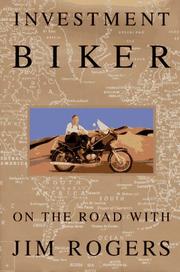
Jim Rogers · 2003

Driving through 116 countries scouting markets from the ground up

Recommended by: Mohnish Pabrai
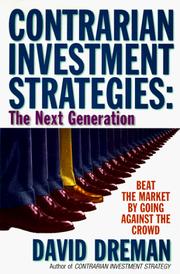
David Dreman · 1999

Data showing that low-expectation stocks beat popular ones over the long run.

“all these people really were helpful in forming and getting me involved in investing” — Joel Greenblatt

Source: Masters in Business transcript: Joel Greenblatt (2018)

Recommended by: Joel Greenblatt, Mohnish Pabrai and 1 other

Jim Rogers · 2004

Why years of low prices and Chinese demand set up a long commodity bull market.

Recommended by: Mohnish Pabrai

Where it sits in the reference 2

Investors
Investment styles

Topics

InvestingParenting and Family