Updates

  1. Person pages list letters, writing, profiles and links as sortable tables with filters, and show each person's companies as links; Fund letters show each letter's description in its own column.
  2. Experts show a checked job title and a short description of each person; 30 more people have photographs.
  3. Every company, fund, university and publication the experts work for has a page listing the people there.
  4. Fund letters show each letter's thesis and filter by it; 225 person pages list the essays, columns and newsletter issues the person wrote.
  5. Person pages list every essay and newsletter issue a person wrote, and their own books as a table in List view.
  6. Recommends shows the five largest kinds of book and the rest under More; browse pictures load sooner.
  7. Podcasts and talks link the original episode, filter by Audio and video or Press, and list each publisher once.
  8. Pages are wider, Recommends has List and Grid, and a filter clicked again turns off.
  9. Book cards sit in a ruled grid with Open Library and Goodreads links and each book's one-line note.
  10. Funds is now Investors; each investor's styles are buttons that filter the table.
  11. Podcasts and talks on a person's page filter by year and publisher and show as a list or a grid of pictures.
  12. Quotes show only people's own words: 472 summaries written by list sites are gone.
  13. Country pages open from Browse again, and every link on the shelf lands on a page.
  14. Subject and person pages show their sections as tabs, and each book appears once on a person's page.
  15. Book cards show the quote, who said it and the source; grids show five cards to a row.
  16. On a phone, a menu holds the sections, search, Updates, Feedback and dark mode.
  17. Feedback takes a screenshot of the page with no browser prompt, opens a screenshot full size when you click it, and clears itself once sent.
  18. Book cards are centred, search names the topic each book sits in, and any text cut short shows whole on hover.
  19. Search groups its results by kind: people, companies, geographies, subjects, topics, books, funds, fund letters and papers.
  20. The Books table lists who recommended each book by name, and the browser tab names the section you are in.
  21. Feedback can take a screenshot of the page, or one you paste or choose, and opens in the corner beside Updates.
  22. Each rail button reopens its section where you left it, and Browse, Table and People show on every book and subject page.
  23. Filters grey out choices that hold nothing instead of hiding them, and Books › People filters by authors or recommenders.
  24. Feedback takes a subject line and up to three screenshots.
  25. Biographies are grouped by the person they are about: 41 new pages, from Abraham Lincoln to Lee Kuan Yew.
  26. Sport splits into 23 sports, and Religion into one topic per faith.
  27. Book lists show as cards: the cover, one recommendation quote and every recommender by name.
  28. Seventeen subjects that had two or three pages under different names now have one page each.
  29. Every page lists its Experts as authors and recommenders, with a link to them on the Experts tab.
  30. Economics, Financial history, Financial panics and Accounting are subjects of their own, with one page per financial crisis.
  31. Book, person and subject pages open inside the app, so the tabs stay in view.
  32. 996 more book covers, and photographs or logos for 227 more people and companies.
  33. Books › Browse shows every subject as cards, and the rail holds Fund letters, Papers, Experts, Books and Funds.
  34. Every topic over 150 books splits into narrower topics, each with a page of its own.

Send feedback

What is it?
Screenshots, up to 3 (optional)
or paste one with Ctrl+V

We use your email only to reply to you.

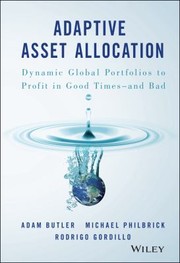
Adaptive Asset Allocation

Adaptive Asset Allocation

Adam Butler, Michael Philbrick, Rodrigo Gordillo
2015
T3 240 pages · about 4h to read Open Librarygoodreads

Rule-based momentum and volatility allocation, tested rather than asserted.

Summary

Butler, Philbrick and Gordillo, who run a quantitative asset management firm, argue for a systematic allocation approach that adjusts holdings in response to observed returns and risk rather than holding fixed weights.

The critique of the conventional approach comes first. They argue that the standard sixty-forty portfolio and the strategic allocation framework depend on long-run return assumptions that cannot be estimated reliably, that they ignore observable changes in risk and correlation, and that the historical record supporting them covers a period of falling interest rates that will not repeat. They also argue that market-capitalisation weighting concentrates a portfolio in whatever has already risen.

Their method combines three elements applied to a universe of asset classes accessed through liquid instruments. Momentum selects the assets with the strongest recent returns, on the empirical finding that relative performance persists over intermediate horizons. Volatility estimation sizes positions so that each contributes comparable risk, since volatility is far more predictable than return. Correlation estimation adjusts the combination so the portfolio's total risk is minimised for the assets selected. The whole is rebalanced periodically.

They support this with backtests over long periods showing higher risk-adjusted returns and smaller drawdowns than static allocation.

The method's components are each supported in the academic literature: momentum, the low volatility effect and the predictability of volatility and correlation relative to returns. The combination's backtested performance depends on parameter choices made after seeing the data, which is the standard problem, and the authors' out-of-sample record since publication is where the evidence actually lies. Transaction costs and tax treatment matter more for this approach than for static allocation, and the book treats them lightly.

Key takeaways 7

  1. Volatility and correlation are far more predictable than expected returns, so allocation should rely on them rather than on return forecasts.
  2. Relative performance across asset classes persists over intermediate horizons, which is the basis of the momentum selection.
  3. Sizing positions by volatility makes each contribute comparable risk, which fixed-weight allocation does not achieve.
  4. The historical record supporting conventional balanced portfolios covers a period of falling interest rates that cannot repeat.
  5. Market-capitalisation weighting concentrates a portfolio in whatever has already appreciated most.
  6. Adjusting allocation in response to observed risk reduces drawdowns relative to holding fixed weights through a decline.
  7. The approach requires more turnover than static allocation, so transaction costs and tax treatment materially affect the realised result.

Who should read it

Investors and allocators considering systematic tactical allocation who want the method stated explicitly, weighed against its turnover costs and out-of-sample record.

Similar books 6

Chosen by shared topics, the entries that hold them, and the people who recommended both.
Vitaliy N. Katsenelson · 2007

Katsenelson on buying and selling inside range-bound markets.
Russell Napier · 2005

What markets looked like at the US stock bottoms of 1921, 1932, 1949 and 1982.
Alex Shahidi · 2014

How to build a portfolio balanced to hold up in any economic environment.

Gary Antonacci · 2014

Absolute momentum as a systematic substitute for judgement.
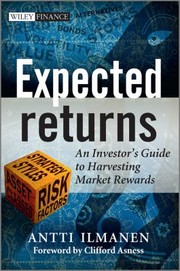
Antti Ilmanen · 2011

The evidence on what drives returns across asset classes: risk factors and behaviour.
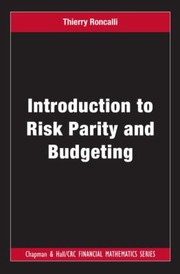
Thierry Roncalli · 2013

The mathematics of risk parity: risk contributions and risk budgeting.

Where it sits in the reference 2

Portfolio & risk
Investment styles

Topics

Investing