Updates

  1. Person pages list letters, writing, profiles and links as sortable tables with filters, and show each person's companies as links; Fund letters show each letter's description in its own column.
  2. Experts show a checked job title and a short description of each person; 30 more people have photographs.
  3. Every company, fund, university and publication the experts work for has a page listing the people there.
  4. Fund letters show each letter's thesis and filter by it; 225 person pages list the essays, columns and newsletter issues the person wrote.
  5. Person pages list every essay and newsletter issue a person wrote, and their own books as a table in List view.
  6. Recommends shows the five largest kinds of book and the rest under More; browse pictures load sooner.
  7. Podcasts and talks link the original episode, filter by Audio and video or Press, and list each publisher once.
  8. Pages are wider, Recommends has List and Grid, and a filter clicked again turns off.
  9. Book cards sit in a ruled grid with Open Library and Goodreads links and each book's one-line note.
  10. Funds is now Investors; each investor's styles are buttons that filter the table.
  11. Podcasts and talks on a person's page filter by year and publisher and show as a list or a grid of pictures.
  12. Quotes show only people's own words: 472 summaries written by list sites are gone.
  13. Country pages open from Browse again, and every link on the shelf lands on a page.
  14. Subject and person pages show their sections as tabs, and each book appears once on a person's page.
  15. Book cards show the quote, who said it and the source; grids show five cards to a row.
  16. On a phone, a menu holds the sections, search, Updates, Feedback and dark mode.
  17. Feedback takes a screenshot of the page with no browser prompt, opens a screenshot full size when you click it, and clears itself once sent.
  18. Book cards are centred, search names the topic each book sits in, and any text cut short shows whole on hover.
  19. Search groups its results by kind: people, companies, geographies, subjects, topics, books, funds, fund letters and papers.
  20. The Books table lists who recommended each book by name, and the browser tab names the section you are in.
  21. Feedback can take a screenshot of the page, or one you paste or choose, and opens in the corner beside Updates.
  22. Each rail button reopens its section where you left it, and Browse, Table and People show on every book and subject page.
  23. Filters grey out choices that hold nothing instead of hiding them, and Books › People filters by authors or recommenders.
  24. Feedback takes a subject line and up to three screenshots.
  25. Biographies are grouped by the person they are about: 41 new pages, from Abraham Lincoln to Lee Kuan Yew.
  26. Sport splits into 23 sports, and Religion into one topic per faith.
  27. Book lists show as cards: the cover, one recommendation quote and every recommender by name.
  28. Seventeen subjects that had two or three pages under different names now have one page each.
  29. Every page lists its Experts as authors and recommenders, with a link to them on the Experts tab.
  30. Economics, Financial history, Financial panics and Accounting are subjects of their own, with one page per financial crisis.
  31. Book, person and subject pages open inside the app, so the tabs stay in view.
  32. 996 more book covers, and photographs or logos for 227 more people and companies.
  33. Books › Browse shows every subject as cards, and the rail holds Fund letters, Papers, Experts, Books and Funds.
  34. Every topic over 150 books splits into narrower topics, each with a page of its own.

Send feedback

What is it?
Screenshots, up to 3 (optional)
or paste one with Ctrl+V

We use your email only to reply to you.

Expected Returns: An Investor's Guide to Har

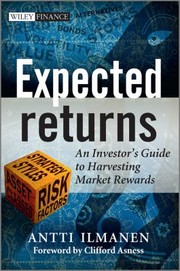
Expected Returns: An Investor's Guide to Harvesting Market Rewards

Antti Ilmanen
2011
T2 589 pages · about 9h 49m to read Open Librarygoodreads

key not recorded.

Summary

Ilmanen, who has worked at Salomon, Brevan Howard and AQR, produced a comprehensive survey of the empirical evidence on what generates returns across asset classes. The organising argument is that returns should be understood as compensation for risk factors and for behavioural and structural effects, and that these can be identified across asset classes rather than analysed separately within each.

The structure examines returns three ways: by asset class, covering equities, bonds, credit, commodities, currencies, real estate, private equity and hedge funds; by strategy style, covering value, carry, momentum, volatility and defensive; and by underlying risk factor, covering growth, inflation, liquidity and tail risk. He then examines how each behaves across environments and over time.

The empirical work is the book's substance. Ilmanen assembles long return series, decomposes historical returns into income, growth and repricing components, and argues that a large share of historical asset class returns came from valuation expansion that cannot recur. His forward-looking estimates, made in 2011, were systematically lower than historical averages, which was the correct direction though the subsequent decade delivered more than he expected.

The book is dense, technical and organised as a reference rather than a narrative. It is aimed at institutional allocators. Ilmanen's factor framing reflects his AQR affiliation, and readers should recognise that treating returns as factor compensation is a position rather than a settled finding. The historical data and the return decomposition method are useful independently of that framing.

Key takeaways 7

  1. Historical asset class returns should be decomposed into income, growth and valuation change, and the valuation change component cannot be expected to repeat.
  2. Starting yields and valuations are the best available predictors of long-horizon returns across every asset class.
  3. The same style factors, being value, carry, momentum and defensive, generate returns across asset classes rather than being specific to equities.
  4. Carry strategies earn returns as compensation for taking losses in bad states, which means the returns are payment for a risk rather than free.
  5. Illiquidity premia in private assets are substantially overstated because reported valuations are smoothed and do not reflect what a forced sale would realise.
  6. Diversifying across return sources rather than across asset classes produces better risk-adjusted outcomes, since asset classes share underlying factor exposures.
  7. Expected returns vary over time in ways that are partially predictable, which means constant long-run assumptions are the wrong input for allocation.

Who should read it

Institutional allocators and serious investors who need a comprehensive empirical reference on what drives returns across every asset class.

About Antti Ilmanen

Principal and Global Co-Head of the Portfolio Solutions Group, AQR Capital Management; previously Brevan Howard and Salomon Brothers/Citigroup

Expected Returns is the standard practitioner survey of risk premia across asset classes and styles, and it sits on top of three decades of institutional bond and multi-asset work.

AQR Capital Management, Brevan Howard

Similar books 6

Chosen by shared topics, the entries that hold them, and the people who recommended both.
Richard C. Grinold, Ronald N. Kahn · 1995

The quantitative method for building active portfolios against a benchmark.

Lasse Heje Pedersen · 2015

Markets pay skilled active managers; a survey of the strategies they run.
Adam Butler, Michael Philbrick, Rodrigo Gordillo · 2015

Rule-based momentum and volatility allocation, tested rather than asserted.
Andrew Ang · 2014

Factor investing for asset owners: factors as the nutrients inside assets.

Recommended by: Patrick O'Shaughnessy
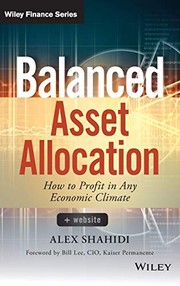
Alex Shahidi · 2014

How to build a portfolio balanced to hold up in any economic environment.
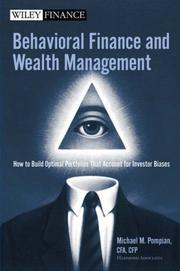
Michael M. Pompian · 2008

Applies behavioural finance to building portfolios for real clients.

Where it sits in the reference 4

Investors
Portfolio & risk
Investment styles
Investment styles

Topics

Investing