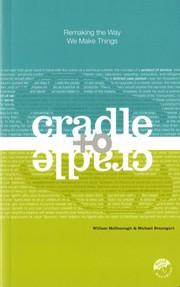
Cradle to Cradle
Design products on nature's model, where waste becomes food for the next cycle.
The circular-design argument against efficiency-only environmentalism.
Summary
McDonough, an architect, and Braungart, a chemist, argue that the environmental slogan reduce, reuse, recycle only slows down the one-way, cradle-to-grave manufacturing model inherited from the Industrial Revolution, which creates waste and pollution in the first place. They propose taking nature as the model instead. A tree produces thousands of blossoms to make one tree, and that abundance is not waste because it feeds the system. Their principle is that waste equals food.
Products, they argue, should be designed from the outset so that after their useful lives they nourish something new. Some can be biological nutrients that return safely to water or soil without synthetic materials or toxins. Others can be technical nutrients that circulate as pure, valuable materials within closed industrial loops, instead of being downcycled into low-grade uses. The authors call this approach eco-effectiveness and draw on their own work redesigning products from carpeting to corporate campuses to show how manufacturers can start.
Key takeaways 4
- Doing less harm through efficiency still keeps the cradle-to-grave model that produces waste.
- Products should be designed so that every material becomes food for a biological or technical cycle.
- Most recycling is downcycling, which turns materials into lower-grade products until they are thrown away.
- Designers should separate biological nutrients that can return to soil from technical nutrients that stay in industrial loops.
Who should read it
Product designers, manufacturers and investors in materials and sustainability who want the founding argument for circular design.
Who recommended it 1 · 1 direct
“Cradle to Cradle," yeah, like Bill McDonough's book, which also came out around this time, was hugely influential.”
Similar books 6
Chosen by shared topics, the entries that hold them, and the people who recommended both.
Why treating natural resources as capital will drive the next industrial revolution.
Recommended by: Joe Gebbia
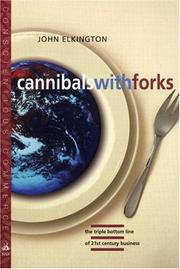
The triple bottom line: report on economic, environmental and social results.
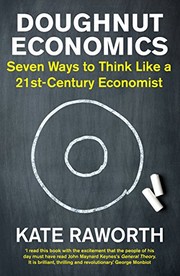
Replacing growth as the goal with a range between social needs and planetary limits.
Recommended by: Jackie Vullinghs
The inventor of the triple bottom line revises it and argues for faster change.
Evidence that rich economies now grow while using fewer physical resources.
“on how modern technological economies can build more outputs with less inputs” — Marc Andreessen
Source: @pmarca, companion thread to 'It's Time to Build'
Recommended by: Marc Andreessen
How business harms the environment, and a plan to cut energy and resource use by 80%.