Updates

  1. Person pages list letters, writing, profiles and links as sortable tables with filters, and show each person's companies as links; Fund letters show each letter's description in its own column.
  2. Experts show a checked job title and a short description of each person; 30 more people have photographs.
  3. Every company, fund, university and publication the experts work for has a page listing the people there.
  4. Fund letters show each letter's thesis and filter by it; 225 person pages list the essays, columns and newsletter issues the person wrote.
  5. Person pages list every essay and newsletter issue a person wrote, and their own books as a table in List view.
  6. Recommends shows the five largest kinds of book and the rest under More; browse pictures load sooner.
  7. Podcasts and talks link the original episode, filter by Audio and video or Press, and list each publisher once.
  8. Pages are wider, Recommends has List and Grid, and a filter clicked again turns off.
  9. Book cards sit in a ruled grid with Open Library and Goodreads links and each book's one-line note.
  10. Funds is now Investors; each investor's styles are buttons that filter the table.
  11. Podcasts and talks on a person's page filter by year and publisher and show as a list or a grid of pictures.
  12. Quotes show only people's own words: 472 summaries written by list sites are gone.
  13. Country pages open from Browse again, and every link on the shelf lands on a page.
  14. Subject and person pages show their sections as tabs, and each book appears once on a person's page.
  15. Book cards show the quote, who said it and the source; grids show five cards to a row.
  16. On a phone, a menu holds the sections, search, Updates, Feedback and dark mode.
  17. Feedback takes a screenshot of the page with no browser prompt, opens a screenshot full size when you click it, and clears itself once sent.
  18. Book cards are centred, search names the topic each book sits in, and any text cut short shows whole on hover.
  19. Search groups its results by kind: people, companies, geographies, subjects, topics, books, funds, fund letters and papers.
  20. The Books table lists who recommended each book by name, and the browser tab names the section you are in.
  21. Feedback can take a screenshot of the page, or one you paste or choose, and opens in the corner beside Updates.
  22. Each rail button reopens its section where you left it, and Browse, Table and People show on every book and subject page.
  23. Filters grey out choices that hold nothing instead of hiding them, and Books › People filters by authors or recommenders.
  24. Feedback takes a subject line and up to three screenshots.
  25. Biographies are grouped by the person they are about: 41 new pages, from Abraham Lincoln to Lee Kuan Yew.
  26. Sport splits into 23 sports, and Religion into one topic per faith.
  27. Book lists show as cards: the cover, one recommendation quote and every recommender by name.
  28. Seventeen subjects that had two or three pages under different names now have one page each.
  29. Every page lists its Experts as authors and recommenders, with a link to them on the Experts tab.
  30. Economics, Financial history, Financial panics and Accounting are subjects of their own, with one page per financial crisis.
  31. Book, person and subject pages open inside the app, so the tabs stay in view.
  32. 996 more book covers, and photographs or logos for 227 more people and companies.
  33. Books › Browse shows every subject as cards, and the rail holds Fund letters, Papers, Experts, Books and Funds.
  34. Every topic over 150 books splits into narrower topics, each with a page of its own.

Send feedback

What is it?
Screenshots, up to 3 (optional)
or paste one with Ctrl+V

We use your email only to reply to you.

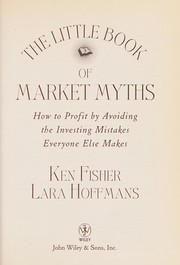
Debunkery: Learn It, Do It, and Profit from

Debunkery: Learn It, Do It, and Profit from It

Ken Fisher, Lara Hoffmans
2010
T4 256 pages · about 4h 16m to read Open Librarygoodreads

Summary

Fisher and Hoffmans set out fifty beliefs about investing that they argue are wrong, testing each against long-run data.

The format is uniform: state the belief, present the data, explain what the data shows instead. The beliefs addressed include that bonds are safer than stocks, which they test over long horizons and against inflation; that a high price to earnings ratio means the market is expensive and will fall, which they show has weak predictive power; that high dividend yields provide safe income, which ignores the total return and the risk of dividend cuts; that a rule allocating bonds by age is sound, which they argue ignores the investor's time horizon and needs; that budget deficits, trade deficits or high government debt cause poor market returns, none of which the historical relationships support; that a strong currency is good for equities; that small capitalisation stocks always outperform; that stop-loss orders limit losses; that market timing based on presidential terms, calendar effects or technical indicators works; and that high volatility predicts poor returns.

The recurring analytical points are that a belief widely held is already reflected in prices and therefore cannot produce excess return; that correlations people assume exist frequently do not when tested; and that investors need long-horizon growth more than they need short-horizon comfort.

Fisher's firm manages money for individuals and its business depends on clients remaining invested in equities, which aligns with most of the book's conclusions. The data presented supports the arguments but is selected by the authors and the tests are not always specified precisely enough to check. Several of the debunked beliefs are straw versions rather than what informed holders actually claim. The general method, of testing a widely held belief against data rather than accepting it, is sound regardless.

Key takeaways 7

  1. A belief widely held about markets is already reflected in prices and therefore cannot produce excess return.
  2. Bonds are not safer than stocks over long horizons once inflation is accounted for.
  3. High price to earnings ratios have weak predictive power for subsequent one-year returns.
  4. Budget deficits, trade deficits and high government debt have no reliable relationship with subsequent market returns.
  5. Allocating bonds by the investor's age ignores time horizon and cash needs, which are what should determine allocation.
  6. Stop-loss orders convert a temporary decline into a realised loss and do not protect against gaps.
  7. Correlations investors assume exist between economic variables and market returns frequently disappear when tested.

Who should read it

Individual investors who act on widely held market beliefs and want them tested, noting the author's business interest in the conclusions.

About Ken Fisher

Founder and Executive Chairman, Fisher Investments; Forbes "Portfolio Strategy" columnist 1984-2016

A long, public money-management record plus Super Stocks, which introduced the price-to-sales ratio and outlived its news cycle.

Fisher Investments, Forbes

Similar books 6

Chosen by shared topics, the entries that hold them, and the people who recommended both.

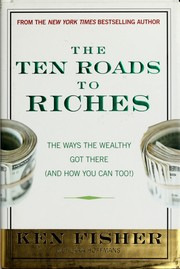
Ken Fisher, Lara Hoffmans · 2013

Common investing beliefs, such as bonds being safer than stocks, tested against data.
Where it sits in the reference 2

Investors
Journalists

Topics

Investing