Updates

  1. Person pages list letters, writing, profiles and links as sortable tables with filters, and show each person's companies as links; Fund letters show each letter's description in its own column.
  2. Experts show a checked job title and a short description of each person; 30 more people have photographs.
  3. Every company, fund, university and publication the experts work for has a page listing the people there.
  4. Fund letters show each letter's thesis and filter by it; 225 person pages list the essays, columns and newsletter issues the person wrote.
  5. Person pages list every essay and newsletter issue a person wrote, and their own books as a table in List view.
  6. Recommends shows the five largest kinds of book and the rest under More; browse pictures load sooner.
  7. Podcasts and talks link the original episode, filter by Audio and video or Press, and list each publisher once.
  8. Pages are wider, Recommends has List and Grid, and a filter clicked again turns off.
  9. Book cards sit in a ruled grid with Open Library and Goodreads links and each book's one-line note.
  10. Funds is now Investors; each investor's styles are buttons that filter the table.
  11. Podcasts and talks on a person's page filter by year and publisher and show as a list or a grid of pictures.
  12. Quotes show only people's own words: 472 summaries written by list sites are gone.
  13. Country pages open from Browse again, and every link on the shelf lands on a page.
  14. Subject and person pages show their sections as tabs, and each book appears once on a person's page.
  15. Book cards show the quote, who said it and the source; grids show five cards to a row.
  16. On a phone, a menu holds the sections, search, Updates, Feedback and dark mode.
  17. Feedback takes a screenshot of the page with no browser prompt, opens a screenshot full size when you click it, and clears itself once sent.
  18. Book cards are centred, search names the topic each book sits in, and any text cut short shows whole on hover.
  19. Search groups its results by kind: people, companies, geographies, subjects, topics, books, funds, fund letters and papers.
  20. The Books table lists who recommended each book by name, and the browser tab names the section you are in.
  21. Feedback can take a screenshot of the page, or one you paste or choose, and opens in the corner beside Updates.
  22. Each rail button reopens its section where you left it, and Browse, Table and People show on every book and subject page.
  23. Filters grey out choices that hold nothing instead of hiding them, and Books › People filters by authors or recommenders.
  24. Feedback takes a subject line and up to three screenshots.
  25. Biographies are grouped by the person they are about: 41 new pages, from Abraham Lincoln to Lee Kuan Yew.
  26. Sport splits into 23 sports, and Religion into one topic per faith.
  27. Book lists show as cards: the cover, one recommendation quote and every recommender by name.
  28. Seventeen subjects that had two or three pages under different names now have one page each.
  29. Every page lists its Experts as authors and recommenders, with a link to them on the Experts tab.
  30. Economics, Financial history, Financial panics and Accounting are subjects of their own, with one page per financial crisis.
  31. Book, person and subject pages open inside the app, so the tabs stay in view.
  32. 996 more book covers, and photographs or logos for 227 more people and companies.
  33. Books › Browse shows every subject as cards, and the rail holds Fund letters, Papers, Experts, Books and Funds.
  34. Every topic over 150 books splits into narrower topics, each with a page of its own.

Send feedback

What is it?
Screenshots, up to 3 (optional)
or paste one with Ctrl+V

We use your email only to reply to you.

How to Smell a Rat: The Five Signs of Financ

How to Smell a Rat: The Five Signs of Financial Fraud

Ken Fisher, Lara Hoffmans
2009
T4 209 pages · about 3h 29m to read Open Librarygoodreads

Summary

Ken Fisher wrote this with Lara Hoffmans immediately after the Madoff arrest, and the argument is narrow and practical. Fisher claims that nearly all investment frauds against retail clients share five detectable features, and that an investor who checks for them can avoid the great majority of losses without any ability to analyse the underlying strategy.

The first and most important sign is that the adviser has custody of client assets rather than using an independent third-party custodian. Fisher treats this as close to decisive: if the money sits at a large unaffiliated custodian that sends statements directly, the adviser cannot fabricate returns. The remaining four are returns that are consistently positive and smooth, a strategy the adviser will not or cannot explain, marketing that emphasises exclusivity or shared membership of a religious or ethnic community, and delegation of due diligence to a third party such as a feeder fund or consultant.

The book is short and repetitive, and Fisher's own firm benefits commercially from the advice, since it uses third-party custody. He also does not address frauds inside institutions with legitimate custody arrangements, such as accounting fraud at operating companies, or the sales-practice abuses that cost investors more in aggregate than outright theft. Within its scope the custody point is correct and remains the single most useful thing a retail investor can check.

Key takeaways 7

  1. Independent third-party custody of assets eliminates the mechanism by which nearly all retail investment frauds operate.
  2. Consistently smooth positive returns indicate fabricated or smoothed marks rather than skill, because real strategies produce variable results.
  3. An adviser who cannot explain the strategy in terms the client understands should be treated as concealing something.
  4. Affinity marketing through religious, ethnic or club networks substitutes social trust for verification and is a recurring feature of frauds.
  5. Investors who delegate due diligence to a consultant or feeder fund have not performed due diligence.
  6. Regulatory registration and long track records provide no protection, since Madoff had both.
  7. Fisher argues that these checks require no financial expertise and take less than an hour, which is why failing to perform them is inexcusable.

Who should read it

Individual investors and family offices selecting outside managers who want a short verification checklist rather than an analysis of fraud psychology.

About Ken Fisher

Founder and Executive Chairman, Fisher Investments; Forbes "Portfolio Strategy" columnist 1984-2016

A long, public money-management record plus Super Stocks, which introduced the price-to-sales ratio and outlived its news cycle.

Fisher Investments, Forbes

Similar books 6

Chosen by shared topics, the entries that hold them, and the people who recommended both.

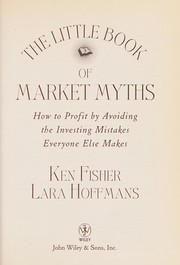
Ken Fisher, Lara Hoffmans · 2013

Common investing beliefs, such as bonds being safer than stocks, tested against data.
Where it sits in the reference 2

Investors
Journalists

Topics

Investing