Updates

  1. Fund letters lists 118 more letters, each with its own page: 44 weekly commentaries by Jeremy Siegel from 2026, 31 issues of Van Tharp's newsletter from 2018, 23 Pabrai Investment Funds letters from 2021 to Q3 2026, 13 Efficient Frontier essays by William Bernstein, Oakmark's three 3Q 2026 commentaries, two Lindsell Train reports, a John Hussman comment and Third Point's Q3 2026 letter.
  2. 2,027 more books carry a one-line description in the Books table and on their pages; 7,067 of 7,715 have one, every tier 1, 2 and 3 book among them.
  3. Fund letters lists 187 more letters from 19 firms, among them Permanent Equity, Social Capital, Lux Capital, Square Peg, Bestinver, Cobas, Sequoia Fund, Marketfield and EquityCompass; each shows on its investor's page and has a page of its own.
  4. 2,928 more books carry a one-line description in the Books table and on their pages, so every tier 1, 2 and 3 book has one; 5,040 in all.
  5. Every publication on Newsletters has its own page: its writing, its writers, its staff and who recommends it. Investor pages have a Management tab; a company's Experts tab now leaves out its own people, who list under Management. Tabs on a phone move sideways only.
  6. Every fund letter and research paper has its own page: the thesis, the PDF, the companies and books it names, and for 176 letters and 24 papers so far a summary, key insights and quotes with their page.
  7. 99 books that no page listed now sit under their topics in Books, among them Caste, American Prometheus and Pale Blue Dot.
  8. Newsletters lists every newspaper, magazine, investment newsletter, journal and blog the reference holds, 442 in all, with the people who write there. The search box keeps your last 20 searches. You can create an account.
  9. 283 books that fund managers recommend in their letters are on the shelf, each with the letter's own words and page; investor pages have a Recommends tab.
  10. Person, company, investor and show pages link their own accounts on X, Threads, Instagram, LinkedIn, YouTube and Substack: 275 people, 552 companies and organisations, 88 investors and 478 shows.
  11. 716 more book recommendations name their source: the person's own reading list, letter, blog post, speech or interview, or an article that reports it. 232 of them quote the person's own words about the book, on the book card and on the book's page.
  12. Every US-listed company has a page with its SEC filings. Company pages list their experts and their management, past and present. Fund managers sit under Investors. Each show has a page of its episodes, and an episode page names its guests and hosts. Biographies lists groups, then people. Breadcrumbs show where a page sits.
  13. Media lists every podcast episode, video, interview and talk, over 10,000, by person, company, publisher and event; each filter searches its own choices. Books opens on its table, then Browse, then Authors and Recommenders. A filter's count no longer covers its arrow.
  14. A book that no company, country or subject page lists shows its topics under Where it sits in the reference. On a phone, a page's tabs scroll sideways only. Descriptions read the same on every page. See them in the Experts tab lists every expert the page names.
  15. Every podcast episode, video and interview has its own page with a video or audio player and a link to the source. Investor pages show each company's sector and market cap; firms such as Berkshire Hathaway have one page that holds their letters and their company tabs. Letters tabs filter by company and search the theses. Companies filter by Public, Private and Defunct and link each company's website.
  16. Every tab, view and search has its own address, such as /books/table/asset or /letters/companies, so Back works and a link opens the same place. Page addresses no longer end in .html. Fund letters, Investors, Companies and Papers load about a fifth of the data they did.
  17. Fund letters has a Companies tab: every company the letters name, with its market cap, sector, country, and how many letters and investors name it. Investor pages link each investor's website. Lists in table cells end with “… and N more” at every width.
  18. 1,120 more book summaries; descriptions for 373 papers; pages for 137 more companies, each with the fund letters that discuss it; 215 official photographs; search has its own page.
  19. 411 more books have a summary; person pages list 930 more of the books they wrote; 147 people show their official photograph.
  20. Every investor has a page with its letters and the companies they discuss; company pages list the investors whose letters name them.
  21. A Companies section at the top of the rail lists every company the books, experts and fund letters name.
  22. Person pages list letters, writing, profiles and links as sortable tables with filters, and show each person's companies as links; Fund letters show each letter's description in its own column.
  23. Experts show a checked job title and a short description of each person; 30 more people have photographs.
  24. Every company, fund, university and publication the experts work for has a page listing the people there.
  25. Fund letters show each letter's thesis and filter by it; 225 person pages list the essays, columns and newsletter issues the person wrote.
  26. Person pages list every essay and newsletter issue a person wrote, and their own books as a table in List view.
  27. Recommends shows the five largest kinds of book and the rest under More; browse pictures load sooner.
  28. Podcasts and talks link the original episode, filter by Audio and video or Press, and list each publisher once.
  29. Pages are wider, Recommends has List and Grid, and a filter clicked again turns off.
  30. Book cards sit in a ruled grid with Open Library and Goodreads links and each book's one-line note.
  31. Funds is now Investors; each investor's styles are buttons that filter the table.
  32. Podcasts and talks on a person's page filter by year and publisher and show as a list or a grid of pictures.
  33. Quotes show only people's own words: 472 summaries written by list sites are gone.
  34. Country pages open from Browse again, and every link on the shelf lands on a page.
  35. Subject and person pages show their sections as tabs, and each book appears once on a person's page.
  36. Book cards show the quote, who said it and the source; grids show five cards to a row.
  37. On a phone, a menu holds the sections, search, Updates, Feedback and dark mode.
  38. Feedback takes a screenshot of the page with no browser prompt, opens a screenshot full size when you click it, and clears itself once sent.
  39. Book cards are centred, search names the topic each book sits in, and any text cut short shows whole on hover.
  40. Search groups its results by kind: people, companies, geographies, subjects, topics, books, funds, fund letters and papers.
  41. The Books table lists who recommended each book by name, and the browser tab names the section you are in.
  42. Feedback can take a screenshot of the page, or one you paste or choose, and opens in the corner beside Updates.
  43. Each rail button reopens its section where you left it, and Browse, Table and People show on every book and subject page.
  44. Filters grey out choices that hold nothing instead of hiding them, and Books › People filters by authors or recommenders.
  45. Feedback takes a subject line and up to three screenshots.
  46. Biographies are grouped by the person they are about: 41 new pages, from Abraham Lincoln to Lee Kuan Yew.
  47. Sport splits into 23 sports, and Religion into one topic per faith.
  48. Book lists show as cards: the cover, one recommendation quote and every recommender by name.
  49. Seventeen subjects that had two or three pages under different names now have one page each.
  50. Every page lists its Experts as authors and recommenders, with a link to them on the Experts tab.
  51. Economics, Financial history, Financial panics and Accounting are subjects of their own, with one page per financial crisis.
  52. Book, person and subject pages open inside the app, so the tabs stay in view.
  53. 996 more book covers, and photographs or logos for 227 more people and companies.
  54. Books › Browse shows every subject as cards, and the rail holds Fund letters, Papers, Experts, Books and Funds.
  55. Every topic over 150 books splits into narrower topics, each with a page of its own.

Send feedback

What is it?
Screenshots, up to 3 (optional)
or paste one with Ctrl+V

We use your email only to reply to you.

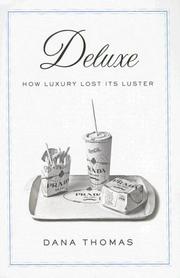
Deluxe: How Luxury Lost Its Luster

Deluxe: How Luxury Lost Its Luster

How family luxury houses became conglomerates selling to the mass affluent.

Dana Thomas
2007
T2 380 pages · about 6h 20m to read Open Librarygoodreads

The best-known account of LVMH-led mass luxury and outsourcing.

Summary

Thomas, a fashion journalist, traces how European luxury houses moved from family-owned workshops serving a few thousand customers to publicly traded conglomerates selling accessories to a mass affluent market. The pivot centres on Bernard Arnault's construction of LVMH, on the parallel building of Gucci Group and Richemont, and on the discovery that handbags, sunglasses, perfume and cosmetics carry the brand's aura at a price point millions of people can reach.

The reporting is the strength. Thomas visited factories in China producing goods for houses that market themselves as Italian or French, documented the legal boundaries of the made-in labelling rules that make this possible, sat in on perfume launches, and followed the counterfeit trade to its production sites. She shows how licensing, duty-free retail, celebrity fragrance deals and airport distribution generate the cash that funds the loss-making couture that supplies the brand image.

The book is useful to operators as a study in brand economics: how a house converts scarcity signals into volume revenue, where the actual margin sits in a luxury profit and loss statement, and what happens to pricing power when a brand widens its customer base. Thomas writes as a critic and the moral register is consistent throughout, which some readers will find sharpens the argument and others will find crowds out the counter-case. The financial detail is now well out of date, and the industry has since consolidated further, moved substantially online, and shifted its demand base toward China, none of which the 2007 text anticipates.

Key takeaways 7

  1. Luxury houses make most of their money from accessories, fragrance and cosmetics, not from the clothing that defines the brand.
  2. Conglomerate ownership replaced the founding families and changed the objective from craft continuity to quarterly growth in accessible product lines.
  3. Country-of-origin labelling rules allow substantial production in low-cost countries while a final assembly step preserves the European label.
  4. Widening the customer base raises revenue in the short term and erodes the scarcity that justifies the price in the long term.
  5. Counterfeiting is funded and organised by the same criminal networks that move other contraband, and its scale is a direct function of brand ubiquity.
  6. Loss-making runway shows function as marketing expenditure that supports the margin on licensed and mass-market products.
  7. Celebrity endorsement replaced craftsmanship as the primary mechanism for communicating luxury status.

Who should read it

Founders and operators in consumer brands who want a concrete account of how premium positioning converts into volume economics and what that trade costs.

Similar books 6

Chosen by shared topics, the entries that hold them, and the people who recommended both.

Teri Agins · 1999

How fashion became a business of brands once designers stopped dictating trends.
Sara Gay Forden · 2000

Gucci from a Florence leather shop through family collapse to its Tom Ford revival.
Jean-Noël Kapferer, Vincent Bastien · 2008

Why luxury brands run on their own rules, and how standard marketing ruins them.
Dana Thomas · 2015

Alexander McQueen and John Galliano, from London art school to Paris fashion houses.
Bernard Arnault, Yves Messarovitch · 2000

A book of interviews with LVMH's chief executive, in French.
Nadège Forestier, Nazanine Ravaï · 1992

How Bernard Arnault won control of LVMH through a series of takeover battles.

Where it sits in the reference 6

Companies
Biographies
Geographies
Assets
Business models
Industries

Topics 4

Sociology and CultureSales and MarketingConsumer culture and cultural criticismBrands, positioning and luxury