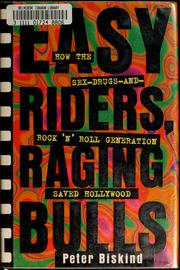
Easy Riders, Raging Bulls
How young directors and drugs remade Hollywood in the 1970s, from Easy Rider on.
How the 1970s directors' era gave way to the blockbuster system.
Summary
Biskind chronicles the New Hollywood of the late 1960s and 1970s, when young directors took over the studios and anything-goes experimentation ran both on screen and off. He starts with the success of Easy Rider and the conditions under which it was made, with drugs, alcohol and a violent rivalry between its stars Dennis Hopper and Peter Fonda. He follows BBS, a small production company that became the guiding spirit of the youth rebellion in Hollywood, some of whose executives helped smuggle Huey Newton out of the country.
The book is built from incidents: Hal Ashby jailed for drugs in Toronto, Martin Scorsese attending the Academy Awards with an FBI escort when Taxi Driver was nominated, George Lucas cutting off his own hair in anxiety while writing Star Wars, the Nicholas Beach house of Margot Kidder and Jennifer Salt serving as the movement's headquarters, Billy Friedkin trying to humiliate Paramount's Barry Diller, and Paul Schrader playing Russian roulette in his hot tub. Through them Biskind shows how the directors' era of the 1970s gave way to the blockbuster system.
Key takeaways 4
- Easy Rider's success opened the studios to young directors in the late 1960s.
- Small independent producers such as BBS shaped the New Hollywood alongside the studios.
- The era's excesses ran off screen as well as on, from drug arrests to feuds between stars.
- The directors' era of the 1970s gave way to a studio system built around blockbusters.
Who should read it
Readers interested in the film business who want an account of how creative control shifted from studios to directors and back again.
Similar books 6
Chosen by shared topics, the entries that hold them, and the people who recommended both.
What it is like to write films for Hollywood, from a screenwriter's own career.
“William Goldman, Adventures in the Screen Trade: A Personal View of Hollywood and Screenwriting (New York: Warner Books, 1983), 39” — Michael Mauboussin
Source: Who Is On the Other Side? A Framework for Understanding Market (In)Efficiency
Recommended by: Michael Mauboussin, Tim Ferriss
How storyboards become shots, and how shots are built into film sequences.
Film editing explained: why cuts work when they follow the rhythm of thought.
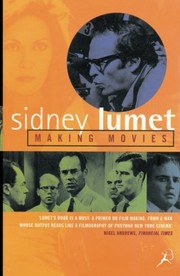
How a film comes together, from the first script reading to the final mix.
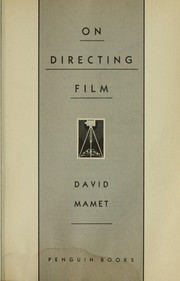
Directing as finding the simplest images that carry the story.
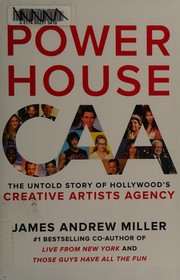
An oral history of CAA and how it changed the Hollywood talent agency.
Recommended by: Joel Connolly