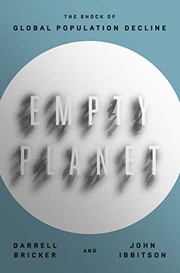
Empty Planet
The costs and benefits of a shrinking world population.
The argument that global population peaks sooner than the UN projects.
Summary
Bricker and Ibbitson argue that the world's population will soon begin to decline rather than keep growing, reversing fifty years of warnings that population growth would overwhelm the earth's resources. In the past, depopulation followed catastrophes such as ice ages, plagues and the collapse of civilisations. This time people are choosing it, by having fewer children than needed to replace themselves. In much of the developed and developing world the decline has already begun, as urbanisation, the empowerment of women and falling religiosity lead to smaller families.
The authors travelled from South Florida and São Paulo to Seoul, Nairobi, Brussels, Delhi and Beijing. They see benefits in a smaller population: scarcer workers will earn higher wages, the environment will improve, the risk of famine will fall and lower birth rates will bring women more wealth and autonomy. They also foresee great disruption, already visible in Europe and parts of Asia, where ageing populations and worker shortages weaken economies and strain healthcare and pensions. They argue that the United States is well placed, unless isolationism and hostility to immigrants close it off when openness matters most.
Key takeaways 4
- Global population is heading for decline because people are choosing smaller families.
- Urbanisation, women's empowerment and falling religiosity drive the drop in birth rates.
- Ageing populations and labour shortages already weaken economies in Europe and Asia.
- Openness to immigration will decide how well the United States copes.
Who should read it
Investors who think about long-run demand, labour and pensions and want the case that population peaks sooner than official projections.
Who recommended it 1 · 1 direct
“A favorite book on the topic is Empty Planet: The Shock of Global Population Decline, by Darrell Bricker and John Ibbitson, and a recommended YouTube video, if you prefer, is “Birthgap – Childless World Part 1,” Birthgap.org (2022).”
Similar books 6
Chosen by shared topics, the entries that hold them, and the people who recommended both.
A political demographer on what population numbers do and do not determine.
Falling birth rates worldwide, and countries from Italy to Japan starting to shrink.
Why the US-guarded trading order is ending, and what that means for supply chains.
Recommended by: Andrew Wilkinson
Disinflation came from a one-time surge in workers; ageing will reverse it.
How population change and migration made and unmade nations over two centuries.
Why falling birth rates, not overpopulation, are the economic danger.