
Enemies: A Love Story
A Holocaust survivor and refugee who finds himself with three wives.
Summary
Isaac Bashevis Singer's novel first ran as a serial in the Yiddish Jewish Daily Forward from 11 February 1966; the English translation appeared in 1972. It is set in New York a few years after the Second World War. Herman Broder, a Holocaust survivor who has lost his Orthodox faith, lives in Coney Island with Yadwiga, the Polish peasant who once served his family and hid him in a hayloft for three years. He tells her he travels as a book salesman. In fact he ghost-writes for a corrupt Manhattan rabbi, Milton Lampert, and spends nights in the Bronx with his mistress Masha, a traumatised survivor, and her pious mother. Then a classified advertisement reveals that his first wife, Tamara, reported shot with their two children, is alive and in New York.
The comedy lies in Herman's attempts to keep the three women from learning about one another; the tragedy lies in the characters' inability to reconcile themselves to having survived. Reviewers split: The New York Times called it bleak and without hope, while the Times Literary Supplement and the New York Review of Books praised its moral subtlety. Paul Mazursky filmed it in 1989.
Key takeaways 4
- Herman Broder ends up with three wives at once: his rescuer, his mistress and the first wife he believed dead.
- Singer sets the story in the Yiddish-speaking New York of refugees just after the war.
- Survival itself is the wound: the characters cannot make the compromises that would let them live with it.
- The novel mixes farce about a man's lies with the lasting damage of the Holocaust.
Who should read it
Readers of Jewish and post-war American fiction who want a novel about Holocaust survivors that is both comic and tragic.
Who recommended it 1 · 1 direct
Similar books 6
Chosen by shared topics, the entries that hold them, and the people who recommended both.

A story told entirely in pictograms and icons, with no words.
Recommended by: Patrick Collison
Milan publishers drawn into Kabbalah, the Knights Templar and conspiracy theories.
Recommended by: Patrick Collison
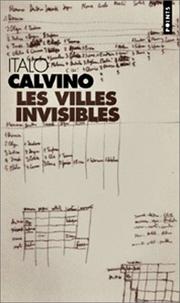
A novel of Marco Polo describing imagined cities to the emperor Kublai Khan.
Recommended by: Mohnish Pabrai, Patrick Collison and 2 others
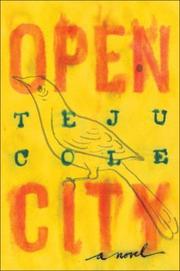
A young Nigerian doctor walks Manhattan, thinking over his relationships.
Recommended by: Patrick Collison
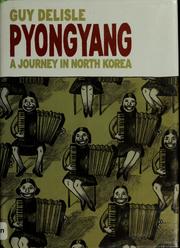
A cartoonist's graphic memoir of two months working in North Korea's capital.
Recommended by: Patrick Collison