Foucault's Pendulum
Milan publishers drawn into Kabbalah, the Knights Templar and conspiracy theories.
Summary
Umberto Eco's novel was published in Italian in 1988 and in William Weaver's English translation in 1989. It is divided into ten sections named for the Sefiroth of the Kabbalah and is full of esoteric references to Kabbalah, alchemy and conspiracy theories, so many that Anthony Burgess suggested it needed an index. The title refers to the pendulum the physicist Léon Foucault designed to show the rotation of the Earth; Eco rejected any intended reference to Michel Foucault.
The book opens with Casaubon hiding in the Musée des Arts et Métiers in Paris after closing, convinced that a secret society has kidnapped his friend Jacopo Belbo and is coming for him. In the 1970s in Milan, Casaubon, writing a thesis on the Knights Templar, meets Belbo and Diotallevi, editors at the publisher Garamond, who also runs a vanity press that charges incompetent authors to print their work. A colonel's manuscript claims to reveal a secret Templar plan to rule the world, and the colonel vanishes. Garamond launches lines of occult books, and the three editors, steeped in the manuscripts, begin inventing a conspiracy of their own. The narrator is implied to be unreliable, his mind bent by conspiracy theories.
Key takeaways 4
- Three editors invent a secret plan as a game and lose control of it.
- Eco satirises the appetite for conspiracy theories and occult secrets.
- The narrator's account is shaped by the conspiracies he has absorbed.
- The novel is dense with references to the Templars, Kabbalah and alchemy.
Who should read it
Readers of intellectual fiction who enjoy erudite puzzles and satire about secret societies.
Who recommended it 1
Similar books 6
Chosen by shared topics, the entries that hold them, and the people who recommended both.
A story told entirely in pictograms and icons, with no words.
Recommended by: Patrick Collison

A Holocaust survivor and refugee who finds himself with three wives.
Recommended by: Patrick Collison
A novel of Marco Polo describing imagined cities to the emperor Kublai Khan.
Recommended by: Mohnish Pabrai, Patrick Collison and 2 others
A young Nigerian doctor walks Manhattan, thinking over his relationships.
Recommended by: Patrick Collison
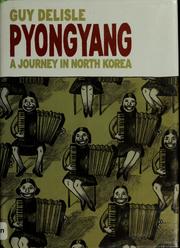
A cartoonist's graphic memoir of two months working in North Korea's capital.
Recommended by: Patrick Collison