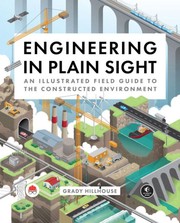
Engineering in Plain Sight
An illustrated field guide to the engineering of the built environment.
Summary
Grady Hillhouse, a civil engineer, published this illustrated field guide to the built environment with No Starch Press in 2022. It applies the field-guide format, usually kept for birds and plants, to human-made structures, so that non-engineers can identify and understand the infrastructure they pass every day. Each section pairs colour illustrations with explanations of how a structure works and why it looks the way it does.
The eight chapters cover the electrical grid; communications; roadways; bridges and tunnels; railways; dams, levees and coastal structures; municipal water and wastewater; and construction. Readers learn to recognise the parts of each system, from the hardware on power lines to the features of roads, rail lines and waterways, and to read the purpose behind them. Library Journal and Design World reviewed it favourably, Purdue University's INSPIRE Research Institute listed it in its engineering gift guide, and Bill Gates put it on his 2024 holiday books list.
Key takeaways 4
- Most infrastructure can be identified and understood by a non-engineer who knows what to look for.
- The book's eight chapters run from the electrical grid and communications to dams, water systems and construction sites.
- Illustrations show the details that reveal how each structure works.
- Looking at roads, bridges and power lines with knowledge turns an ordinary trip into a lesson in engineering.
Who should read it
Curious general readers, students and travellers who want to understand the infrastructure around them.
Who recommended it 1 · 1 direct
Similar books 6
Chosen by shared topics, the entries that hold them, and the people who recommended both.
A catalogue reviewing over 1,500 tools and what each one is good for.
Recommended by: John Doerr
A plain guide to solar and wind power for homes connected to the grid.
Recommended by: Mohnish Pabrai
How to rebuild civilisation's inventions if stranded in the past.
Recommended by: Balaji S. Srinivasan
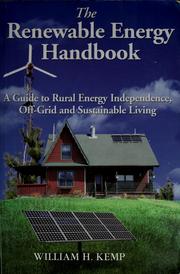
How to power a home with renewable energy and live off the grid.
Recommended by: Mohnish Pabrai
An illustrated encyclopedia that explains modern machines and technology.
Recommended by: Mike Maples, Jr.
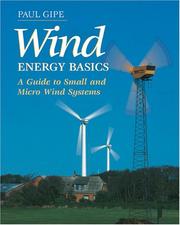
How to plan, buy, site and install a home or community wind-energy system.
Recommended by: Mohnish Pabrai