Updates

  1. Person pages list letters, writing, profiles and links as sortable tables with filters, and show each person's companies as links; Fund letters show each letter's description in its own column.
  2. Experts show a checked job title and a short description of each person; 30 more people have photographs.
  3. Every company, fund, university and publication the experts work for has a page listing the people there.
  4. Fund letters show each letter's thesis and filter by it; 225 person pages list the essays, columns and newsletter issues the person wrote.
  5. Person pages list every essay and newsletter issue a person wrote, and their own books as a table in List view.
  6. Recommends shows the five largest kinds of book and the rest under More; browse pictures load sooner.
  7. Podcasts and talks link the original episode, filter by Audio and video or Press, and list each publisher once.
  8. Pages are wider, Recommends has List and Grid, and a filter clicked again turns off.
  9. Book cards sit in a ruled grid with Open Library and Goodreads links and each book's one-line note.
  10. Funds is now Investors; each investor's styles are buttons that filter the table.
  11. Podcasts and talks on a person's page filter by year and publisher and show as a list or a grid of pictures.
  12. Quotes show only people's own words: 472 summaries written by list sites are gone.
  13. Country pages open from Browse again, and every link on the shelf lands on a page.
  14. Subject and person pages show their sections as tabs, and each book appears once on a person's page.
  15. Book cards show the quote, who said it and the source; grids show five cards to a row.
  16. On a phone, a menu holds the sections, search, Updates, Feedback and dark mode.
  17. Feedback takes a screenshot of the page with no browser prompt, opens a screenshot full size when you click it, and clears itself once sent.
  18. Book cards are centred, search names the topic each book sits in, and any text cut short shows whole on hover.
  19. Search groups its results by kind: people, companies, geographies, subjects, topics, books, funds, fund letters and papers.
  20. The Books table lists who recommended each book by name, and the browser tab names the section you are in.
  21. Feedback can take a screenshot of the page, or one you paste or choose, and opens in the corner beside Updates.
  22. Each rail button reopens its section where you left it, and Browse, Table and People show on every book and subject page.
  23. Filters grey out choices that hold nothing instead of hiding them, and Books › People filters by authors or recommenders.
  24. Feedback takes a subject line and up to three screenshots.
  25. Biographies are grouped by the person they are about: 41 new pages, from Abraham Lincoln to Lee Kuan Yew.
  26. Sport splits into 23 sports, and Religion into one topic per faith.
  27. Book lists show as cards: the cover, one recommendation quote and every recommender by name.
  28. Seventeen subjects that had two or three pages under different names now have one page each.
  29. Every page lists its Experts as authors and recommenders, with a link to them on the Experts tab.
  30. Economics, Financial history, Financial panics and Accounting are subjects of their own, with one page per financial crisis.
  31. Book, person and subject pages open inside the app, so the tabs stay in view.
  32. 996 more book covers, and photographs or logos for 227 more people and companies.
  33. Books › Browse shows every subject as cards, and the rail holds Fund letters, Papers, Experts, Books and Funds.
  34. Every topic over 150 books splits into narrower topics, each with a page of its own.

Send feedback

What is it?
Screenshots, up to 3 (optional)
or paste one with Ctrl+V

We use your email only to reply to you.

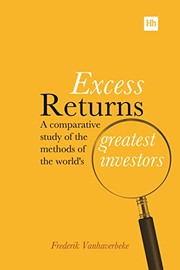
Excess Returns

Excess Returns

Frederik Vanhaverbeke
2014
T3 353 pages · about 5h 53m to read Open Librarygoodreads

Systematic study of what great investors have in common.

Summary

Vanhaverbeke assembled this as a synthesis of what successful investors have written and said about their methods, drawing on a very large number of sources and organising the material into a structured account.

The method is compilation and comparison rather than original argument. He reads across Graham, Buffett, Munger, Lynch, Templeton, Klarman, Greenblatt, Marks, Fisher, Neff, Miller, Whitman and many others, identifies where they agree and where they differ, and organises the result around the stages of the investment process: developing the right mindset and temperament, generating ideas and screening, analysing a business, valuing it, deciding when to buy, constructing a portfolio, and deciding when to sell.

The comparative approach produces the book's value. On most questions the successful investors he surveys agree: that investing means buying part of a business, that price and value are different, that a margin of safety is required, that temperament matters more than intelligence, that most activity destroys returns, and that understanding what you own is a constraint on where you can operate. On other questions they disagree sharply, including concentration versus diversification, whether to hold cash, the use of macroeconomic analysis, the definition of value, and when to sell, and Vanhaverbeke sets the positions against each other rather than resolving them.

The book is very long, densely referenced and reads as a reference rather than as a narrative. It has no original insight and does not claim any. Its use is as an organised index into the primary literature, since every claim is attributed and a reader can go to the source. Readers who have already read the principals will find it repetitive.

Key takeaways 7

  1. Successful investors agree on the foundations: buying part of a business, distinguishing price from value, and requiring a margin of safety.
  2. They disagree sharply on concentration, on holding cash, on macroeconomic analysis and on when to sell.
  3. Temperament rather than intelligence is identified as the binding constraint by nearly every investor surveyed.
  4. Most portfolio activity destroys returns through costs and errors, which the sources agree on across very different styles.
  5. Understanding what you own limits where an investor can operate, which every source treats as a constraint rather than advice.
  6. Where successful practitioners disagree, the disagreement indicates that more than one approach works rather than that one is wrong.
  7. The book has no original argument and functions as an organised index into the primary literature.

Who should read it

Investors who want a structured comparison of what many successful practitioners actually said, used as a reference into the primary sources.

Similar books 6

Chosen by shared topics, the entries that hold them, and the people who recommended both.
H. Nejat Seyhun · 1998

Whether corporate insiders' disclosed trades predict their stocks' returns.

Mohnish Pabrai · 2004

Collection of his essays on Buffett-style investing.
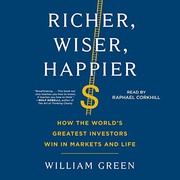
William Green · 2021

Lessons from 25 years of interviews with investors from Templeton to Munger.

“William has written the kind of book that we would love to have written but know that we lack the requisite skills.” — Nick Sleep

Source: Nick Sleep and Qais Zakaria, Postamble to the full collection of the Nomad Letters to Partners, p. 219

Recommended by: Nick Sleep

Mohnish Pabrai · 2007

The explicit argument for cloning rather than originating ideas.

“It is, without a doubt, my most recommended book on investing” — Andrew Wilkinson

Source: @awilkinson on X, 22 May 2024

Recommended by: Andrew Wilkinson, Guy Spier and 1 other
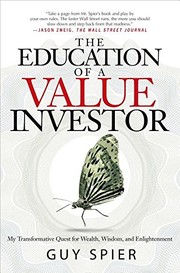
Guy Spier · 2014

Spier on the psychology and habits behind durable value investing.

“…books I've recommended, highlighted to death, or forced on friends.” — Andrew Wilkinson

Source: Andrew Wilkinson's Bookshelf, neverenough.com

Recommended by: Andrew Wilkinson, Christopher Bloomstran and 1 other

Where it sits in the reference 2

Investment styles
Investment styles

Topics

Investing