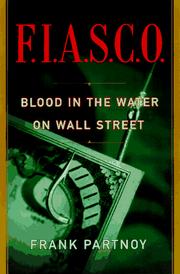
Fiasco
Insider account of derivatives sales at Morgan Stanley.
Summary
Partnoy worked at Morgan Stanley in the derivatives group in the mid-1990s, and wrote this account of how structured products were designed and sold. He left and became a law professor, and the book is an insider's account written against the business he worked in.
The substance concerns the design of derivatives that were built to be difficult for buyers to evaluate. He describes products structured so that their embedded risks did not appear in the buyer's accounting or in their risk reporting, sold to institutions including Japanese insurers, Latin American banks and American municipalities and funds. The specific transactions covered include Mexican peso-linked notes and the products connected to the Orange County bankruptcy and to the Barings failure.
His central claim is that the profitability of the business came directly from the opacity, since a product the buyer could price would produce ordinary margins, and that the sales effort concentrated on buyers who did not have the capability to evaluate what they were purchasing. He also describes the internal culture, including the language used about clients, the compensation structure, and the way risk was communicated internally.
Morgan Stanley disputed the book and the account is one participant's. Partnoy has interests as a critic and later academic. The specific products described are from the mid-1990s and the regulatory environment has changed, though the 2008 crisis involved substantially similar mechanisms. The argument that opacity is the source of margin in structured products has held up completely and is the reason the book still gets read.
Key takeaways 8
- The profitability of structured derivatives came directly from their opacity, since a product the buyer could price would produce ordinary margins.
- Products were designed so that their embedded risks did not appear in the buyer's accounting or risk reporting.
- Sales effort concentrated on institutions that lacked the capability to evaluate what they were buying, which was a selection criterion rather than an accident.
- Buyers frequently purchased these products to conceal existing losses or to obtain yield without recording the corresponding risk.
- Institutional buyers including municipalities, insurers and funds took positions whose risks their own boards could not have understood.
- Internal compensation rewarded the size of the margin on each transaction, which directed effort toward the least sophisticated buyers.
- The mechanisms described in the mid-1990s recurred substantially unchanged in the products at the centre of the 2008 crisis.
- The account is from one participant, is disputed by the firm, and is written by someone who became a public critic of the industry.
Who should read it
Investors and trustees who buy structured products and want an insider account of why the complexity exists and who it serves.
About Frank Partnoy
Law professor at the University of California, Berkeley and former Morgan Stanley derivatives salesman writing on derivatives, fraud and regulation.
F.I.A.S.C.O. describes structured-derivatives selling from inside the desk that did it, naming how the trades were priced and why clients kept buying them. Infectious Greed and The Match King follow the same incentives through the accounting frauds of the 1990s and the 1920s.
University of San Diego, Morgan Stanley, University of California, Berkeley
Who recommended it 3 · 3 direct
“F.I.A.S.C.O.: The Inside Story of a Wall Street Trader by Frank Partnoy. Another great writer and great read.”
Similar books 6
Chosen by shared topics, the entries that hold them, and the people who recommended both.
How finance used complexity to hide risk from the 1980s through Enron.

How Ivar Kreuger built a 1920s match monopoly, and the forgeries found at his death.
Recommended by: Mohnish Pabrai

Raj Rajaratnam's insider-trading crime and conviction, and Galleon's fall.
Recommended by: Mohnish Pabrai
The Hunt brothers' attempt to corner silver and its collapse in March 1980.
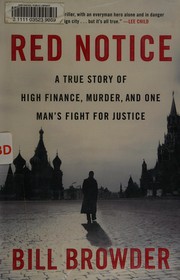
An investor in Russia is expelled, his firms seized, and his lawyer Magnitsky dies.
“my favorite read of the year, Bill Browder's terrific Red Notice... I highly recommend the read” — Christopher Bloomstran
Source: Semper Augustus 2022 Letter to Clients, 'Books and Stuff', p. 73
Recommended by: Christopher Bloomstran, Mohnish Pabrai and 6 others

The Libor rigging scandal told through the traders who ran it
“saga of global financial market manipulation, at mind-boggling scale and hiding in plain sight” — Marc Andreessen
Source: @pmarca, 'Thread: Books I've recently read and recommend'
Recommended by: Marc Andreessen
Where it sits in the reference 3
Topics