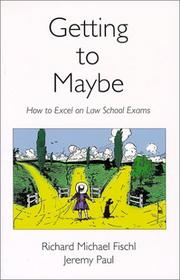
Getting To Maybe
How law school exams work and how to get better grades.
Summary
Law professors Richard Michael Fischl and Paul set out how law school exams work, with the aim of raising the reader's grades. They open by contrasting two cultures of schooling. Most education praises students for finding the "right answer"; law school instead rewards careful analysis of unclear situations where several approaches can each be correct. The authors explain at length how legal analysis comes to produce so many such puzzles, and why.
From there they teach how to apply legal analysis to exam problems. They give study and preparation tips that go past the usual advice, and they show how to argue both sides of a legal question without sounding indecisive. They also explain why exam questions leave students unsure of the correct outcome, and how a student can use that doubt to advantage. The authors hold that no exam guide replaces solid knowledge of the substantive law; a student who puts in the time to learn it, they argue, can use their method to turn that learning into better exam results.
Key takeaways 4
- Law exams reward analysis of ambiguous situations, not single right answers.
- Uncertainty about the outcome of an exam question can work in the student's favour.
- A good answer argues both sides of an issue without sounding indecisive.
- Exam technique helps only a student who has learned the substantive law.
Who should read it
Law students preparing for exams, and prospective students curious about legal reasoning.
Who recommended it 1
Similar books 6
Chosen by shared topics, the entries that hold them, and the people who recommended both.
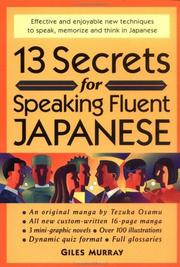
Techniques for speaking natural, fluent Japanese.
“The first is probably for people who speak more intermediate Japanese, so you'd want some basics first. It is 13 Secrets for Speaking Fluent Japanese. This is by Giles Murray.” — Tim Ferriss
Source: The Tim Ferriss Show Transcripts: Lessons Learned Traveling the World (#315)
Recommended by: Tim Ferriss
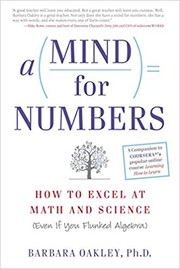
How to learn maths and science, from the course Learning How to Learn.
“Thought I was getting a book about math, but ended up being a surprisingly good book about learning in general. Main points are about diffused thinking vs focused thinking.” — Derek Sivers
Source: Derek Sivers book notes (primary, rated list) · Rating: 8/10
Recommended by: Derek Sivers, Mohnish Pabrai
How to educate students for a fast-changing, borderless world.
Recommended by: Bill Gates

The autobiography of an educator who shaped American medical education.
Recommended by: Mohnish Pabrai
What survey, transcript and test data show about how much college students learn.
Recommended by: Bill Gates
TRIZ, a method for solving technical problems through invention.
Recommended by: Patrick Collison