Updates

  1. Person pages list letters, writing, profiles and links as sortable tables with filters, and show each person's companies as links; Fund letters show each letter's description in its own column.
  2. Experts show a checked job title and a short description of each person; 30 more people have photographs.
  3. Every company, fund, university and publication the experts work for has a page listing the people there.
  4. Fund letters show each letter's thesis and filter by it; 225 person pages list the essays, columns and newsletter issues the person wrote.
  5. Person pages list every essay and newsletter issue a person wrote, and their own books as a table in List view.
  6. Recommends shows the five largest kinds of book and the rest under More; browse pictures load sooner.
  7. Podcasts and talks link the original episode, filter by Audio and video or Press, and list each publisher once.
  8. Pages are wider, Recommends has List and Grid, and a filter clicked again turns off.
  9. Book cards sit in a ruled grid with Open Library and Goodreads links and each book's one-line note.
  10. Funds is now Investors; each investor's styles are buttons that filter the table.
  11. Podcasts and talks on a person's page filter by year and publisher and show as a list or a grid of pictures.
  12. Quotes show only people's own words: 472 summaries written by list sites are gone.
  13. Country pages open from Browse again, and every link on the shelf lands on a page.
  14. Subject and person pages show their sections as tabs, and each book appears once on a person's page.
  15. Book cards show the quote, who said it and the source; grids show five cards to a row.
  16. On a phone, a menu holds the sections, search, Updates, Feedback and dark mode.
  17. Feedback takes a screenshot of the page with no browser prompt, opens a screenshot full size when you click it, and clears itself once sent.
  18. Book cards are centred, search names the topic each book sits in, and any text cut short shows whole on hover.
  19. Search groups its results by kind: people, companies, geographies, subjects, topics, books, funds, fund letters and papers.
  20. The Books table lists who recommended each book by name, and the browser tab names the section you are in.
  21. Feedback can take a screenshot of the page, or one you paste or choose, and opens in the corner beside Updates.
  22. Each rail button reopens its section where you left it, and Browse, Table and People show on every book and subject page.
  23. Filters grey out choices that hold nothing instead of hiding them, and Books › People filters by authors or recommenders.
  24. Feedback takes a subject line and up to three screenshots.
  25. Biographies are grouped by the person they are about: 41 new pages, from Abraham Lincoln to Lee Kuan Yew.
  26. Sport splits into 23 sports, and Religion into one topic per faith.
  27. Book lists show as cards: the cover, one recommendation quote and every recommender by name.
  28. Seventeen subjects that had two or three pages under different names now have one page each.
  29. Every page lists its Experts as authors and recommenders, with a link to them on the Experts tab.
  30. Economics, Financial history, Financial panics and Accounting are subjects of their own, with one page per financial crisis.
  31. Book, person and subject pages open inside the app, so the tabs stay in view.
  32. 996 more book covers, and photographs or logos for 227 more people and companies.
  33. Books › Browse shows every subject as cards, and the rail holds Fund letters, Papers, Experts, Books and Funds.
  34. Every topic over 150 books splits into narrower topics, each with a page of its own.

Send feedback

What is it?
Screenshots, up to 3 (optional)
or paste one with Ctrl+V

We use your email only to reply to you.

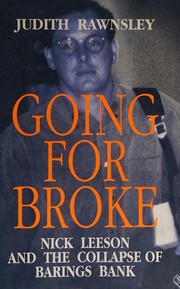
Going for Broke: Nick Leeson and the Collaps

Going for Broke: Nick Leeson and the Collapse of Barings Bank

Judith Rawnsley
1995
T3 206 pages · about 3h 26m to read Open Librarygoodreads

By a former Barings Tokyo employee.

Summary

The reference has not verified this book in detail; the summary states only what the title, author and subject establish.

Rawnsley, who had worked at Barings in Tokyo before becoming a journalist, wrote one of the first accounts of the bank's 1995 collapse.

Her position gives the book a particular perspective: she had worked inside the organisation, knew people involved, and could describe the culture of the bank and of its Asian operations from experience.

The established facts of the case are that Nick Leeson ran Barings Futures Singapore with responsibility for both trading and the back office; that he concealed losses in an error account excluded from reports to London; that he reported profits from what was described as low-risk arbitrage between the Singapore and Osaka exchanges while holding a large directional position including short options on the Nikkei; that the Kobe earthquake moved the market against him; that London funded margin calls exceeding the bank's capital without establishing what positions required them; and that the bank collapsed in February 1995 and was sold to ING for one pound.

Rawnsley's account, written within months of the collapse, covers the culture of the bank, the relationship between the traditional merchant banking side and the securities operation, the management structure that left no one clearly responsible for Singapore, and Leeson himself.

The book was written before the Bank of England's board of banking supervision report and before the Singapore inspectors' report, both of which established the documented record. Gapper and Denton's All That Glitters, also in this reference, is the more thorough account. This one is useful for the insider's description of the organisation's culture.

Key takeaways 7

  1. Leeson controlled both trading and settlement, which is the control failure that made concealment possible.
  2. Reported profits were implausible for the low-risk arbitrage strategy claimed and were not investigated because they were welcome.
  3. London funded margin calls exceeding the bank's entire capital without establishing what positions required the money.
  4. No single manager held clear responsibility for the Singapore operation, so warnings reached no one with authority.
  5. Tension between the traditional merchant banking side and the newer securities operation shaped how the business was overseen.
  6. The account was written within months of the collapse and before the official reports established the documented record.
  7. Two centuries of institutional history ended in a sale for a nominal sum.

Who should read it

Readers wanting a former employee's account of Barings' culture, using the official reports and later accounts for the documented record.

Similar books 6

Chosen by shared topics, the entries that hold them, and the people who recommended both.
John Gapper, Nicholas Denton · 1996

How one trader's losses destroyed Barings, Britain's oldest merchant bank, in 1995.
Nick Leeson, Edward Whitley · 1996

How one trader's hidden losses in Singapore brought down Barings Bank.
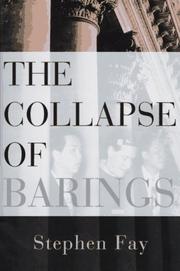
Stephen Fay · 1996

How losses in its Singapore futures unit destroyed Barings Bank in February 1995.
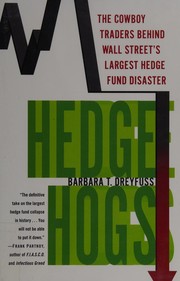
Duncan Mavin · 2024

Closest book coverage: Archegos as the loss that broke Credit Suisse.

Where it sits in the reference 2

Companies
Business themes

Topics

Company HistoriesFinance and Markets