Updates

  1. Person pages list letters, writing, profiles and links as sortable tables with filters, and show each person's companies as links; Fund letters show each letter's description in its own column.
  2. Experts show a checked job title and a short description of each person; 30 more people have photographs.
  3. Every company, fund, university and publication the experts work for has a page listing the people there.
  4. Fund letters show each letter's thesis and filter by it; 225 person pages list the essays, columns and newsletter issues the person wrote.
  5. Person pages list every essay and newsletter issue a person wrote, and their own books as a table in List view.
  6. Recommends shows the five largest kinds of book and the rest under More; browse pictures load sooner.
  7. Podcasts and talks link the original episode, filter by Audio and video or Press, and list each publisher once.
  8. Pages are wider, Recommends has List and Grid, and a filter clicked again turns off.
  9. Book cards sit in a ruled grid with Open Library and Goodreads links and each book's one-line note.
  10. Funds is now Investors; each investor's styles are buttons that filter the table.
  11. Podcasts and talks on a person's page filter by year and publisher and show as a list or a grid of pictures.
  12. Quotes show only people's own words: 472 summaries written by list sites are gone.
  13. Country pages open from Browse again, and every link on the shelf lands on a page.
  14. Subject and person pages show their sections as tabs, and each book appears once on a person's page.
  15. Book cards show the quote, who said it and the source; grids show five cards to a row.
  16. On a phone, a menu holds the sections, search, Updates, Feedback and dark mode.
  17. Feedback takes a screenshot of the page with no browser prompt, opens a screenshot full size when you click it, and clears itself once sent.
  18. Book cards are centred, search names the topic each book sits in, and any text cut short shows whole on hover.
  19. Search groups its results by kind: people, companies, geographies, subjects, topics, books, funds, fund letters and papers.
  20. The Books table lists who recommended each book by name, and the browser tab names the section you are in.
  21. Feedback can take a screenshot of the page, or one you paste or choose, and opens in the corner beside Updates.
  22. Each rail button reopens its section where you left it, and Browse, Table and People show on every book and subject page.
  23. Filters grey out choices that hold nothing instead of hiding them, and Books › People filters by authors or recommenders.
  24. Feedback takes a subject line and up to three screenshots.
  25. Biographies are grouped by the person they are about: 41 new pages, from Abraham Lincoln to Lee Kuan Yew.
  26. Sport splits into 23 sports, and Religion into one topic per faith.
  27. Book lists show as cards: the cover, one recommendation quote and every recommender by name.
  28. Seventeen subjects that had two or three pages under different names now have one page each.
  29. Every page lists its Experts as authors and recommenders, with a link to them on the Experts tab.
  30. Economics, Financial history, Financial panics and Accounting are subjects of their own, with one page per financial crisis.
  31. Book, person and subject pages open inside the app, so the tabs stay in view.
  32. 996 more book covers, and photographs or logos for 227 more people and companies.
  33. Books › Browse shows every subject as cards, and the rail holds Fund letters, Papers, Experts, Books and Funds.
  34. Every topic over 150 books splits into narrower topics, each with a page of its own.

Send feedback

What is it?
Screenshots, up to 3 (optional)
or paste one with Ctrl+V

We use your email only to reply to you.

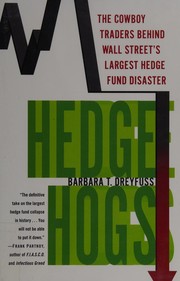
Hedge Hogs: The Cowboy Traders Behind Wall S

Hedge Hogs: The Cowboy Traders Behind Wall Street's Largest Hedge Fund Disaster

Barbara T. Dreyfuss
2013
T3 285 pages · about 4h 45m to read Open Librarygoodreads

The only book-length account of Brian Hunter's gas book.

Summary

Dreyfuss, an investigative journalist, wrote about the collapse of Amaranth Advisors, which lost roughly six billion dollars in natural gas positions in September 2006, at the time the largest hedge fund loss on record.

The mechanism is the substance. Brian Hunter, a trader in his early thirties, ran the fund's natural gas book from Calgary. His positions were calendar spreads, meaning long contracts for one delivery month against short contracts for another, principally betting that winter prices would rise relative to shoulder months. The positions grew until Amaranth held a very large share of the open interest in specific contract months on the New York Mercantile Exchange, which meant Hunter's own trading was setting the prices at which his positions were marked.

That is the trap the book describes. A position large enough to move a market cannot be exited without moving it against the holder, so the only way to sustain it is to keep adding, which increases the size further. When the price moved against him in September 2006 the fund could not liquidate, faced margin calls it could not meet, and transferred the book to JPMorgan and Citadel at a very large discount.

Dreyfuss also covers the regulatory dimension: Amaranth moved positions from the regulated New York exchange to the InterContinental Exchange, which was then subject to different oversight, when position accountability limits became inconvenient, and the subsequent Commodity Futures Trading Commission and Federal Energy Regulatory Commission proceedings addressed this.

The institutional questions are the ones investors should take. Amaranth had been marketed as a diversified multi-strategy fund and had become a single concentrated natural gas position. The fund's risk management did not constrain the trader who was producing its returns.

The book is journalism with a clear position about the traders it describes. The position sizing and market impact mechanics are accurate and are the transferable content.

Key takeaways 7

  1. Amaranth held a very large share of open interest in specific natural gas contract months, so its own trading set the marks on its positions.
  2. A position large enough to move a market cannot be exited without moving it against the holder.
  3. Sustaining such a position requires adding to it, which increases the size and makes exit harder still.
  4. A fund marketed as diversified and multi-strategy had become a single concentrated commodity position.
  5. Risk management did not constrain the trader who was producing the fund's returns, which is the recurring institutional failure.
  6. Positions were moved to a less regulated venue when position accountability limits became inconvenient.
  7. The book transferred to buyers at a very large discount, because the buyers knew the seller had no alternative.

Who should read it

Risk managers and allocators who want a case study in position concentration, market impact and the failure of risk functions to constrain profitable traders.

Similar books 6

Chosen by shared topics, the entries that hold them, and the people who recommended both.
John Gapper, Nicholas Denton · 1996

How one trader's losses destroyed Barings, Britain's oldest merchant bank, in 1995.

Duncan Mavin · 2024

Closest book coverage: Archegos as the loss that broke Credit Suisse.

Nick Leeson, Edward Whitley · 1996

How one trader's hidden losses in Singapore brought down Barings Bank.

Where it sits in the reference 2

Companies
Business themes

Topics

Finance and MarketsCompany Histories