Updates

  1. Person pages list letters, writing, profiles and links as sortable tables with filters, and show each person's companies as links; Fund letters show each letter's description in its own column.
  2. Experts show a checked job title and a short description of each person; 30 more people have photographs.
  3. Every company, fund, university and publication the experts work for has a page listing the people there.
  4. Fund letters show each letter's thesis and filter by it; 225 person pages list the essays, columns and newsletter issues the person wrote.
  5. Person pages list every essay and newsletter issue a person wrote, and their own books as a table in List view.
  6. Recommends shows the five largest kinds of book and the rest under More; browse pictures load sooner.
  7. Podcasts and talks link the original episode, filter by Audio and video or Press, and list each publisher once.
  8. Pages are wider, Recommends has List and Grid, and a filter clicked again turns off.
  9. Book cards sit in a ruled grid with Open Library and Goodreads links and each book's one-line note.
  10. Funds is now Investors; each investor's styles are buttons that filter the table.
  11. Podcasts and talks on a person's page filter by year and publisher and show as a list or a grid of pictures.
  12. Quotes show only people's own words: 472 summaries written by list sites are gone.
  13. Country pages open from Browse again, and every link on the shelf lands on a page.
  14. Subject and person pages show their sections as tabs, and each book appears once on a person's page.
  15. Book cards show the quote, who said it and the source; grids show five cards to a row.
  16. On a phone, a menu holds the sections, search, Updates, Feedback and dark mode.
  17. Feedback takes a screenshot of the page with no browser prompt, opens a screenshot full size when you click it, and clears itself once sent.
  18. Book cards are centred, search names the topic each book sits in, and any text cut short shows whole on hover.
  19. Search groups its results by kind: people, companies, geographies, subjects, topics, books, funds, fund letters and papers.
  20. The Books table lists who recommended each book by name, and the browser tab names the section you are in.
  21. Feedback can take a screenshot of the page, or one you paste or choose, and opens in the corner beside Updates.
  22. Each rail button reopens its section where you left it, and Browse, Table and People show on every book and subject page.
  23. Filters grey out choices that hold nothing instead of hiding them, and Books › People filters by authors or recommenders.
  24. Feedback takes a subject line and up to three screenshots.
  25. Biographies are grouped by the person they are about: 41 new pages, from Abraham Lincoln to Lee Kuan Yew.
  26. Sport splits into 23 sports, and Religion into one topic per faith.
  27. Book lists show as cards: the cover, one recommendation quote and every recommender by name.
  28. Seventeen subjects that had two or three pages under different names now have one page each.
  29. Every page lists its Experts as authors and recommenders, with a link to them on the Experts tab.
  30. Economics, Financial history, Financial panics and Accounting are subjects of their own, with one page per financial crisis.
  31. Book, person and subject pages open inside the app, so the tabs stay in view.
  32. 996 more book covers, and photographs or logos for 227 more people and companies.
  33. Books › Browse shows every subject as cards, and the rail holds Fund letters, Papers, Experts, Books and Funds.
  34. Every topic over 150 books splits into narrower topics, each with a page of its own.

Send feedback

What is it?
Screenshots, up to 3 (optional)
or paste one with Ctrl+V

We use your email only to reply to you.

Nightmare on Wall Street: Salomon Brothers a

Nightmare on Wall Street: Salomon Brothers and the Corruption of the Marketplace

Martin Mayer
1993
T2 288 pages · about 4h 48m to read Open Librarygoodreads

The Treasury-auction scandal and its aftermath.

Summary

Martin Mayer, who wrote about banking for four decades, covers the Salomon Brothers Treasury auction scandal of 1991 and the firm's near-destruction. Paul Mozer, who ran the government bond desk, submitted bids in customers' names without authorisation in order to exceed the limit on how much of an auction any single bidder could take.

Mayer's account covers the mechanics of the primary dealer system and the Treasury auction rules, which is necessary to see what Mozer did and why it mattered: cornering a specific issue lets the holder squeeze short sellers who must deliver that issue. He then covers the management failure, which is the part that nearly killed the firm. Mozer told his superiors, including John Gutfreund and Thomas Strauss, about one unauthorised bid in April 1991, and they did not report it to the authorities for months. When the matter became public the Treasury moved to suspend Salomon from auctions, which would have ended the firm, and Warren Buffett took over as interim chairman.

Mayer sets the episode inside a broader argument about the government securities market, which he considers under-regulated relative to its importance, and about a Wall Street culture in which trading profit justified conduct. He wrote close to events, before the full civil and regulatory record, and his verdicts on individuals reflect that. The book covers ground also treated in Michael Lewis's Liar's Poker, from a very different angle: Mayer is interested in market structure rather than in the trading floor.

Key takeaways 7

  1. Mozer submitted unauthorised bids in customers' names to exceed the limit on any single bidder's share of a Treasury auction.
  2. Cornering a specific Treasury issue lets the holder squeeze short sellers who are contractually obliged to deliver that issue.
  3. Salomon's senior management learned of an unauthorised bid months before reporting it, and that delay rather than the bid nearly destroyed the firm.
  4. Primary dealer status is a licence whose withdrawal would have ended Salomon immediately, which gave the Treasury decisive leverage.
  5. Buffett's intervention worked because his personal reputation substituted for the institutional credibility Salomon had lost.
  6. Mayer argues that the government securities market was regulated far more lightly than its importance to the financial system justified.
  7. A firm whose compensation rewards trading profit above all else will produce conduct its management claims not to want.

Who should read it

Investors and compliance professionals studying how a reporting failure rather than the original misconduct destroys a firm's regulatory standing.

Similar books 6

Chosen by shared topics, the entries that hold them, and the people who recommended both.
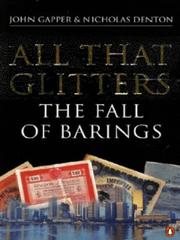
John Gapper, Nicholas Denton · 1996

How one trader's losses destroyed Barings, Britain's oldest merchant bank, in 1995.

Duncan Mavin · 2024

Closest book coverage: Archegos as the loss that broke Credit Suisse.
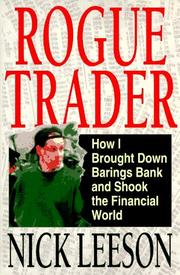
Nick Leeson, Edward Whitley · 1996

How one trader's hidden losses in Singapore brought down Barings Bank.

Where it sits in the reference 2

Companies
Business themes

Topics

Company HistoriesFinance and Markets