Happier
Lessons on happiness from a popular Harvard course.
Summary
The reference has not verified this book in detail; the summary states only what the title, author and subject establish.
Tal Ben-Shahar taught a course on happiness at Harvard University that, according to the publisher, became the university's most popular, attended by one in five Harvard students. The book draws on that course and on the positive psychology movement, and asks whether people can learn to be happy; Ben-Shahar answers that they can.
He combines scientific studies, scholarly research, self-help advice and spiritual insight into a set of principles readers can apply in daily life, with the aim of helping them feel more fulfilled and more connected. The source read in this pass is the publisher's description, which names the approach but not the specific principles.
Key takeaways 4
- Happiness can be learned, according to Ben-Shahar.
- Positive psychology turns research on well-being into practical principles.
- The book grew out of Harvard's most popular course.
- Scientific findings and personal practice can work together.
Who should read it
Readers interested in positive psychology who want a research-informed guide to well-being.
Who recommended it 1
Similar books 6
Chosen by shared topics, the entries that hold them, and the people who recommended both.
What science shows about how meditation changes the mind, brain and body.
Recommended by: Peter Attia
A mindfulness meditation practice for awareness and well-being.
Recommended by: Arianna Huffington
The sense foraging technique: using sensation to break patterns and relieve anxiety.
Recommended by: Andrew Wilkinson
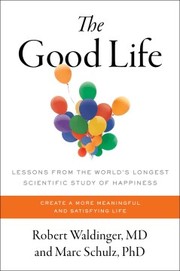
What the longest scientific study of happiness says makes a good life.
“a new book by Robert Waldinger, the study's current director, and it drove this home.” — Andrew Wilkinson
Source: Essay
Recommended by: Andrew Wilkinson

A system for aligning heart rhythms with the brain to reduce stress.
Recommended by: Adam Robinson
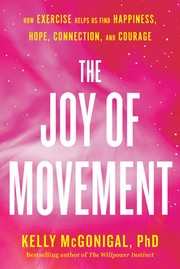
How exercise ties to human joys: self-expression, social connection and mastery.
Recommended by: Keith Rabois, Kevin Rose