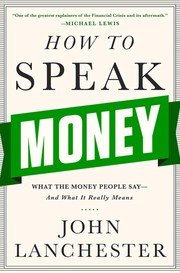
How to Speak Money: What the Money People Say--and What It Really Means
How finance and economics work, decoded from the language of money people.
Summary
John Lanchester, a writer The Economist praised for explaining complex subjects in a down-to-earth, witty style, tries to bridge the gap between the "money people" and everyone else. To outsiders the language of money can seem impenetrable and its ideas too complex, and Lanchester shows how finance and economics actually work, from the terms and conditions of a personal checking account to the deliberate concealments and evasions of bankers testifying before Congress.
He shows how the language of money is often used to conceal and mislead. He explains hundreds of common economic terms, from GDP and the IMF to amortisation, securitisation and the collateralised debt obligation. His argument is that everyone needs to "speak money", because otherwise the people who do will write the financial rules for themselves. Dwight Garner of The New York Times called the book "wickedly funny".
Key takeaways 4
- Financial jargon often serves to hide what is going on.
- Ordinary people can learn the language of money.
- Terms from GDP to collateralised debt obligations can be explained plainly.
- If the public does not understand finance, insiders set the rules.
Who should read it
General readers who want to understand financial and economic terms used in the news.
Who recommended it 1 · 1 direct
Similar books 6
Chosen by shared topics, the entries that hold them, and the people who recommended both.
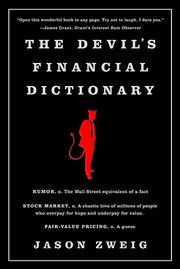
A satirical dictionary of Wall Street terms.
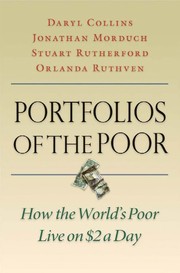
Year-long financial diaries of poor households show how they manage money.
Recommended by: Mark Zuckerberg
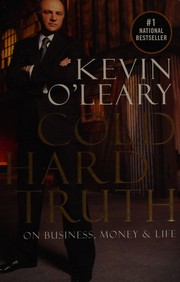
An investor's life story and his rules for business and personal money.
Recommended by: Mohnish Pabrai
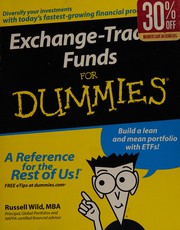
Exchange-traded funds explained in plain English: costs, risks and taxes.
Recommended by: Mohnish Pabrai
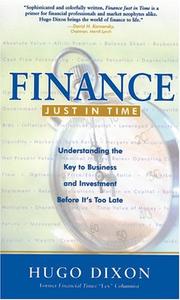
A no-equations guide to corporate finance and markets: risk, valuation and mergers.
Recommended by: Mohnish Pabrai
A textbook on investments and portfolio management, with exercises.
Recommended by: Mohnish Pabrai