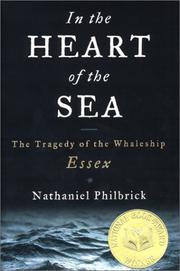
In the Heart of the Sea
The whaleship Essex, sunk by a sperm whale, and the ordeal of its crew.
Summary
Nathaniel Philbrick's account of the loss of the whaleship Essex was published by Viking on 8 May 2000 and won that year's National Book Award for Nonfiction; it was filmed in 2015. In 1819 the 238-ton Essex sailed from Nantucket, Massachusetts, on a routine whaling voyage. Fifteen months later, in November 1820, it was rammed and sunk by a sperm whale in the Pacific Ocean.
Having lost their ship, the crew tried to sail whaleboats to South America. Starvation and dehydration killed most of them before the survivors were rescued in February 1821. Philbrick draws on two first-hand accounts: the well-known narrative of Owen Chase, the first mate, published soon after the disaster, and a memoir by Thomas Nickerson, a teenage cabin boy on the voyage, written in old age, found in 1960, authenticated in 1980 and published in abridged form in 1984.
Key takeaways 4
- A sperm whale attacked and sank the Essex in the Pacific in 1820.
- Most of the crew died of starvation and thirst in open boats.
- Philbrick uses the accounts of the first mate and a teenage cabin boy.
- The disaster shows the hardships of Nantucket's whaling trade.
Who should read it
Readers of maritime history and survival stories.
Who recommended it 1 · 1 direct
Similar books 6
Chosen by shared topics, the entries that hold them, and the people who recommended both.
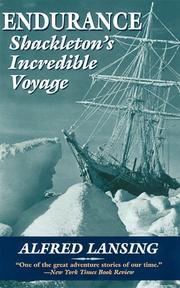
Shackleton's men survive after the ice crushes their ship Endurance in Antarctica.
Recommended by: Andrew Wilkinson, Jim Collins, Morgan Housel and 8 others
An explorer's account of the search in Peru that found the ruins of Machu Picchu.
Recommended by: David Kadavy
The Pacific Ocean's geology and history, and its role in the modern world.
Recommended by: Patrick Collison
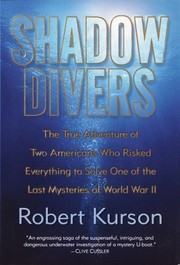
Two divers set out to identify a German U-boat found off the New Jersey coast.
Recommended by: Patrick O'Shaughnessy, Ryan Holiday

Twelve American sailors wrecked on the North African coast and sold into slavery.
Recommended by: Patrick Collison
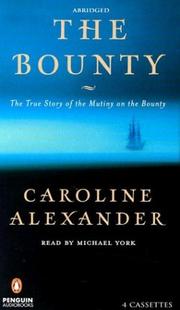
The mutiny on the Bounty and the court martial of the mutineers who were caught.
Recommended by: Patrick Collison